
 E-Paper



Mayawati will hold key to a potent Opposition
Leaders such as Sharad Pawar have said that the Opposition should focus on building state-specific alliances, giving leadership to the locally strong players. Mayawati’s messaging suggests that she might not be willing to accept this method


Bypolls are of little consequence in Indian politics. However, by-polls for the Lok Sabha seats of Gorakhpur, Phulpur and Kairana in Uttar Pradesh (UP) made national headlines. The reason was the Bharatiya Janata Party’s (BJP) defeat by a united opposition, comprising primarily of the Samajwadi Party (SP) and the Bahujan Samaj Party (BSP).
Simple electoral arithmetic suggests that a grand alliance led by the SP-BSP could cause major upsets for the BJP in India’s largest state. In the 2014 Lok Sabha and the 2017 assembly elections, the BJP won 89% and 77% of total seats with a vote share of 43% and 40%. The combined vote share of the SP and the BSP comes to 43% and 44% in these elections. Adding the Congress’s vote share takes these numbers above 50%. A major upset in UP can spoil the BJP’s ambitions of repeating its 2014 performance.
But politics is not just arithmetic. India’s anti-BJP political spectrum is extremely diverse. In many cases, non-BJP parties have a history of mutually conflicting interests. This reality has the potential of creating difficulties for forging and sustaining any grand coalition against the BJP. Parting of ways between the Janata Dal (United) and the Rashtriya Janata Dal in Bihar is an example of post-poll breakdown of a successful grand alliance against the BJP.
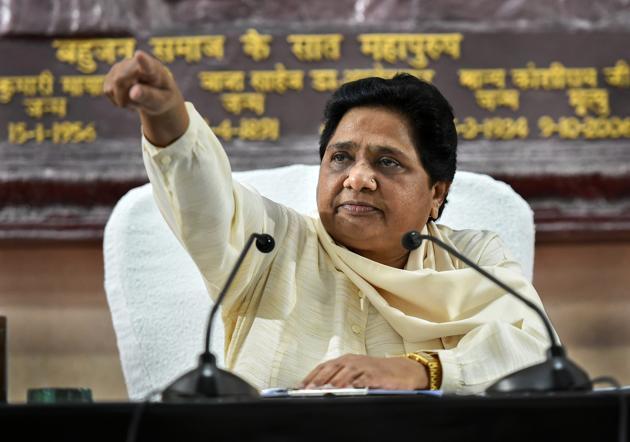
Now Mayawati has said that the BSP will fight elections alone in case the BSP is not allocated a “respectable” number of seats. Cleverly, she has left the definition of respectable ambiguous. There could be a larger political design here.
The BSP is perhaps the only party apart from the Congress which can impact election results in more than a couple of states. It played smartly by allying with the Janata Dal (Secular) in the Karnataka assembly elections and has a cabinet minister in the state now. Combined vote share of the Congress and the BSP exceeded that of the BJP on six out of nine occasions in assembly elections in Madhya Pradesh, Chhattisgarh and Rajasthan since 2003. Reports suggest that alliance negotiations between the two parties have been going on in these states. While the BSP is the junior partner vis-à-vis the Congress in these three states, the tables will turn in Uttar Pradesh, where the BSP walking out can be a big spoiler.
This opens up another contradiction in the efforts to build a grand unity against the BJP in the run-up to 2019. Leaders such as Sharad Pawar have said that the Opposition should focus on building state-specific alliances, giving leadership to the locally strong players, rather than make attempts to put together a national level alliance. Mayawati’s threat suggests that she might not be willing to accept this method.


