
 E-Paper



Missing in the BJP basket
With no Lok Sabha MPs from Tamil Nadu and Kerala, the party has launched an outreach

 Prefer HTon Google


Since 2014, the Modi juggernaut has rolled over most of India, expanding the BJP’s footprint. Only pockets in the Northeast and Southern India have been lukewarm to the party’s electoral charm. PM Narendra Modi’s visit to Tamil Nadu and Kerala earlier this week suggests that the party wants to change this (the two states and UTs of Puducherry and Lakshadweep together send 61 MPs to the Lok Sabha) before the general elections.
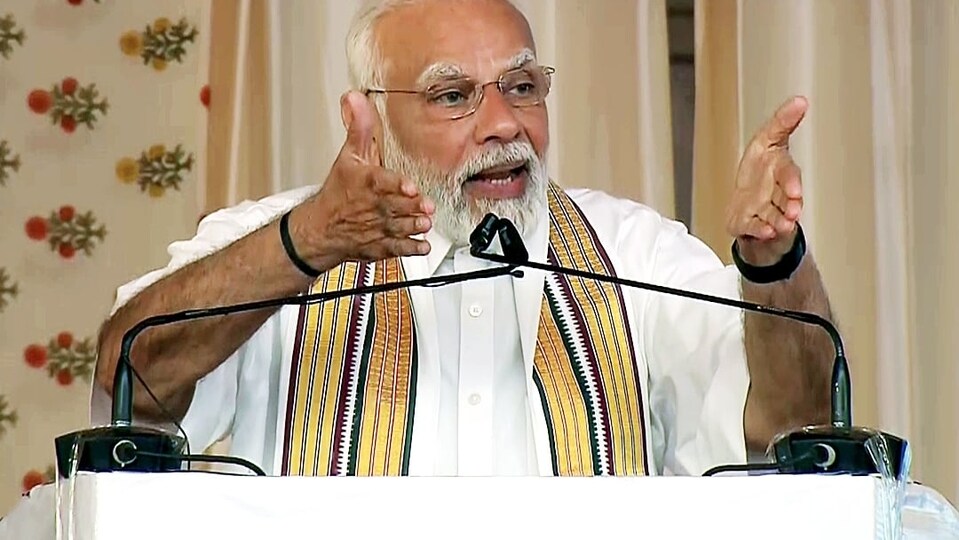
At his public meetings in Trichy, Tamil Nadu and Thrissur, Kerala, PM Modi underplayed the hardline Hindutva agenda that has enabled the party to exercise hegemony in the Hindi heartland. Instead, he tried to connect with the local Hindu heritage and establish the BJP’s credentials as a custodian of all Hindu traditions. In Tamil Nadu, the BJP has focussed on cultural politics that foregrounds the Hindu spiritual heritage of the region. This was conspicuous during the inauguration of the new Parliament complex where Tamil language and Hindu rituals and symbols from Tamil mathas, such as the Sengol (a sceptre), were given prominence. The BJP has also tried to invoke the memory of Kashi/Varanasi as a spiritual centre of Tamil Hindus through the Kashi Tamil sangamam, now in its third year. In his Thrissur speech, the PM highlighted both Sabarimala and Thrissur Pooram (a local festival) to emphasise the point that the state administration was insensitive to Hindu sentiments. However, the PM also sought to highlight the Union government’s development pitch: He reminded the audience in Trichy that Tamil Nadu got 2.5 times more money from a BJP-led Centre as compared to the 10 years under the Congress-led UPA. In Kerala, he focused on the CPI-M’s alleged corruption and the Centre’s women-centric schemes.
In Kerala and Tamil Nadu, the BJP has tried to overcome organisational and leadership limitations by forging broader coalitions with influential local groups and civil society activists. but the party has found it difficult to grow beyond a committed vote that is too small to win even assembly seats: It does not have a single MP from these states, while it won four assembly seats in Tamil Nadu in alliance with the AIADMK. In Kerala, the BJP is wooing the Christian community, offering an alternative to the Left and the Congress. The challenge in both states will be for the BJP to broaden its social base and political appeal, alone or with allies. That looks like a long haul, but PM Modi is a tireless campaigner, and the outlines of an outreach are now clearly visible.


