
 E-Paper



NE floods: Climate is not the only villain
The obstruction of the natural flow of water through dams, barrages, and embankments, deforestation and mining in the hills, the destruction of wetlands, development activities on river banks, and unplanned urbanisation have all contributed to rivers losing their navigability

 Prefer HTon Google


In one of the worst episodes of flooding in India’s ecologically critical Northeastern (NE) region, five states -- Assam, Meghalaya, Tripura, Nagaland, and Arunachal Pradesh -- have been badly affected. The deluge and landslides have killed at least 100 people, displaced thousands, affected livelihoods, destroyed properties and expensive infrastructure worth crores, and inundated national parks and wildlife sanctuaries. Excessive rainfall and flooding in the Northeast have also inundated vast stretches of Bangladesh, with troops deployed to evacuate stranded people.
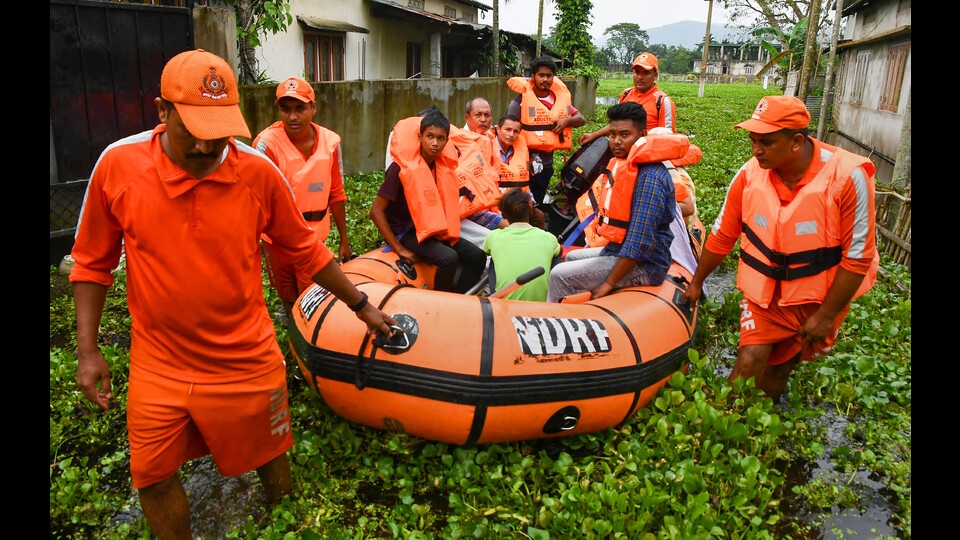
While Assam, the worst affected state, is one of the most flood-prone in India due to its intricate network of rivers and their tributaries, scientists say this year’s event shows the irrefutable footprint of the climate crisis. Studies have shown that the Himalayan region’s rainfall patterns have been changing, leading to unpredictable weather. The India Meteorological Department (IMD) has said that the moisture convergence with Bay of Bengal winds was high since the Southwest Monsoon entered the Northeast. The abundance of moisture heated the eastern Himalayas, bringing heavy to extremely heavy rainfall during the first half of June. In a normal year, the Northeast records heavy spells for five to seven days in a month. But this time, it rained heavily for 15 days. The intensity and frequency of such natural disasters will increase further, affecting lives, livelihoods, irrigation, food and water security, and industries.
But the excessive rainfall is not the only reason for such flooding. The obstruction of the natural flow of water in India and China, Nepal, and Bhutan through dams, barrages, and embankments, deforestation and mining in the hills, the destruction of wetlands, development activities on river banks, and unplanned urbanisation have all contributed to rivers losing their navigability. These reasons also made managing floods all the more difficult. Unless corrective actions on both the infrastructure and climate crisis fronts are taken urgently, the region will continue to pay a heavy price every year in a climate-hit era.


