
 E-Paper



Silencing TM Krishna is an act of pure disgrace
Like all true artists, Krishna has, in his art, strived to dissolve boundaries, make his genre more inclusive, and forge something new out of what exists. The attack on him is much more than an attack on freedom of speech or dissent.

 Prefer HTon Google


The cancellation of the forthcoming concert of Carnatic vocalist, TM Krishna, is a travesty. Mr Krishna, 42, is not merely one of the pre-eminent Carnatic musicians of his generation. He is an award winning author (his book, A Southern Music - A Karnatik Story, a socio-political exploration of his genre of music, won the prestigious Tata LitLive First Book Award); and a deeply thoughtful, committed and fiercely intelligent public intellectual.
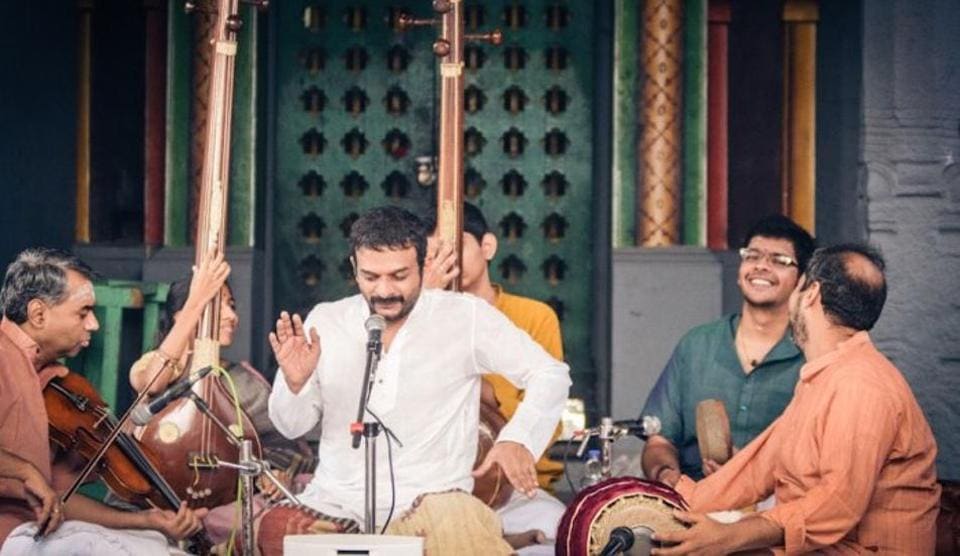
Mr Krishna’s concert was scheduled to have been part of a two-day music and dance festival over this weekend at New Delhi’s Nehru Park. It was jointly organised by the Airports Authority of India (AAI) and the stellar cultural body, SPIC-MACAY. Following an attack by a few right wing trolls, who called him, among other things, “anti-India” and an “urban Naxal”, AAI announced that the concert had been called off for the moment. AAI denied that the concert had been cancelled; it said the event had been postponed because of an exigency. It is not known how the body had not spotted the said “exigency” when it had been enthusiastically promoting the performance only a few days ago.
It is known that Mr Krishna has been critical of the entrenched caste elitism in Carnatic music; that he has tried genre bending experiments such as including in his performances hymns in praise to Allah and Mary; that he has tried to expand the limits of his chosen art form by bringing on stage the poetry of the controversial writer, Perumal Murugan, who was a target of some religious Hindu groups in 2016; that he has spoken repeatedly, including on TV on Thursday, about how he rejects the notion of India as a monolithic, Hindu country, and thinks of it as a multicultural, multireligious nation; and that he has faced similar protests from similar groups previously. Mr Krishna has said that he is willing to perform this weekend on a stage, any stage, in Delhi. The Delhi government has reached out to him. But none of that makes the calling off of the concert any less of a disgrace.
Like all true artists, Mr Krishna has, in his art, strived to dissolve boundaries, make his genre more inclusive, and forge something new out of what exists. The attack on him is much more than an attack on freedom of speech or dissent. It is an attack on the protean nature of art itself. When Mr Krishna won the Ramon Magsasay Award in 2016, his citation spoke of his “forceful commitment as artist and advocate to art’s power to heal India’s deep social divisions”. Now, Mr Krishna finds himself caught in the cleft of one such division.


