
 E-Paper



Solar power: Focus on funding, equity
In the face of the continued growth of electricity demand, the rise of extreme weather events and volatile fossil fuel prices, all stakeholders must join hands to realise the potential of solar

 Prefer HTon Google


The United States (US) on Wednesday became the 101st member of the International Solar Alliance (ISA), an inter-governmental organisation formed by India and France in 2015. A coalition of solar-resource-rich countries, ISA is a dedicated platform for cooperation among governments, bilateral and multilateral organisations, and industry to increase the use and quality of solar energy.
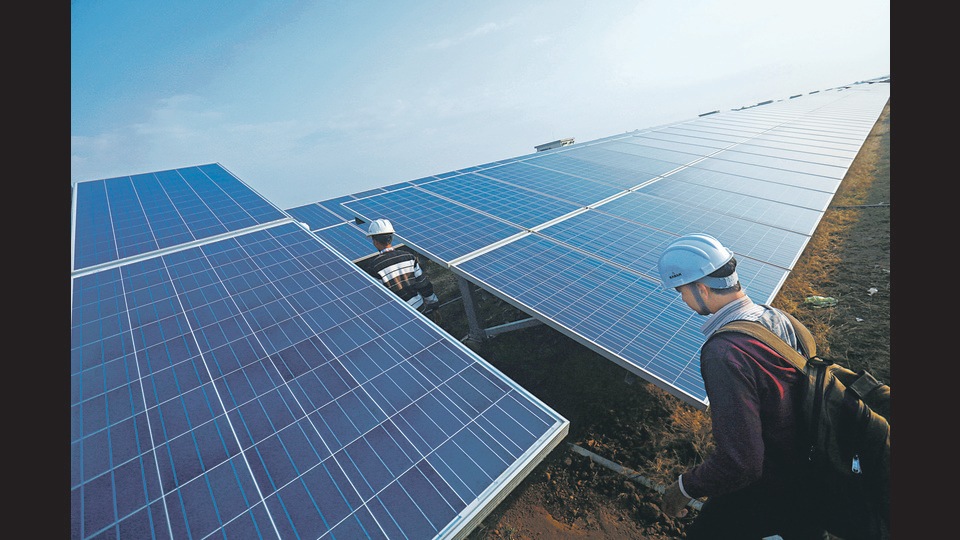
The US’s entry will provide significant heft to the initiative, as Union environment minister Bhupender Yadav said, “propel future action on providing the world a clean source of energy”, and strengthen ISA’s recent push for a transnational global energy grid initiative, One Sun One World One Grid. The initiative was recently launched by Prime Minister Narendra Modi and his UK counterpart Boris Johnson at the ongoing COP26 in Glasgow. Countries are now recognising the economic- and climate- mitigating value of solar. This is an important development because solar can meet both climate goals and growing energy needs over the coming decades. In addition, the rapidly declining costs of solar technologies and battery energy storage systems make solar energy competitive.
There is an urgent need to rapidly scale up solar investment, especially in countries with unmet energy needs. Unfortunately, a report (Solar Investment Action Agenda) by ISA, World Resources Institute, and Bloomberg Philanthropies shows that solar investment lags far behind global needs today. The average annual solar photovoltaic investment will need to approximately double through 2050 if solar energy is to achieve climate mitigation potential and the world is to reach net-zero greenhouse gas emissions in the second half of the century. In the face of the continued growth of electricity demand, the rise of extreme weather events and volatile fossil fuel prices across global markets, all stakeholders must join hands to realise the potential of solar to deliver secure, clean, and resilient energy.


