
 E-Paper



Dickie Bird and the umpire as cricket's silent star | Number Theory
.
Updated on: Sep 27, 2025, 11:13:20 IST

 Prefer HTon Google
Share via


Copy link

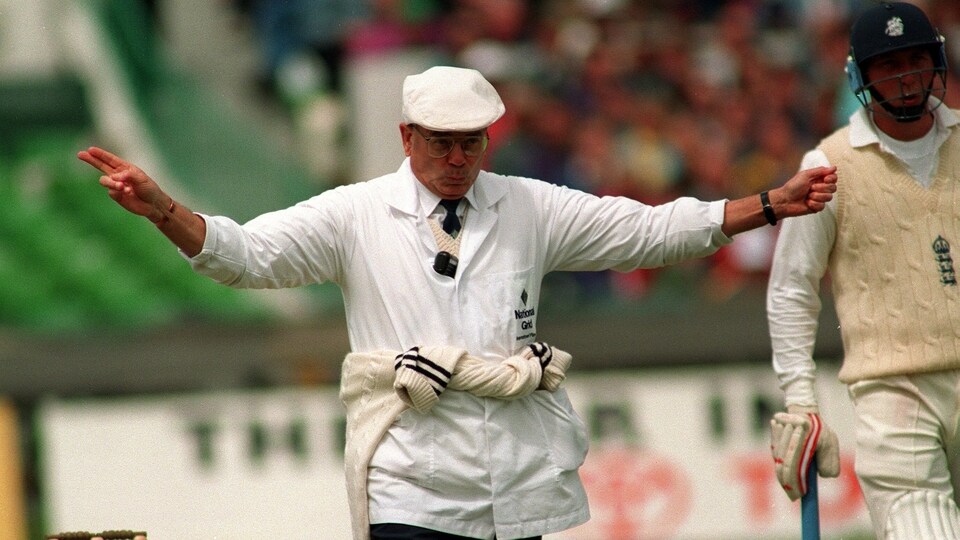
Dickie Bird, who passed away earlier this week, arguably did more to the cause of his tribe than anyone before him and only a handful after him. He plied his trade as a cricket umpire principally in an age when neutral umpires had not yet become the norm, which often become a flashpoint for visiting teams. But not with Bird. He brought judgement that was sound and respected, touch that was light yet firm. He brought humour and a personality. He brought longevity, which several umpires after him built on, in their own ways, to burnish their credentials and further the craft of cricket umpiring.
(www.howindialives.com is a database and search engine for public data)
Dickie Bird and the umpire as cricket's silent star | Number Theory
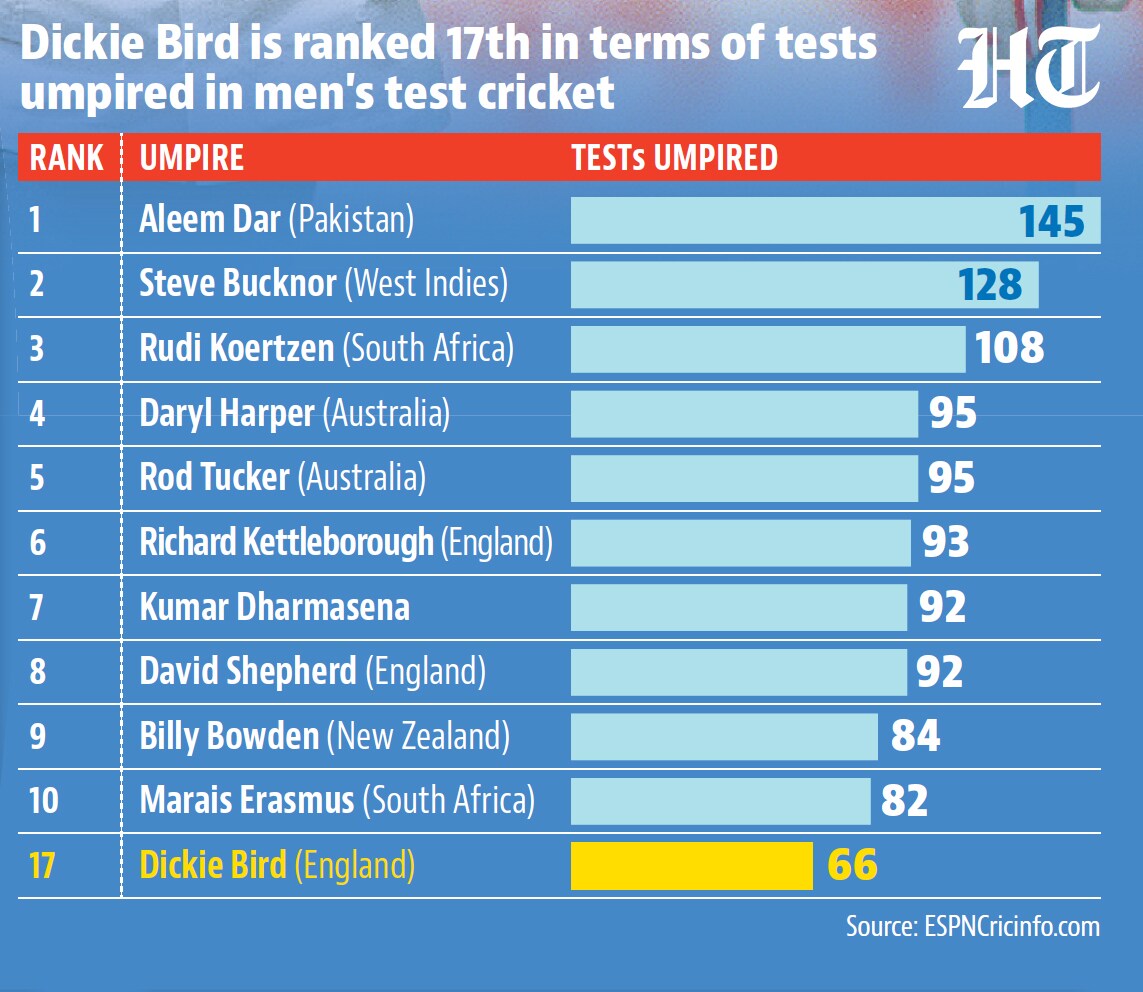
 Another eraHarold Dennis ‘Dickie’ Bird officiated in 66 test matches between 1973 and 1996. When he retired, he held the record for the maximum test matches umpired in men’s test cricket. The explosion in test cricket in the past three decades has meant that numerous others have gone past him in terms of test matches umpired—16 to be exact. Of these 16, five are current umpires. This list is also a testament to the modern, professional era of officiating. For example, the three centurions—Aleem Dar, Steve Bucknor, and Rudi Koertzen—all officiated predominantly after 1994, when one neutral umpire per test became the norm. Before this, umpires were appointed by home boards and rarely travelled, meaning even legendary and well-respected umpires stood in fewer matches. In this list, Bird is the only one among this list of 17 umpires who began his umpiring career in the 1970s.
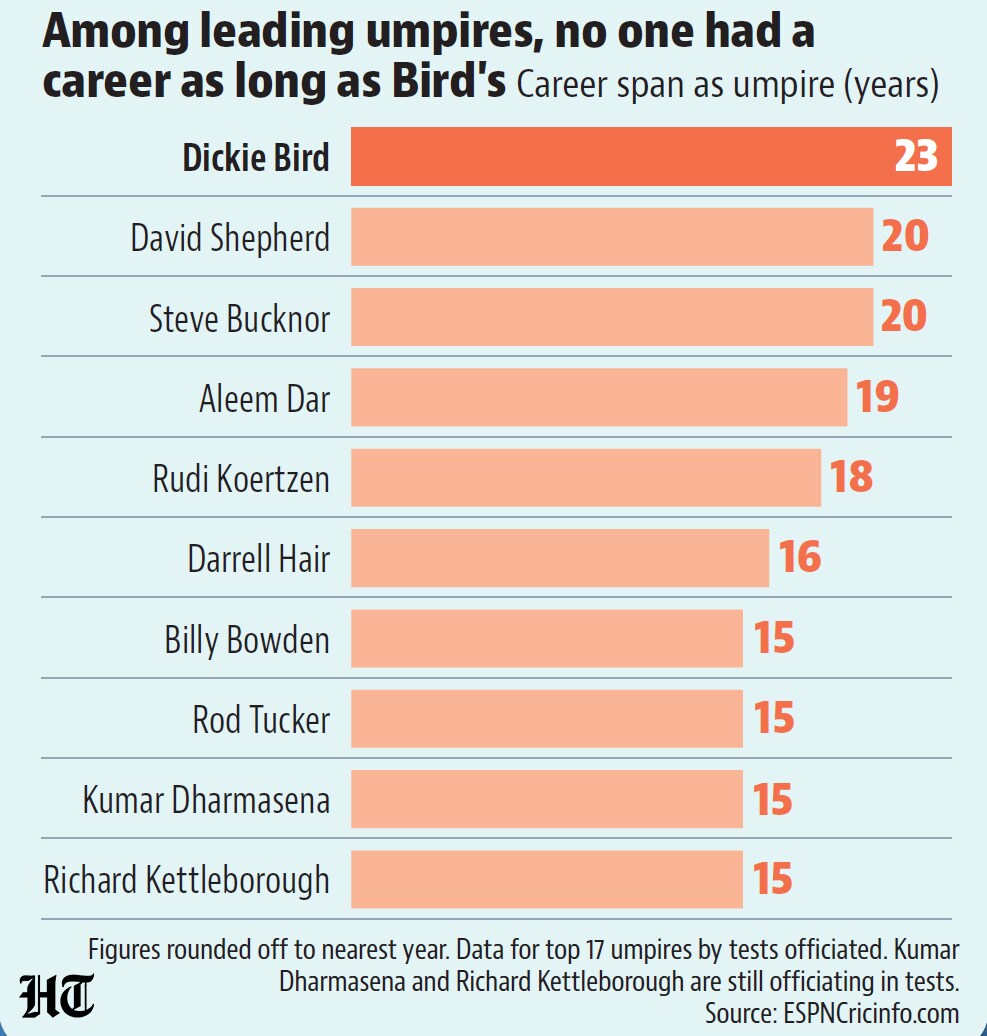
- Old guardBird had a career that was longer than anyone else from this list of 17 umpires, spanning 22 years and 350 days. The next best was his compatriot David Shepherd at 19 years and 306 days, whose career spanned from 1985 to 2005. The creation of the full-time, centrally-contracted ICC Elite Panel in 2002 globalized umpiring, allowing the best officials to have long, traveling careers. This move away from the old system of local appointments professionalized the role entirely. As a result, the sheer volume of matches officiated by the umpires on this list would have been inconceivable to their predecessors, highlighting a fundamental shift from a localized, part-time role to a global, professional career. Thus, for example, while Bird averaged 2.9 test matches per year, most of the 21st century leaders averaged 5-7 tests. Aleem Dar (145 tests) and Darryl Harper (95 tests) both averaged 7.3 tests per year.
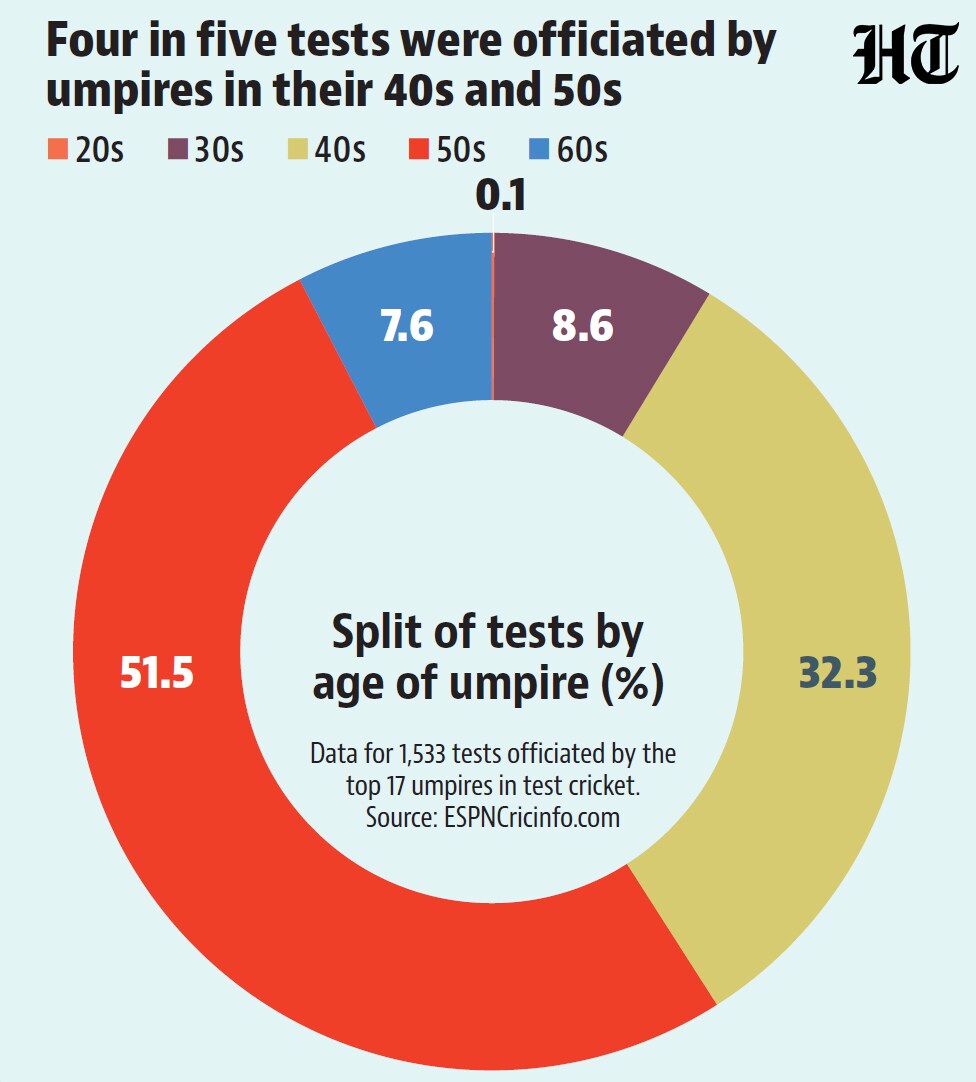
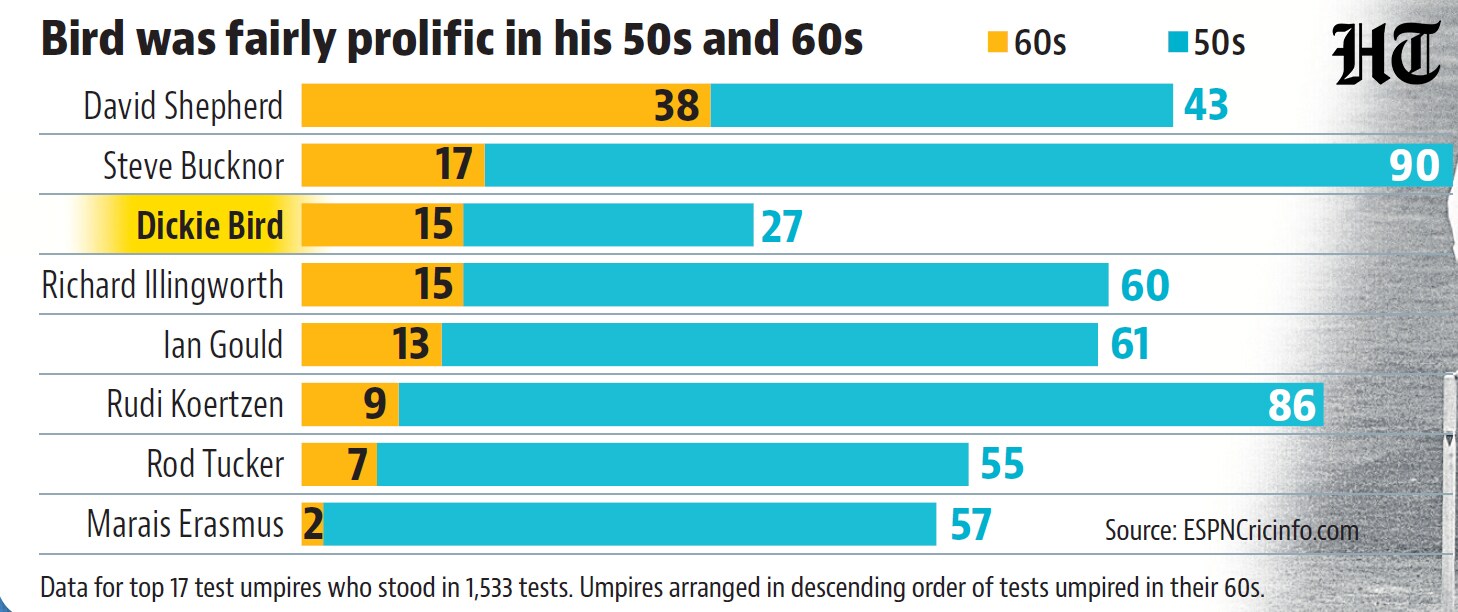
- Middle is the primeCollectively, these 17 umpires stood in 1,533 tests. There are many facets to them. For example, there are five umpires apiece from Australia and England, two from South Africa, and one piece from India (S Venkataraghavan), New Zealand, Pakistan, Sri Lanka and West Indies. As many as 10 of them started their umpiring career in the 21st century. The youngest was Simon Taufel, who was nearing 30 when he stood in his first test. The oldest was Ian Gould, who was 51 years and 3 months. Taufel is an exception, starting in his 20s and finishing in his early 40s, while standing in 74 tests. In general, the 40s and 50s have been the prolific years for umpires. Of the 1,533 tests officiated by these 17 umpires, as many as 1,284 tests, or about 84%, were done when they were in their 40s or 50s. Only about 8% of tests were officiated by them in their 60s.
- Before technologyDickie Bird was 63 years and 62 days when he officiated his last test match. Among this list of 17, only David Shepherd—of Nelson fame—finished older, at 64 years and 158 days. They are not the only ones to have officiated into their 60s. As many as 8 from this list of 17 extended their careers into their 60s. Where they stand out is the number of tests they officiated in their 60s: 38 for Shepherd and 15 for Bird. What’s remarkable about Bird is that he did much of this before the introduction of the third umpire in tests (1992), before neutral umpires (1992) and before the decision review system (2008). This means he officiated at the highest level relying solely on his judgment. The universal respect and admiration for the way he went about his craft cemented his legendary status in a more traditional period of cricket.

Unlock a world of Benefits with HT! From insightful newsletters to real-time news alerts and a personalized news feed – it's all here, just a click away! -Login Now!


