
 E-Paper



How air quality deteriorated in N India in the past week | Number Theory
Since December 12, when a western disturbance started approaching northern India, several cities in the region have experienced a deterioration in air quality
Updated on: Dec 16, 2025, 09:16:48 IST

 Prefer HTon Google
Share via


Copy link

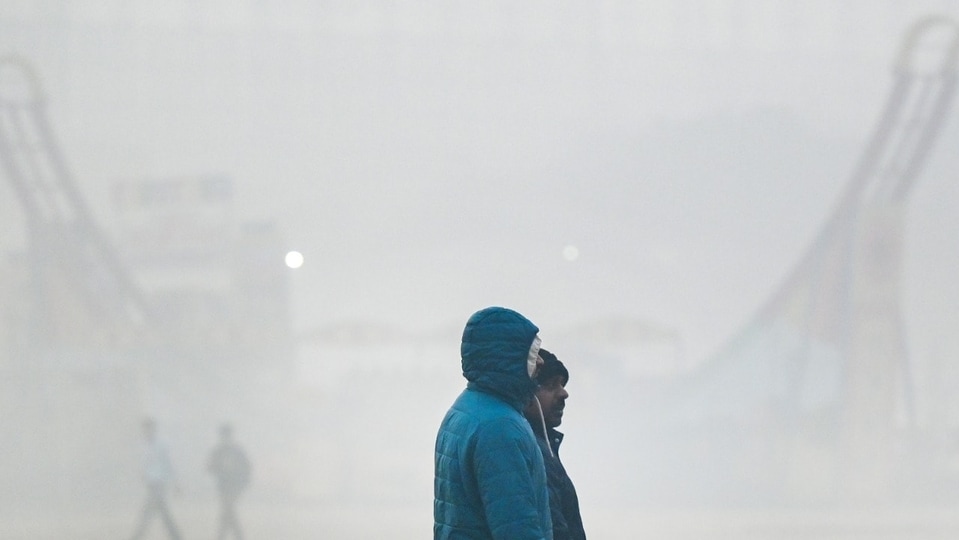
Delhi’s air quality index (AQI) was in the severe range – above 400 -- for the third consecutive day on Monday. This followed a reading of 461 on Sunday, which is classified in the severe plus sub-category of the severe range. However, a countrywide analysis shows that Delhi is not alone in experiencing a deterioration in air quality currently. Since December 12, when a western disturbance started approaching northern India, several cities in the region have experienced a deterioration in air quality. Here’s how this has played out:
 Air quality has worsened in northern cities since December 12That Delhi is not alone in experiencing increasing air pollution in the past week can be seen in the accompanying maps, which show the 24-hour average of AQI for three days: December 10, December 12, and December 14. They show that even Delhi was only in the poor range (an AQI of 201 to 300) on December 10. This changed on December 12, when several northern cities -- such as Delhi and some in western Uttar Pradesh and Haryana – experienced “very poor” air (an AQI of 301-400). To be sure, the air deteriorated even in cities further east in Uttar Pradesh and parts of the western half of Bihar. By December 14, there was deterioration close to the capital, as air pollution turned severe; although parts of northern Haryana and Bihar experienced some improvement. To be sure, these city-level trends must be read with the fact that air quality monitoring is not as robust in the rest of India as it is in Delhi, with most cities having air monitoring stations numbering in single digits compared to over 30 in Delhi.
- Cloudy weather and slow winds from a western disturbance contributed to this deteriorationThe deterioration in air quality in northern India is unlikely to have taken place because sources of air pollution increased substantially. For example, farm fires do not occur in December to add to existing pollution sources. This suggests that it is unfavourable weather that made the air more polluted. One such unfavourable weather condition was a feeble western disturbance. These are storms originating west of India, which are typically more active in winter months. While these storms were not strong enough to bring rain, they led to cloudy weather, which prevented the sun from warming up the atmosphere for the dispersion of pollutants. This can be seen in a decline in outgoing longwave radiation (OLR) in northern half of India between December 10 and December 14. OLR measures the amount of heat leaving the earth’s atmosphere. As cloudy weather traps the heat inside the atmosphere, it leads to a decline in OLR. Approaching western disturbances also decrease surface wind speeds in northern India. This was another factor that contributed to deteriorating air quality, because slow winds also allow accumulation of pollutants.
- And early hours of the day also saw fog adding to the pollutionThis was the third factor contributing to air pollution in north India since December 12. Fog has moved around parts of northern India since December 12, leading to some of the changes in air quality not directly explained by wind speed or cloudy weather. This can be seen from satellite derived fog images from ISRO. For example, northern Haryana, eastern Uttar Pradesh, and Bihar saw fog on December 12 morning, but not on December 14. This might explain why cities there saw air quality worsening on December 12 rather than on December 14.




Unlock a world of Benefits with HT! From insightful newsletters to real-time news alerts and a personalized news feed – it's all here, just a click away! -Login Now!


