
 E-Paper



How new technology helps catch art criminals
Even with technology, art forgery remains active and alive because so many pieces of data are missing.

 Prefer HTon Google


From mapping loot from orbit to decoding stroke pressure using machine learning, new technologies are revealing sophisticated forgeries and helping catch art criminals faster.
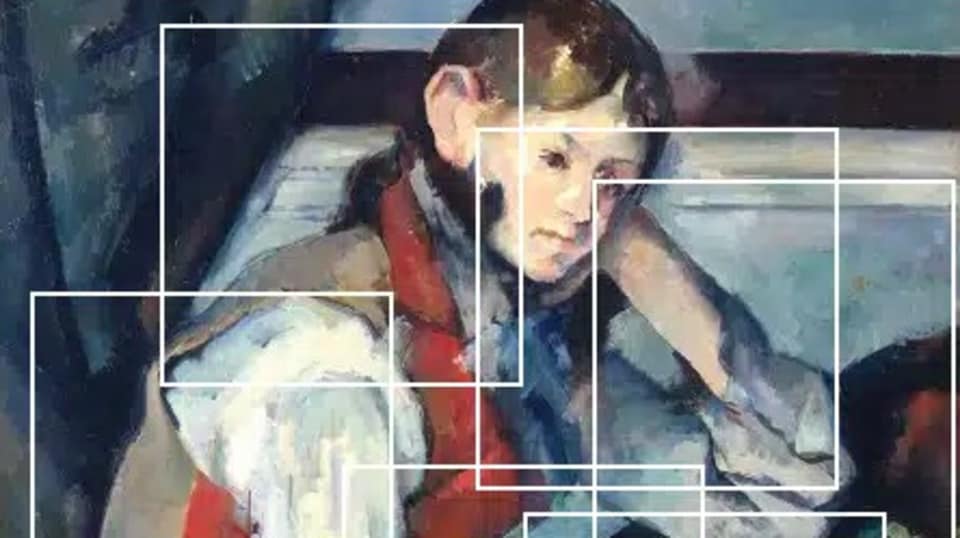
A few weeks ago, a group of researchers at the University of Bradford in the UK stunned the art world when the facial recognition algorithms they used proved that a famous sketch by portrait artist Hans Holbein, supposedly of Anne Boleyn, was not hers. Boleyn, the girl King Henry VIII of England wanted to marry in the 15th century, was one reason the country broke away from the Roman Catholic Church to become Protestant overnight.
The sketch by Holbein, which lies in England’s Royal Collection, has been accepted as Boleyn’s for two centuries thanks to an attribution made in the 18th century. The authors of the study used facial recognition software and an AI-driven methodology on Holbein’s working drawings and sketches to conclude that the wrong sketch was attributed.
Authenticating any artwork is an elaborate exercise in expertise, knowledge, and documentation. An expert art historian has deep knowledge of the artist, their times, their artistic style and brushstrokes, what kind of paint or pigment they would use, the canvas, the wood panels or the support it comes with. In addition, every artwork comes with documents to prove it is authentic. This is called provenance and tracks the chain of ownership of the work.
It needs a human expert, says Dr Anna Tunmers, research professor in Art History at University of Antwerp, Netherlands, who is also a principal investigator of the European Research Council for detection of forgeries.
“Art experts are like detectives. We combine different types of evidence including condition of the artwork, amount of variation in style and technique,” she says, adding that specialised digital tools help with these analyses and detecting forgeries, like doctors use surgical robots, tools and scans.
Invisible to the eye, but visible to AI
At the microscopic level, material science tools like hyperspectral imaging capture a material’s unique spectral ‘fingerprint’ pixel by pixel. Conservators identify pigments, papers, inks and ageing at a near-molecular level using pigment mapping. Non-invasive spectral cameras capture light signatures across hundreds of wavelengths to uncover hidden underdrawings, obscured signatures and modern overpainting without touching the canvas. Hand-held XRF devices can be used directly at excavation sites to authenticate metal and pigment compositions.
The second method is finding a unique ‘art fingerprint’ through high-resolution digital scans. Run an AI tool on it to detect and track micro-brushstrokes, texture and line dynamics unique to the artist’s visual language. Researchers at a university in Valenciennes, France, for example, have developed a high-precision scanning method to capture fine details of the paint layer’s textures and analyse the unique surface patterns using mathematical algorithms.
Similarly, Swiss startup Art Recognition uses minute brushstroke-analysis algorithms to detect forgery. “Our system compares the execution of a work – the brushwork, the texture, the individual hand – against a body of undisputed works by the same artist,” explains Carina Popvici, chief executive officer, Art Recognition.
Then there’s the facial recognition technique to analyse face structures in portraits or sketches, which professor Dr Hassan Ugail, director, Centre for Visual Computing and Intelligent Systems at the University of Bradford used to analyse the Boleyn sketch.
Facial recognition can track not only facial features but also bone geometry, proportional relationships, and even inherited facial features in photos and sketches. In the Boleyn case, Dr Ugail compared Holbein’s sketch to other authentic sketches of the Tudor family, including Boleyn’s daughter, Queen Elizabeth I. It was the bone structure and description that proved that the sketch is not Boleyn’s.
Better satellite imagery and remote sensing techniques are also helping track archaeological sites at a macro level, to flag looting. One open dataset, DAFA-LS, tracked 600+ Afghan archaeological sites from 2016-2023 to highlight 135 items that were looted during that period.
Researchers are now building multimodal authentication, combining all this information into one system where AI analyses visible-light images alongside X-rays, infrared, hyperspectral data, pigment chemistry, and even microscopic 3D information to build an understanding of the artwork.
Automating provenance and matching stolen art
The global art market reached an estimated $59.6 billion in 2025, according to UBS Global Art Market Report 2026, with 44% of sales in the USA. Though credible numbers of art theft and fraud are hard to find, FBI estimates it’s in the tens of billions of dollars annually while Geneva’s Fine Art Expert Institute said that about 50% of the works submitted to them for authentication were fake or misattributed.
Even with technology, art forgery remains active and alive because so many pieces of data are missing. Take the example of what’s called the Nazi lot. During the Second World War, the Nazi Party seized and forced the sale of an estimated 650,000 artworks from private and public collections across Europe, according to data collected by Center of Art Law, a New York-based non-profit. These plundered pieces make up as much as 20% of all art sold worldwide today. There’s no single source of information for these records, which are spread across databases that use different languages, spellings and filing systems.
A researcher at Santa Clara University in California has created a conversational AI tool that explores one of the largest dedicated databases of Nazi-looted art, the Einsatzstab Reichsleiter Rosenberg Project, which covers some 40,000 artworks that Nazis once processed through the Jeu de Paume Museum in Paris.
Conversational AI tools like this can easily cross-reference catalogue archives, sales histories and law enforcement registries to surface hidden provenance gaps or identify stolen art before money is exchanged. Museums like MoMA, LACMA, Centre Pompidou are now anchoring provenance to blockchain ledgers to create tamper-proof records of ownership.
Interpol’s free ID-Art app is another good combination of tech with existing databases. The app uses image recognition and allows police at a border or anyone to upload a photo of a piece of art and instantly match it against its database of 57,000 looted art and antiquities. It was one of these databases that helped Christopher A. Marinello, CEO and founder of Art Recovery International and a lawyer who helps recover stolen art, recover an artwork for his client. His researcher used a popular AI service to locate a low-value painting that an art dealer had sold. “Further inquiries led to other stolen paintings that had gone through the same dealer, an AI-assisted recovery of over $15 million worth of stolen artwork,” he says.
Will technology help or harm art?
Technology can be a useful tool, but you can’t rely on it completely. “AI is not a magic authenticity machine. Its value is that it can detect patterns that are extremely difficult for the human eye to quantify and make that evidence reproducible,” he says.
For Marinello, technology is a double-edged sword. He sees illicit actors using AI to create false documentation and provenance, and to get easy access to internal museum and art dealer records. Earlier, forgers would have to steal letterheads to indicate authenticity of an artwork, now they recreate it using AI. Other documents like certificate of valuation, insurance of an artwork, receipts or fake ledger numbers or forged Nazi stamps are also common.
“Tech can help locate stolen and looted art but criminals can also use it to locate valuable artworks in smaller museums that are vulnerable to smash-and-grab-type heists,” Marinella explains, adding that he hopes law enforcement will use advanced technologies like this to stay one step ahead of crime.


