E-Paper



Number Theory: Bangladesh shows the limits of export led growth for large countries
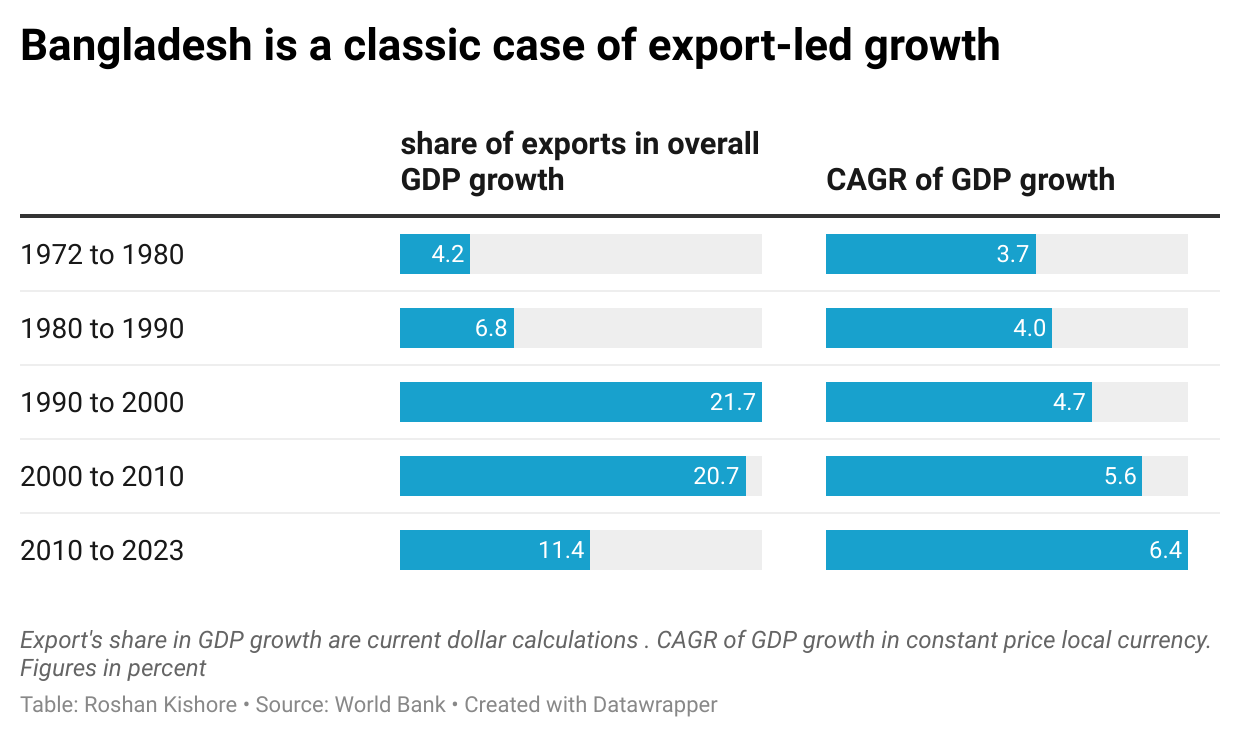
Bangladesh has seen a rise in compound annual growth rate of its gross domestic product in every decade since it came into being in 1971.

 Prefer HTon Google


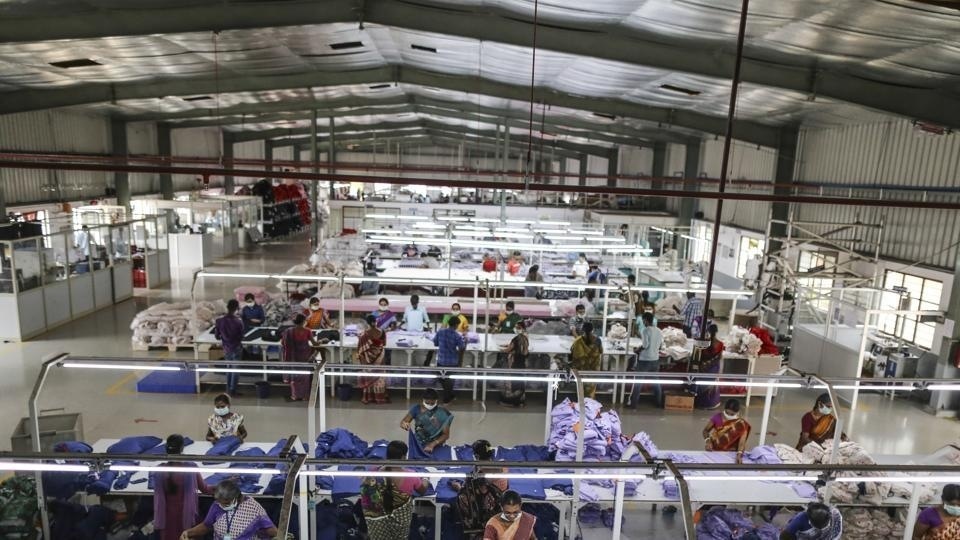
Bangladesh is what a lot of countries in the global south aspire to become: a global leader in labour intensive exports. Its garment exports are the second largest in the world after China. But almost everything else about the country is worrying. It has massive economic inequality, volatile politics, a deeply divided society and what looks like prolonged civic unrest. The ongoing protests in the country which have seen around 200 deaths and thousands of people arrested, are yet another reminder of the fact that countries with large populations will do well to guard against seeing just export-led development as a silver bullet for all of their problems. An unequal growth which is creating a growing mismatch between aspirations and reality without boosting government finances in a democracy which is increasingly turning authoritarian is the recipe for a perfect storm. Its wider ramifications notwithstanding, Bangladesh should serve as a good reminder to development economists that exports alone cannot be a silver bullet for countries with large populations. Here are three charts which explain this argument in detail.
 Bangladesh is a classic case of export-led growthNumbers from World Bank’s World Development Indicators speak for themselves. Bangladesh has seen a rise in compound annual growth rate (CAGR) of its GDP in every decade since it came into being in 1971. This trend fits perfectly well with the tailwinds generated from growth from the country’s exports. In current dollar terms, merchandise exports contributed to more than one-fifth of the overall growth in Bangladesh’s GDP in the 2000s and 2010s, a massive jump compared to what this number was in the 1980s and 1990s. Bangladesh’s export growth story is just garments. Data from The Bangladesh Garment Manufacturers and Exporters Association (BGMEA) – an association of garment exporters in the country – shows that ready made garments had a share of just 4% in Bangladesh’s exports in 1983-84. This number increased to 85% by 2022-23.
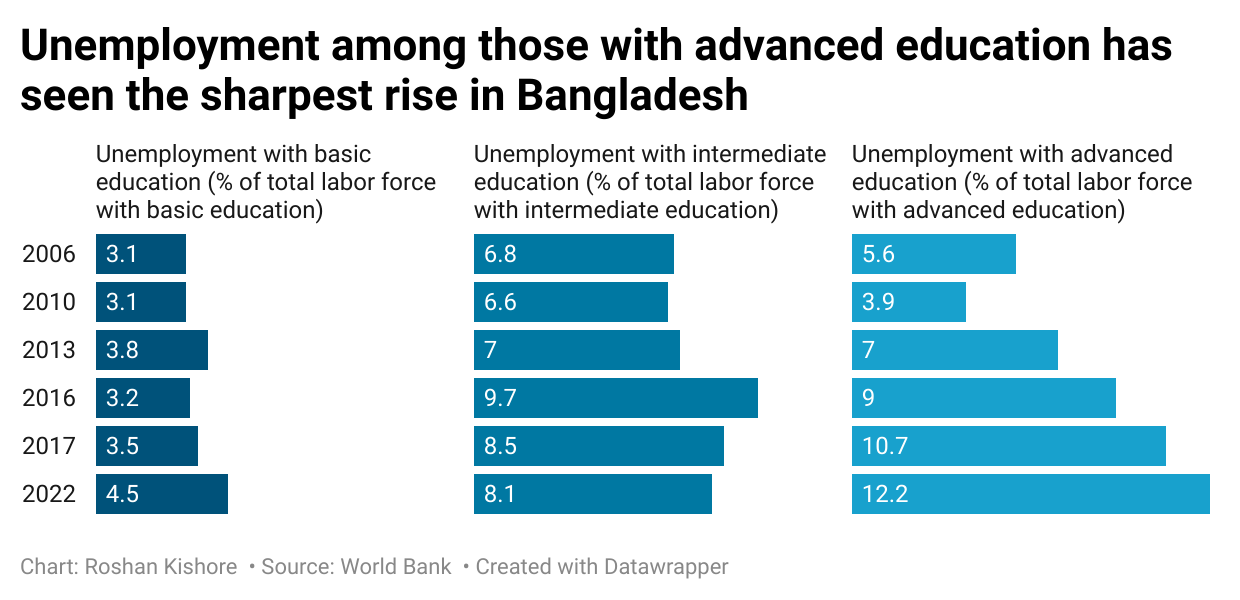
- But the structural transformation and employment generation story in Bangladesh is not as impressiveThis appears to be the case whichever way one looks at it. Let us look at the most important question of shifting jobs from agriculture to non-agriculture sectors. Agriculture had a share of 27% and 64% in GDP and employment in 1991 in Bangladesh, the earliest period for which sector-wise employment data is available in the World Bank database. This number has come down to 11% and 38% by 2021, the latest period for which these numbers are available. This means that close to 40% of the workers actually have a very small claim on Bangladesh’s economic output. To be sure, a bigger problem for Bangladesh in the recent period could be a mismatch between economic aspirations which the growth, even if unequal, has generated and the failure to meet these aspirations. This can be seen in a sharply growing unemployment rate among workers with advanced education even though these numbers are relatively flat for less educated workers. These numbers need to be read with a growing discontent in the country over suppressed earnings in the garment sector. A 2023 Financial Times story had reported how workers are blaming exporters for low incomes while the latter are blaming their buyers for not paying “ethical prices”. It is not very difficult to understand why an already agitated educated cohort of unemployed workers exploded when the government announced large-scale reservations for government jobs, a move seen as favouring supporters of the ruling party.
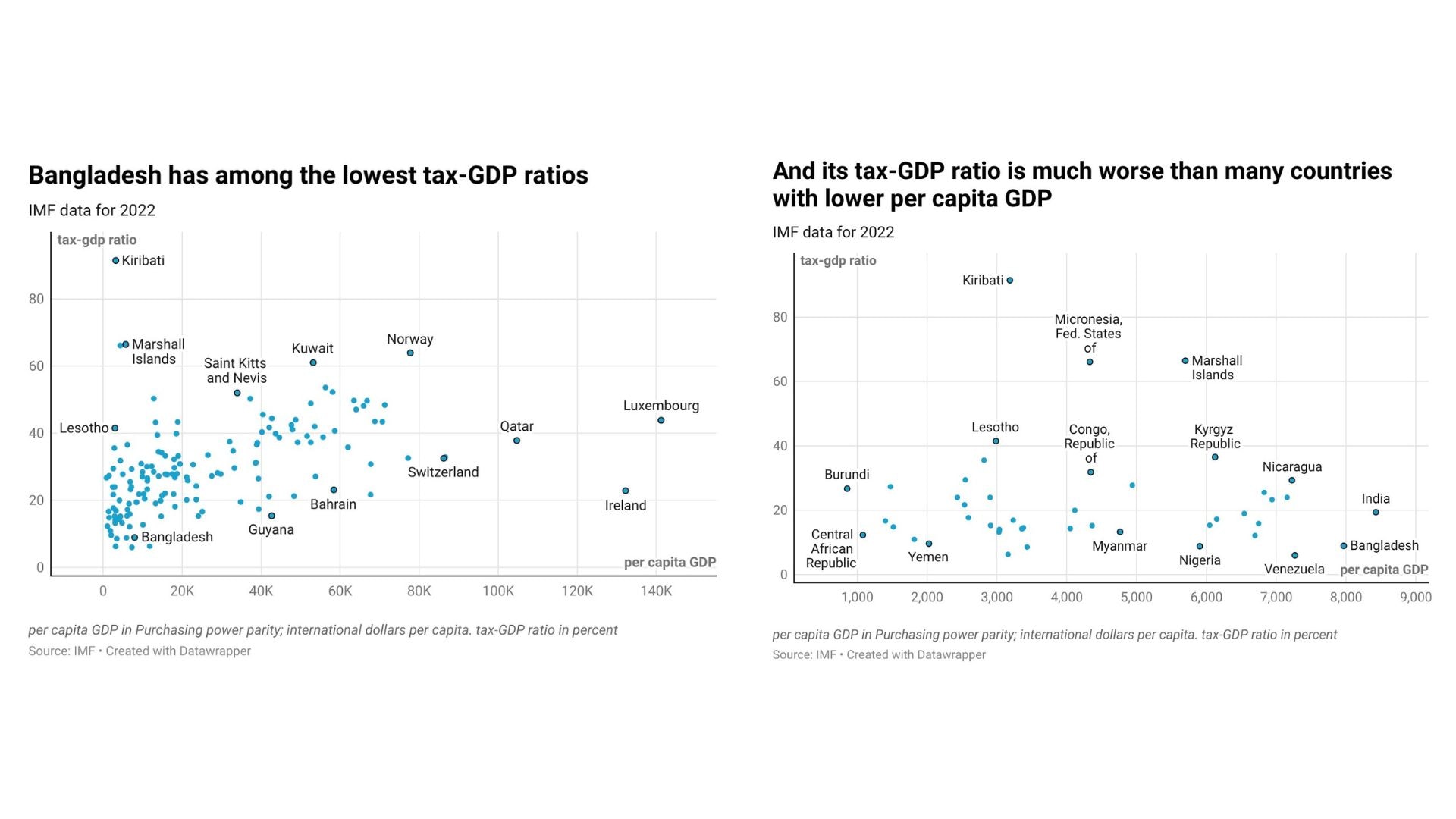
- And Bangladesh’s otherwise impressive growth has done very little for the government’s own financesThis perhaps is the most damning indictment of the nature of growth in Bangladesh. World Bank data shows that Bangladesh’s tax-GDP ratio barely increased in the 2000s and has fallen since . In fact, a comparison of Bangladesh’s tax-GDP ratio with its per capita income levels – direct taxes are largely a function of per capita incomes – using IMF data show that it punches much below its economic weight in revenue mobilization. Not only is its tax-GDP ratio worse than countries with higher per capita incomes, it is lower than many with much lower per capita incomes too. Bangladesh’s poor performance in collecting taxes means that there is either widespread tax evasion in the economy or income is extremely concentrated. What is more likely is a mix of both . Its most tangible effect as far as the contract between the government and the people is concerned is that it cannot spend enough on welfare without jeopardizing macroeconomic stability.