
 E-Paper



Number Theory: The landscape of 866,000 Waqf properties
Waqf is an act by an individual under Islamic religious beliefs to transfer an acquired or inherited property for the purpose of charity

 Prefer HTon Google


On Thursday, the BJP-led Union government introduced in the Lok Sabha The Waqf (Amendment) Bill, 2024, to amend key provisions in the Waqf Act, 1995. Waqf is an act by an individual under Islamic religious beliefs to transfer an acquired or inherited property for the purpose of charity. Each state has a Waqf board, set up under the Waqf Act, to administer these properties. Property disputes are settled by the Waqf tribunal of the respective state.
The Bill, if it becomes law, could alter this compact in certain situations. It could increase contestations of property status and hand governments (both central and state) more powers. Crucially, the power to adjudicate a dispute between the government and Waqf boards will shift from the Waqf Tribunal to District Magistrates, an appointee of the state.
Large landholding
The property that will come under the sweep of the proposed legislation is huge, both in terms of scale and value. A 2014 parliamentary standing committee report estimated that 35 Waqf boards collectively owned about 600,000 acres, with a then-estimated market value of ₹1.2 lakh crore.
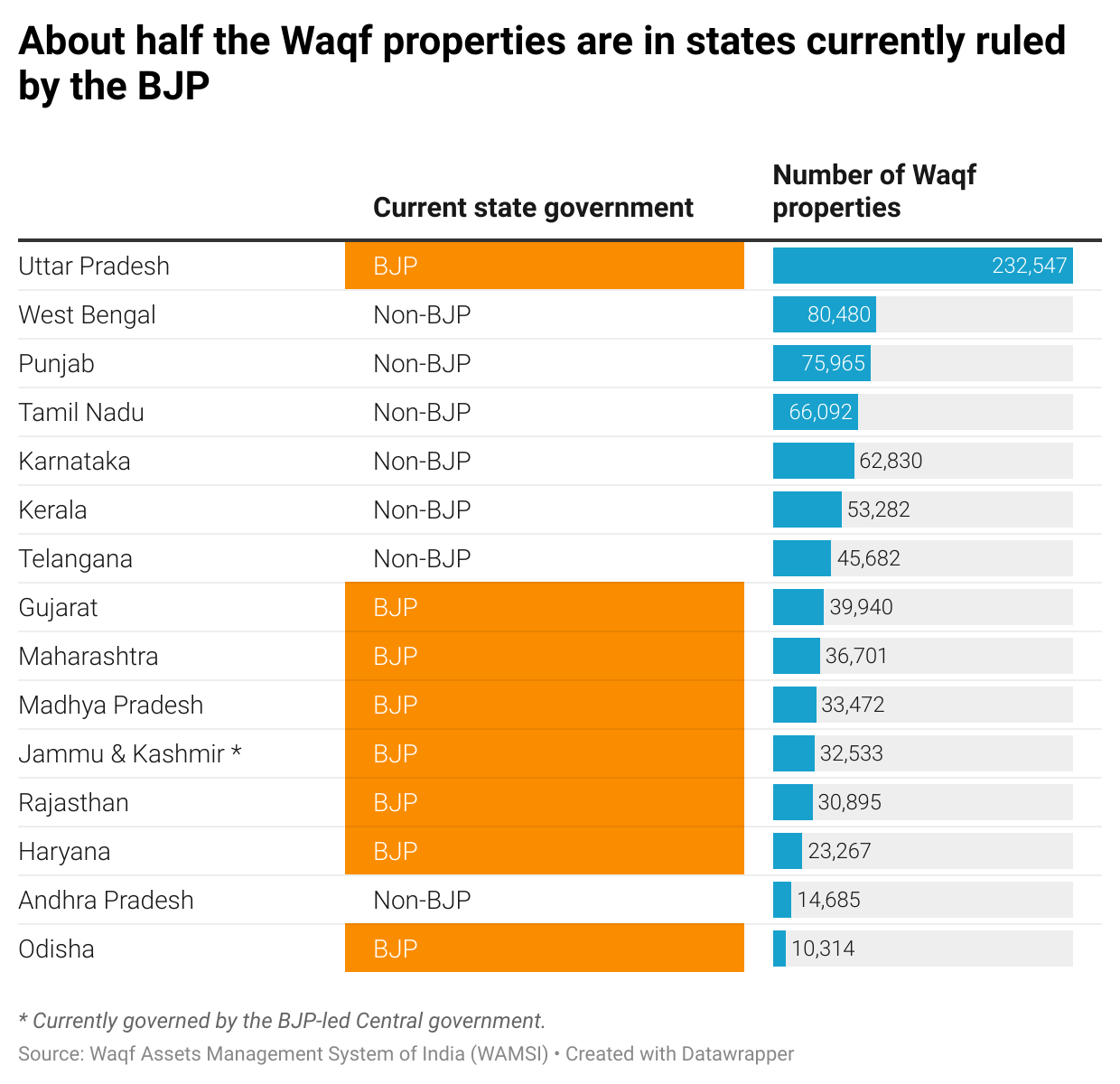
In 2008, the Congress-led UPA government started collecting data of all Waqf properties. It set up the Waqf Assets Management System of India (WAMSI), an online data portal for such properties. As of August 8, WAMSI listed about 866,000 immovable properties. About a quarter of these properties were in Uttar Pradesh alone, where the BJP is currently in power. The top 15 states account for 97% of these properties. The BJP is in power in eight of these states, which account for about half of all Waqf properties.
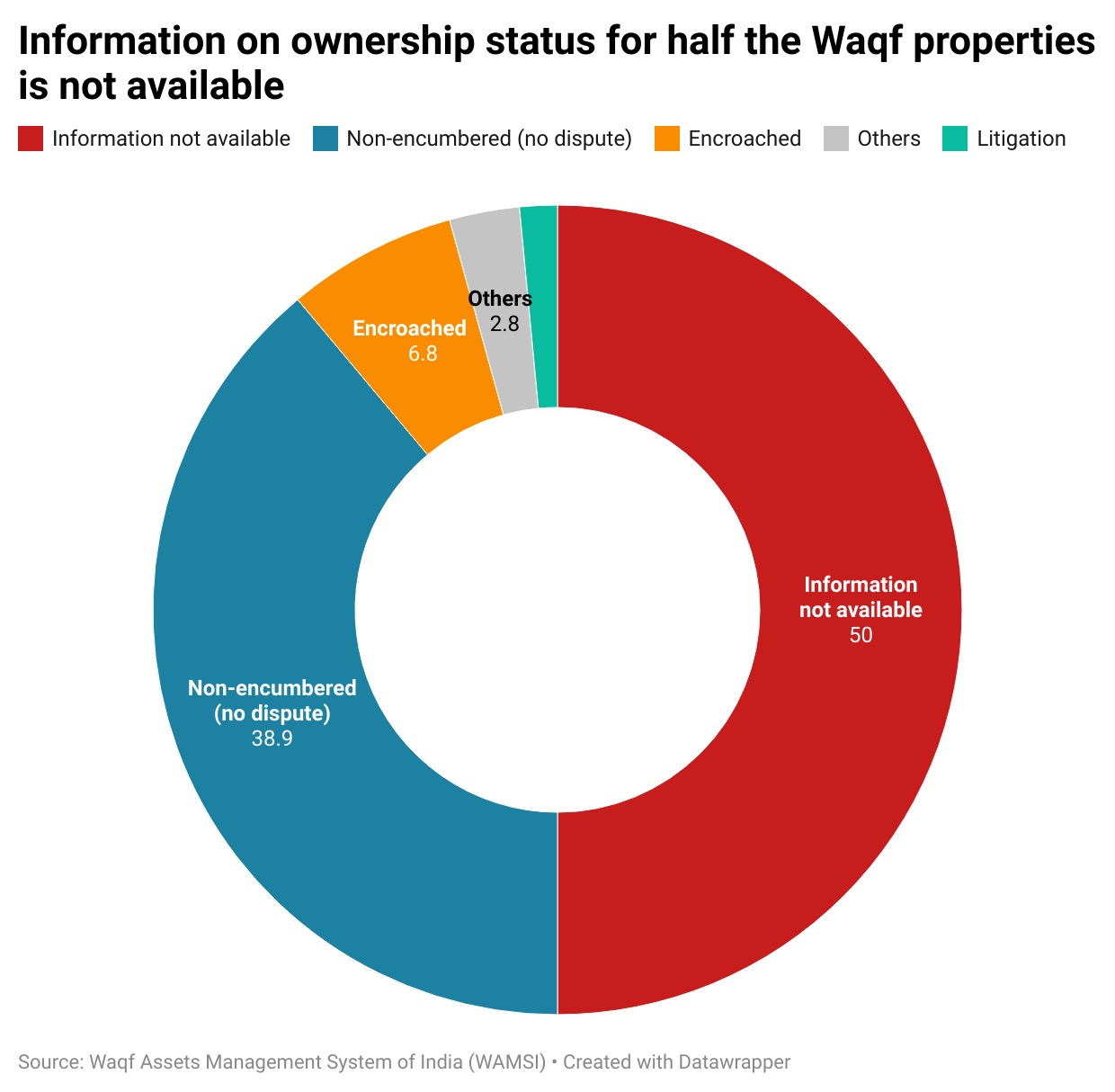
 Potential for disputeAccording to WAMSI, only 39% of all immovable properties are without any dispute. For the rest, there is either inadequate information or they are under dispute, and this is where the proposed legislation can influence outcomes. Nearly 9% of properties are either encroached or under litigation, with 32,000 cases filed as on July 2024. Last year, for example, the Union ministry of housing and urban affairs took over 123 properties of the Delhi Waqf Board, including the Jama Masjid located opposite Parliament House (not to be confused with the one in Old Delhi). The case is currently in the Delhi high court. Under the proposed law, properties declared as Waqf orally will not be accepted. The key provision is the insertion of statute of limitations. Waqf boards cannot claim properties that have been in possession of another party for 12 years. In case of a dispute with Waqf boards, the state, through the district magistrate, will have adjudication powers.
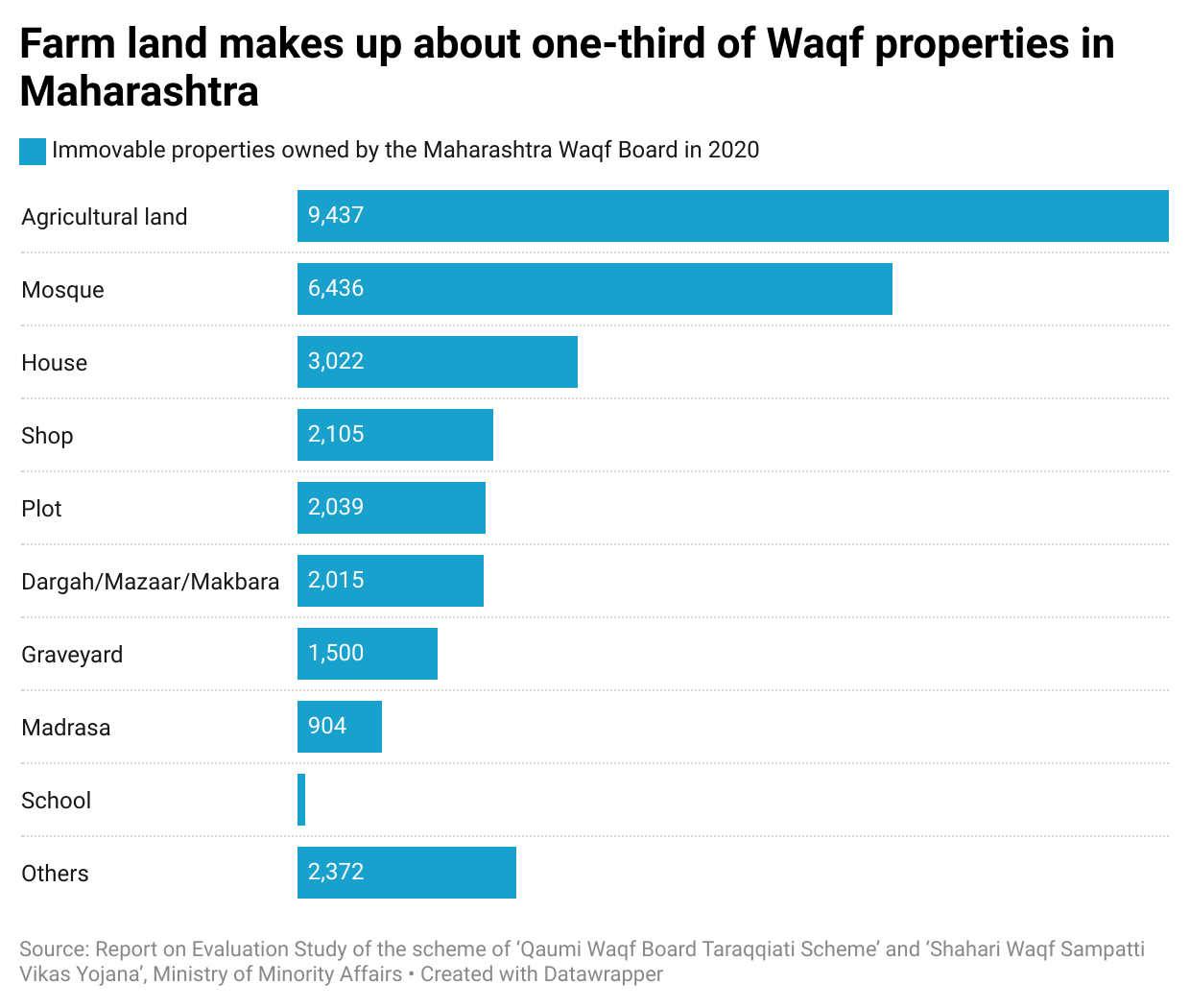
- Diverse property typesMosques are just one of the many forms of Waqf properties. Previously, the Union ministry of minority affairs had engaged the Indian Institute of Technology, Delhi to undertake an evaluation study of two government schemes related to Waqf properties. The report, submitted in 2021, detailed properties owned by Waqf boards in 11 states. It shows diverse asset types. For example, of the 30,000 immovable Waqf properties in Maharashtra, nearly a third were agricultural land. Mosques,dargahs and graveyards accounted for another third.
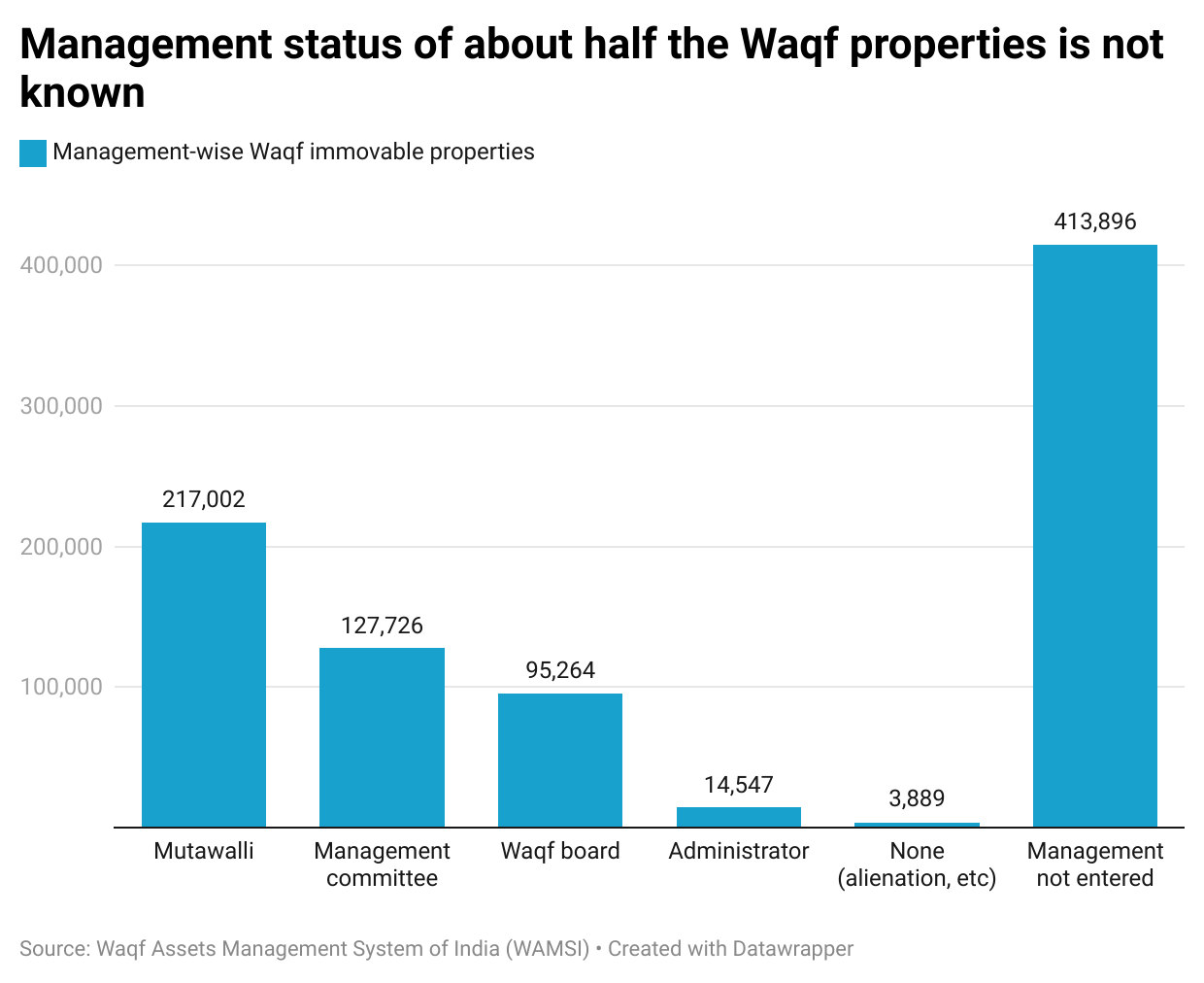
- Property managementAs of July 2024, according to WAMSI, only 8,419 Waqf properties — less than 1% — had filed an income return in 2020-21. They showed a total income of ₹95 crore. Waqf properties can be managed by different modes. The mode most used is “mutawalli” (trusted friend), or a manager who manages the property. Waqf boards, administrator and management committee are other modes being used to manage Waqf properties. Importantly, on the WAMSI portal, nearly half the Waqf properties don’t have any information on who is managing them.
- This is another area where the proposed law can make a difference in determining status of the property. For now, under attack from opposition parties and circumspection of its own allies -- -- over provisions about the constitution of Waqf boards, among other issues -- the BJP-led government has sent the proposed legislation to a joint parliamentary committee. What happens to it will be keenly watched.
(www.howindialives.com is a database and search engine for public data)


