
 E-Paper



Number Theory: Three charts that put Budget 2025-26 in perspective
.
Published on: Jan 30, 2025, 08:33:42 IST

 Prefer HTon Google
Share via


Copy link

Economic policy talk reaches a crescendo around the Union Budget in India. Is this justified? How consequential is the budget as far as the overall economy is concerned? Has its importance been rising or falling? What is more important in the budget: its overall spending or the composition of spending? These are questions worth engaging with as we prepare for the 2025-26 Budget.
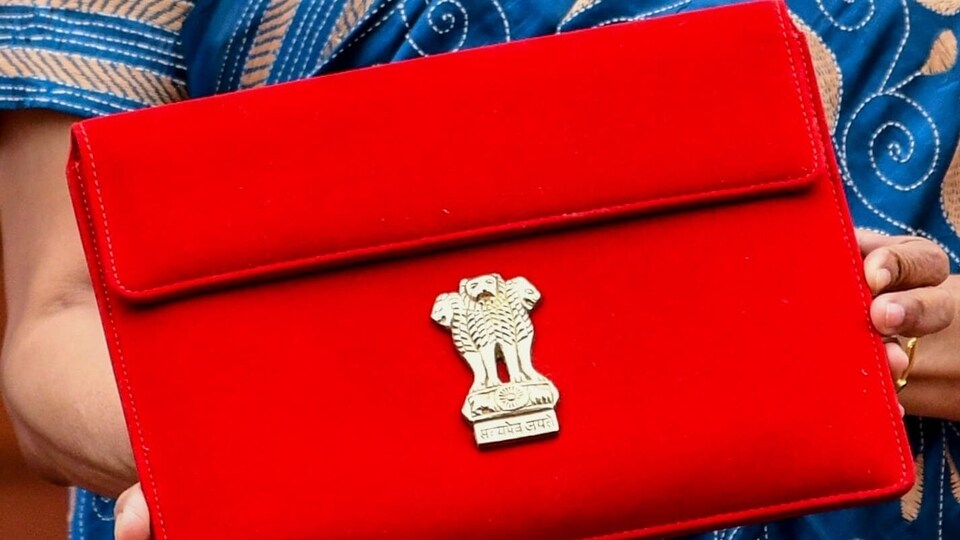
Three charts that put Budget 2025-26 in perspective
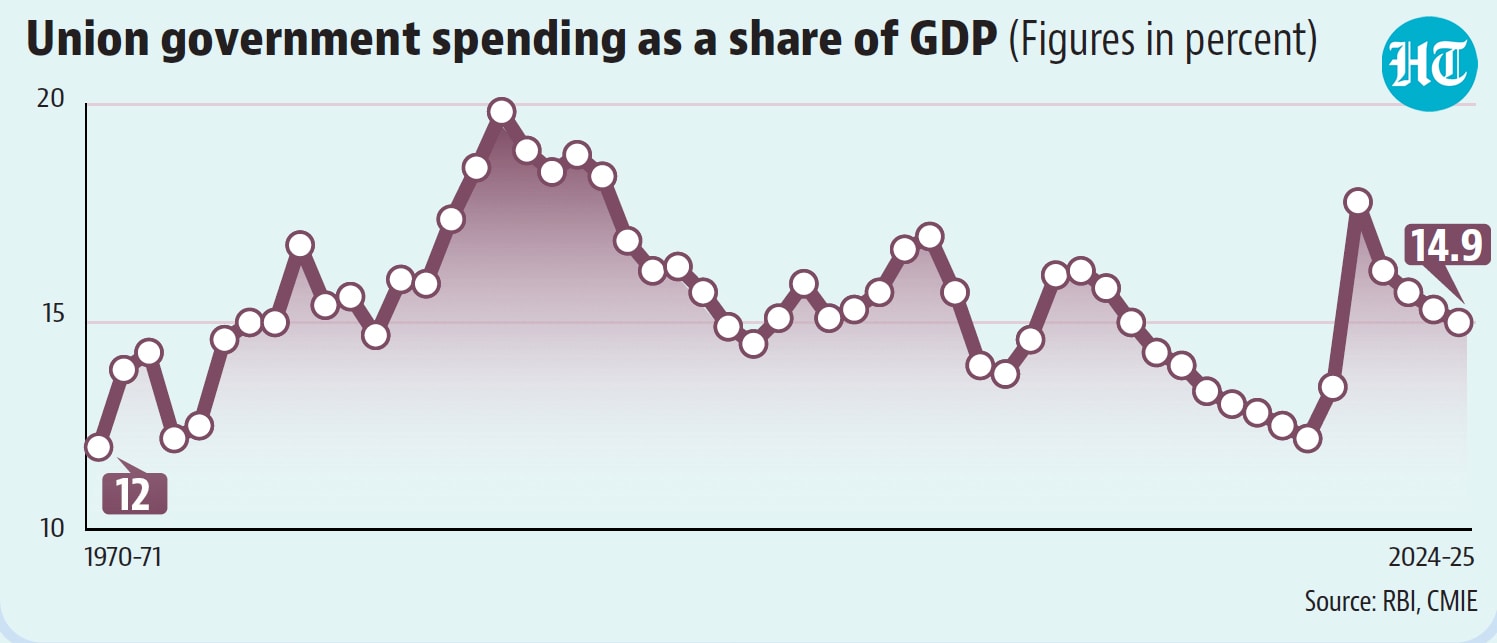
 How big is the Budget vis-à-vis the economy as a whole?The budget is essentially an account of the union government’s spending in a fiscal year. Its importance, or lack of it, therefore, depends on the share of budgetary spending in the economy. The 2024-25 Budget put union government’s total expenditure at ₹48 lakh crore in nominal terms. This is almost 15% of the country’s projected GDP of ₹324 lakh crore in 2024-25.
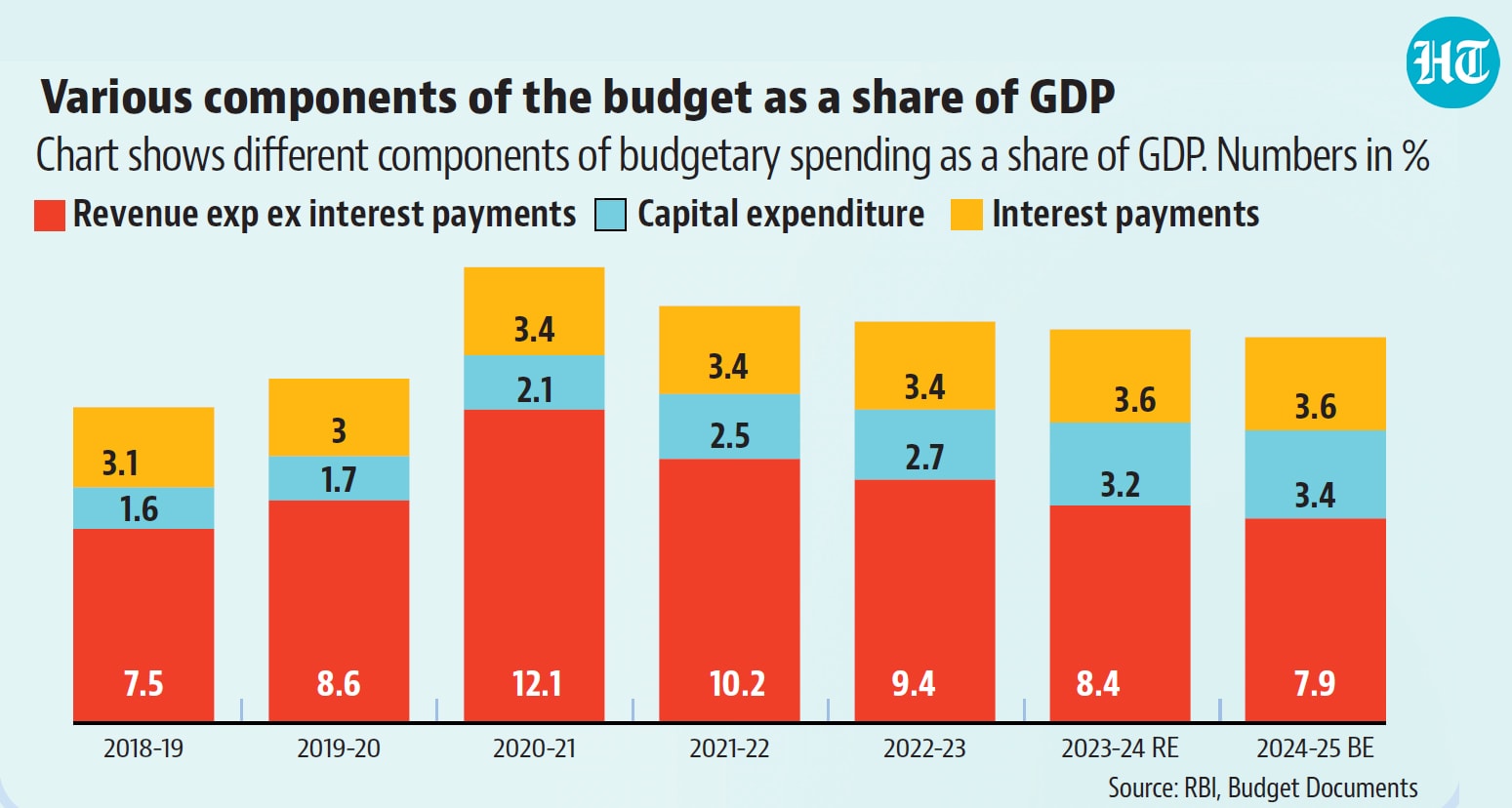
- What has been the composition of the budgetary spending recently?The government spends money on various heads. This means that the composition of the budget is as important as the magnitude of the total spending. At a broad level, one can classify budgetary spending into three heads: interest payments, revenue spending excluding interest payments, and capital spending. Interest payments are just the cost of servicing existing debt of the government and they are a given for any budget. Capital spending is investment and has the dual benefit of not just boosting present demand but also future growth. Revenue spending other than interest payments is used to take care of recurring costs such as salaries and pensions, essential services, and discretionary spending such as subsidies and other government welfare programmes. A comparison of these three heads in the recent past shows that the importance of revenue spending excluding interest payments has fallen in the last couple of years while they other two have actually increased. Further fiscal consolidation, which is what the forthcoming budget is expected to do, will likely entail a further squeeze in non-interest revenue spending.
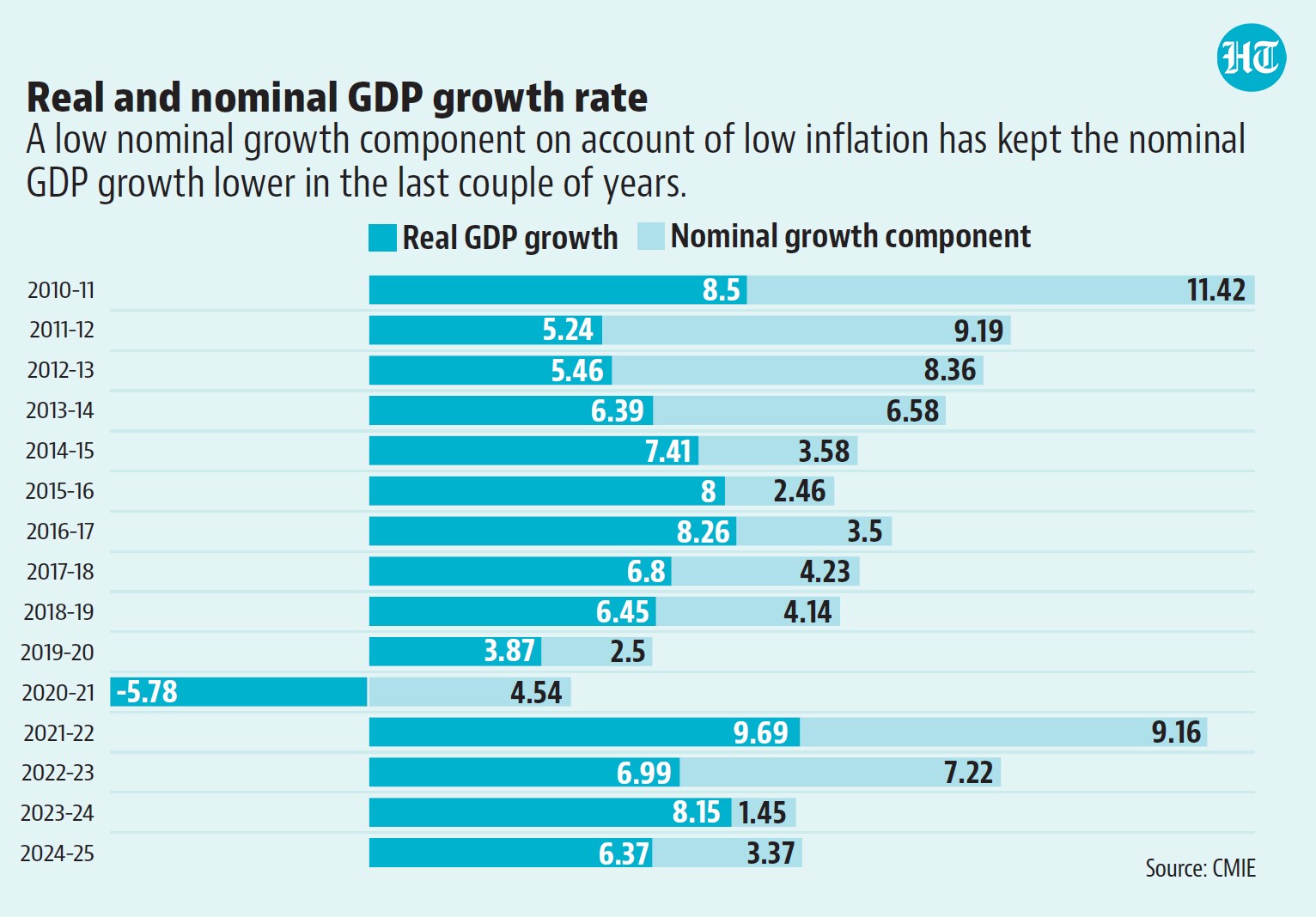
- The irony of low inflation putting a squeeze on budgetary spendingInflation, under normal circumstances, is seen as a bane for policy making in the Indian economy. However, this dynamic plays out slightly differently in case of the budget. Here is why. The budget, unlike the GDP, deals with nominal and not real numbers (nominal growth includes inflation; real does not). Revenues, which are the most important source of government incomes are basically a fraction of nominal incomes, the aggregate of which is the GDP. This means that the budget has more to spend if nominal GDP growth rate increases for same levels of real GDP growth. This has been a problem recently with nominal GDP growth staying below 10% in both 2023-24 and 2024-25 (according to the first advanced estimates). This number was higher in earlier years with lower real GDP growth rates. A budgetary constraint because of subdued nominal growth is a bitter-sweet situation for the government because it generates fiscal headwinds while promising political and economic stability. It will be interesting to see what is the assumed nominal growth rate in the next budget.


Unlock a world of Benefits with HT! From insightful newsletters to real-time news alerts and a personalized news feed – it's all here, just a click away! -Login Now!


