E-Paper



Number Theory: Three things to watch out for in today's Budget
.

 Prefer HTon Google


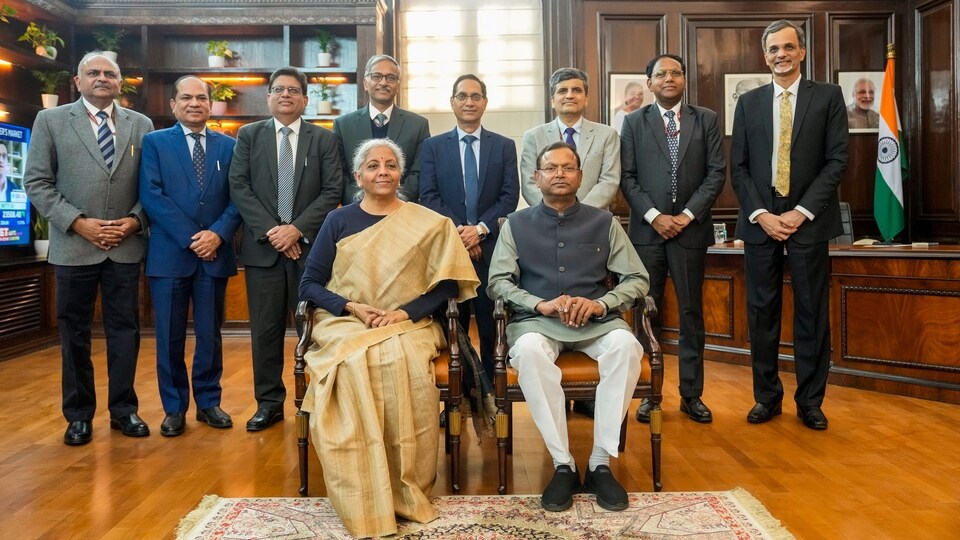
Finance Minister Nirmala Sitharaman will present her eighth budget today. This is the second full budget of the third Narendra Modi government and comes against the backdrop of the Indian economy losing growth momentum. According to the first advance estimates released on January 7, GDP growth in 2024-25 is expected to come down to 6.4% in 2024-25, from 8.2% in 2023-24. The 2023-24 Economic Survey, which was released on Friday, has estimated a GDP growth of 6.3%-6.8% in 2025-26. What can the Budget do to give a boost to the economy? To be sure, it will also have to do justice to the imperative of fiscal consolidation and not doing anything too erratic given the volatile external environment. Here are four numbers which will be worth watching out for in the 2025-26 Budget.
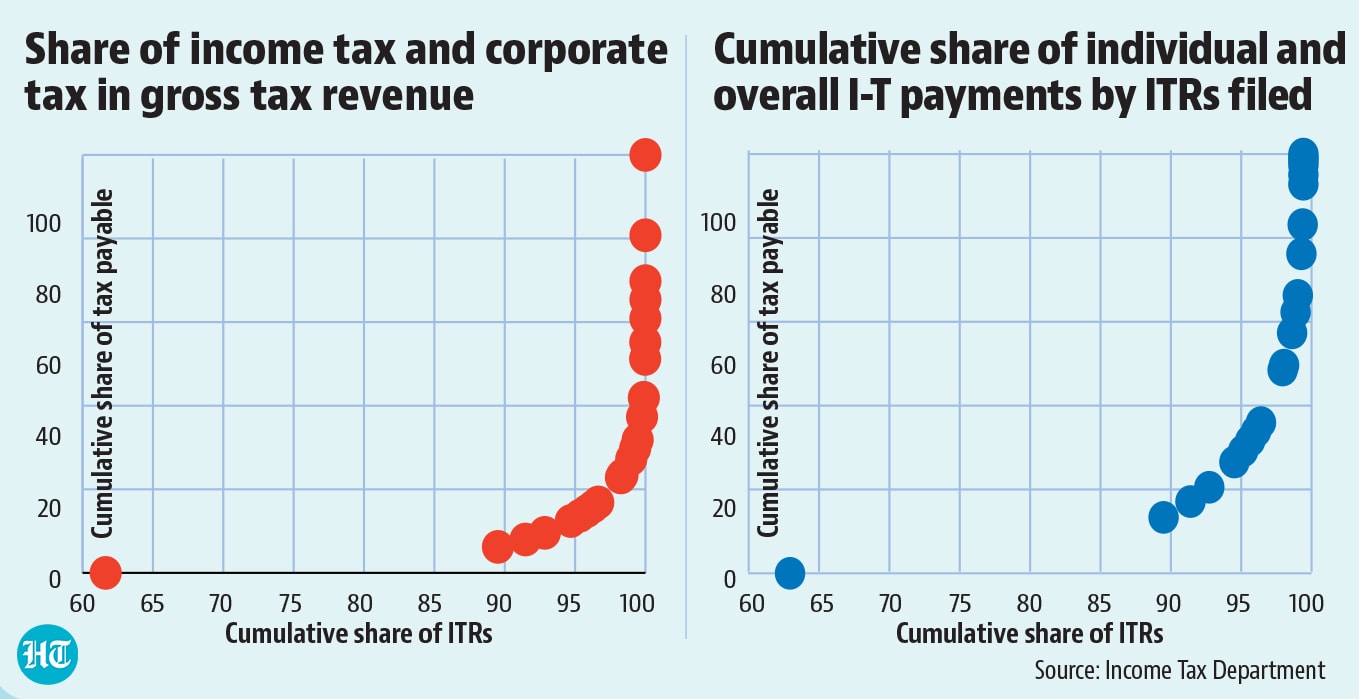
 Is a direct tax relief on the cards?This has been a long-standing demand from the so-called middle classes. Will the government announce a change in income tax slabs giving relief to the tax-payers? Is there going to be another round of corporate tax cuts to give a boost to investment in the economy? Will income tax collections continue to exceed corporate taxes for the second consecutive year? Frankly speaking, the government does not have a lot of leeway on any of these matters as its effective tax base is extremely skewed. Data released by the Income Tax Department shows that a miniscule number of tax payers account for a bulk of the government’s direct tax revenues. But the skew also means that the government could potentially give a relief to low-income tax payers without much impact on the overall revenue collection. Interestingly, the Prime Minister’s comments ahead of the Parliament session on Friday seem to suggest some sort of tax relief may be in the offing.
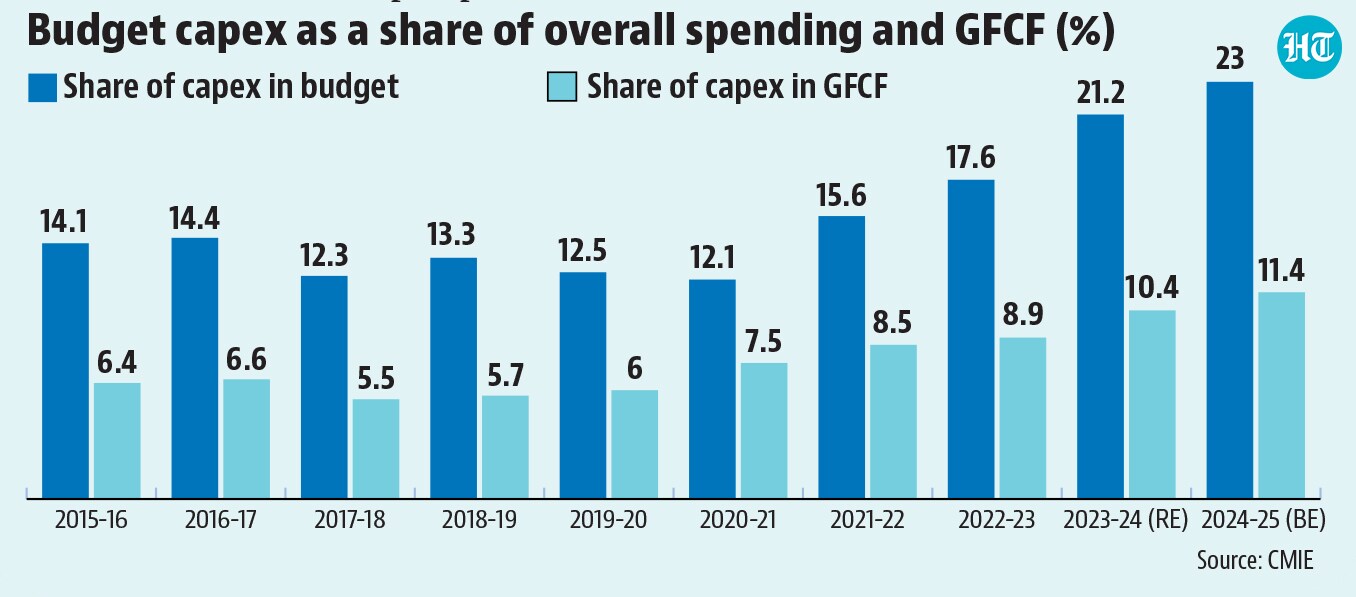
- Has capital spending already peaked?This is another interesting question. The Union Budget has been prioritising capital spending in the aftermath of the pandemic with an eye on boosting infrastructure and overall growth. The share of capital spending in the budget has increased from 12.1% in 2020-21 to 23% in 2024-25. This number has increased significantly even as a share of Gross Fixed Capital Formation (GFCF) which measures the investment spending component of the GDP. To be sure, the pace of rise in share of capex in the budget has moderated in the past couple of years and it remains to be seen whether the capex target of ₹11.11 lakh crore for 2024-25 is actually met in the Revised Estimates. A flattening of capex share in budgetary spending, while it will be higher than what it has been in the recent past, would mean that the private sector will have to do the heavy lifting to boost growth in the economy. This would also bring things such as monetary easing into greater play as far as overall economic prospects are concerned.
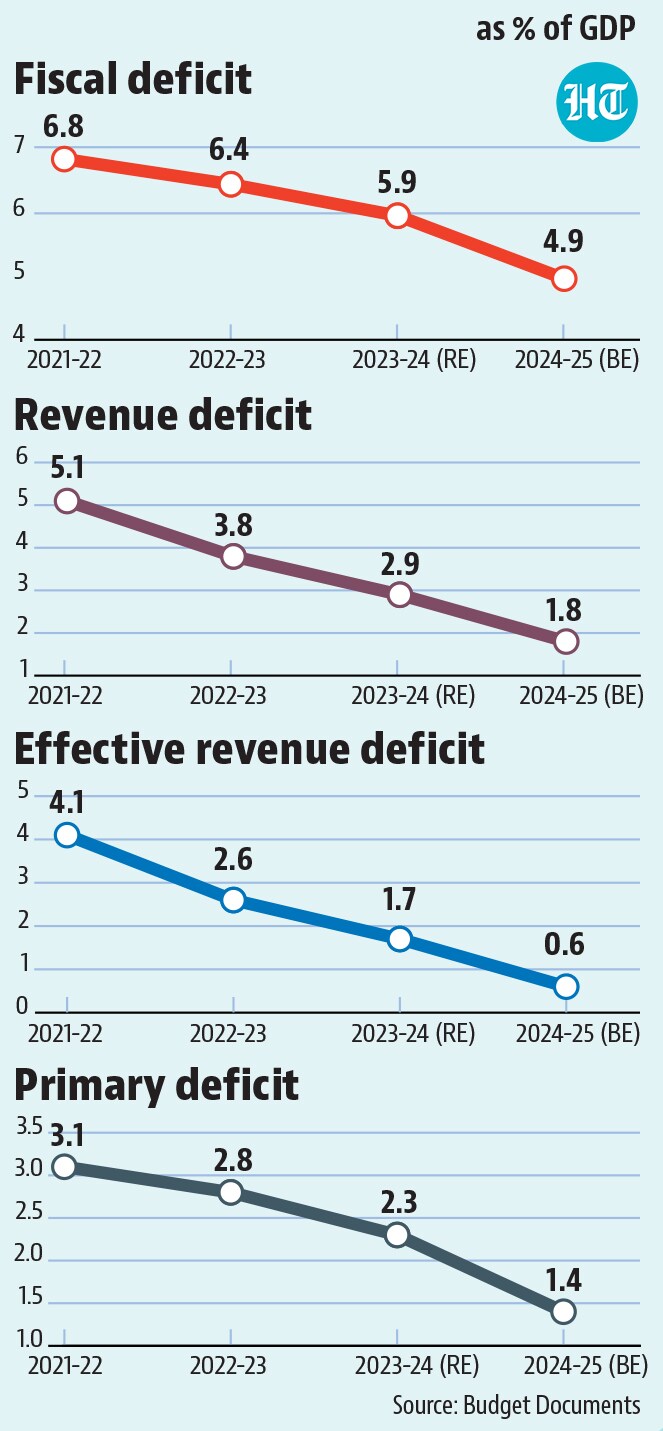
- Will the effective revenue deficit reach zero this year?While the fiscal deficit is the most widely tracked deficit measure in the Budget, there are other measures which are of interest as well. In 2011-12, the government introduced a new measure of deficit called the effective revenue deficit. This is revenue deficit (revenue receipts less revenue expenditure) minus grants in aid for creation of capital assets, the money spent by the union government on creation of capital assets which will be owned by other agencies. The 2011-12 Budget spoke about eliminating the effective revenue deficit in the medium term. Both the revenue deficit and the effective revenue deficit have fallen sharply in the last three years after a spike during the pandemic. Of the two, the effective revenue deficit fell to 0.6% of the GDP in 2024-25 from 1.7% in 2023-24 and 4.1% in 2021-22. The last time the effective revenue deficit was below 1% was in 2017-18, when it was 0.7%. Given the rapidly declining trend of the effective revenue deficit, this number could fall to zero, which is what the idea was when this category was introduced. While doing this will please fiscal hawks, doing so at the cost of revenue spending or capex grants to local bodies and state governments could add to growth headwinds in the economy.