
 E-Paper



The skewed social and legal pool of Supreme Court judges | Number Theory
This is the second of a three-part data journalism series on India’s Supreme Court judges.
Updated on: May 16, 2025, 16:13:53 IST

 Prefer HTon Google
Share via


Copy link

The first part of this series described the importance of family connections among India’s Supreme Court judges and showed that they are far from insignificant. Intra-family judges are only one aspect of the lack of representation in India’s highest judiciary. The second part of this series will look at other inequalities among India’s Supreme Court judges.
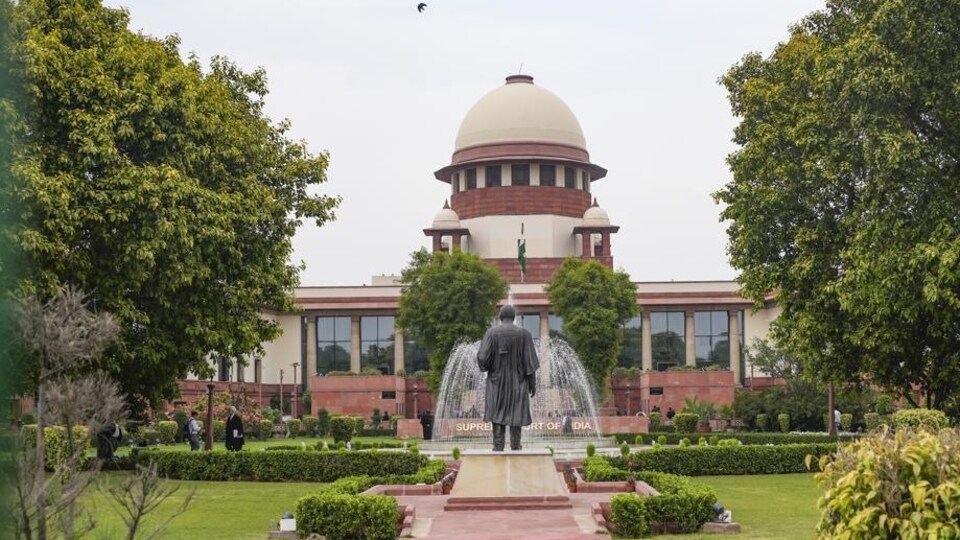
The skewed social and legal pool of Supreme Court judges
 Supreme Court judges represent a very small part of Indian societyThe Supreme Court of India has not had a woman Chief Justice of India (CJI) in the past 75 years. It was only in 1989 that a woman became a Supreme Court judge for the first time. Only 11 out of the 279 SC judges so far have been women. The current Supreme Court bench has only two women judges. Justice BR Gavai, who took over from Justice Sanjiv Khanna on May 14, will only be the second Scheduled Caste (SC) CJI in India after Justice K G Balakrishnan. Only two CJIs, Justice P Sathasivam and Justice Ranjan Gogoi belong to Other Backward Class (OBC) groups. No Scheduled Tribe (ST) person has even been the CJI. Only 27 out of the 279 Supreme Court judges so far have been from OBC, SC, or ST groups. To be sure, the only judge from the ST community was a Christian from Nagaland. The caste classification of judges has been made in keeping with the central list of SC-ST-OBC groups. To be sure, religious minorities in India are relatively well represented (in keeping with their combined population share) among Supreme Court judges. The number of judges from the Muslim, Christian, Sikh, and Zoroastrian groups is 19, 11, 4, and 6 respectively.
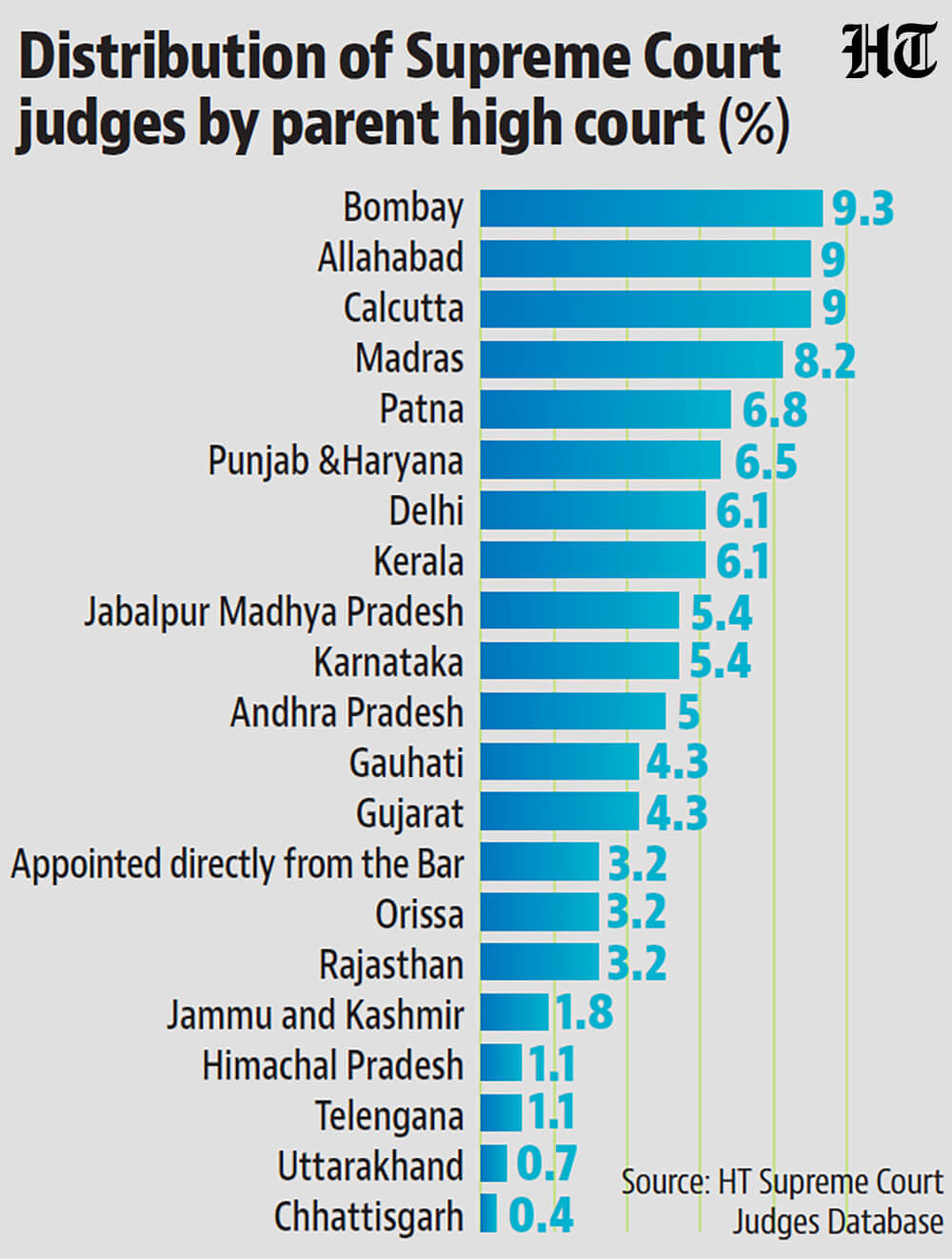
- Some HCs have sent a disproportionate number of judges to the Supreme CourtPost-1950, Supreme Court judges were appointed from two pools: existing high court Judges and directly from the bar (lawyers). Out of the 279 SC judges so far, 270 were high court judges at the time of their appointment, and only nine have been appointed directly from the bar. Among the high court judges, some high courts have had a disproportionate share of judges who have eventually made it to the Supreme Court. Just six high courts, Bombay, Allahabad, Calcutta, Madras, Patna, and Punjab & Haryana, account for nearly 50% of the total SC judges so far. This analysis has taken the parent high court in which a person was first appointed as a judge, for counting the share of each high court among Supreme Court judges, which is the conventional way to make this analysis.
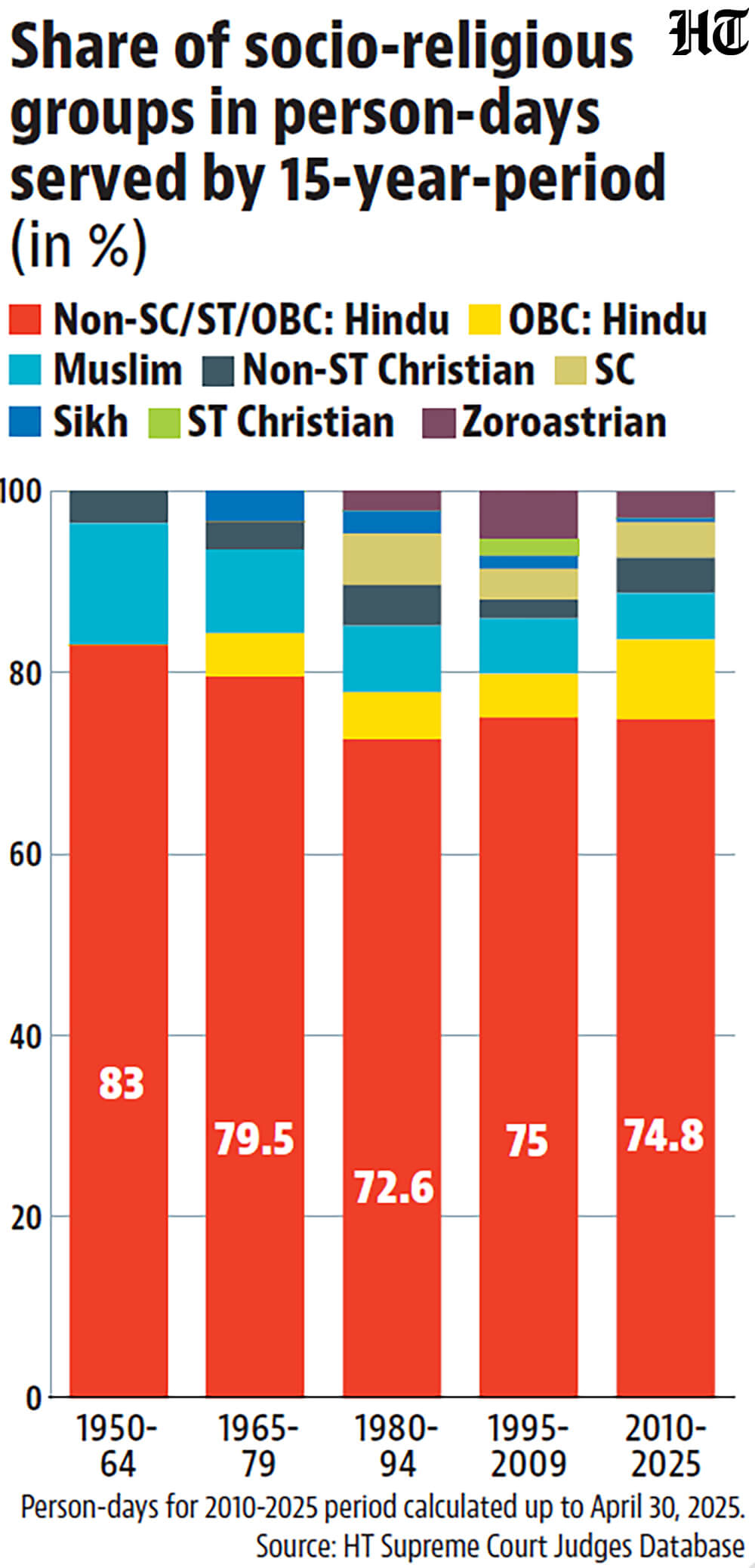
- While SC judges have become more representative in terms of HCs, caste and gender inequality are still problemsHT has classified person days – the number of days served by a judge from a particular group –by their parent high court and social background to make this analysis over five 15-year periods beginning 1950-1964. Data shows that the Supreme Court bench has become more inclusive in terms of representation of different high courts, but social inequality, both in terms of gender and caste, is still a problem. In the 1950-64 period, just eight high courts accounted for nearly 100% of judge-person days in the Supreme Court. The absolute number of high courts represented in the Supreme Court has consistently increased over time. To be sure, some of the improvement could also be on account of more high courts being created; the number has increased from 12 in 1950 to 25 today. On the other hand, the social inequality among Supreme Court judges has gone down only incrementally. Non-SC-ST-OBC Hindu judges had a share of 83% in total judge person days in the 1950-64 period. This number is still 74.8% for the 2010-2025 period. The biggest upward movement for a particular social group among Supreme Court judges is for OBCs. The starkest social inequality among India’s Supreme Court judges is for women who, even in the last 15 years, just had a 6.95% share in judge person days.


Unlock a world of Benefits with HT! From insightful newsletters to real-time news alerts and a personalized news feed – it's all here, just a click away! -Login Now!


