
 E-Paper



Vanguard to rearguard: Nitish Kumar’s populism in Bihar | Number Theory
.
Updated on: Jul 18, 2025, 09:30:50 IST

 Prefer HTon Google
Share via


Copy link

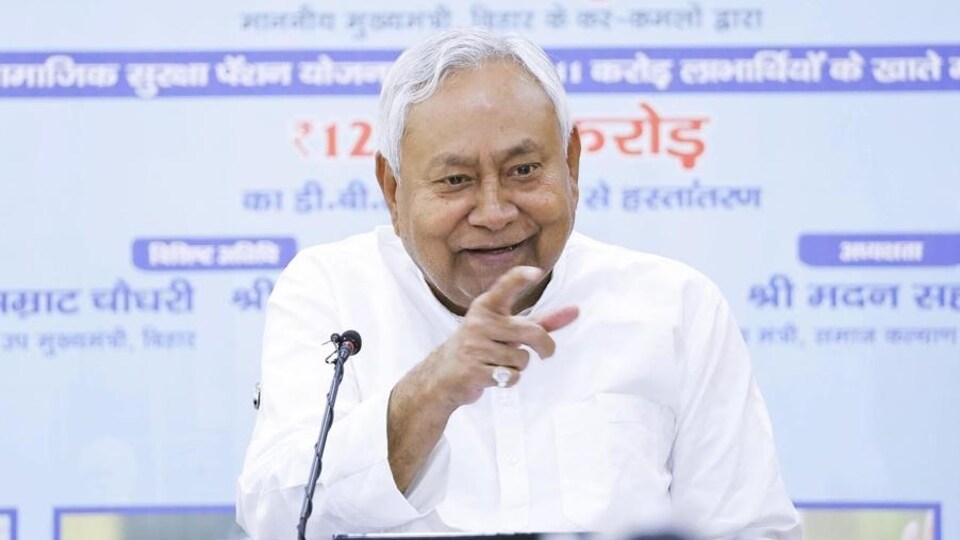
Nitish Kumar is the longest serving chief minister of Bihar. He will seek re-election once again later this year. On Thursday, Kumar announced free power up to 125 units of electricity for domestic consumers in the state. The policy, according to rough calculations, could cushion household budgets by about ₹500 per month. While power subsidies are pretty common in India by now, Nitish Kumar’s use of them to seek his fifth term in power tells a story about his brand of politics and populism going from vanguard to rearguard. Here are four charts which describe this argument in detail.
Vanguard to rearguard: Nitish Kumar’s populism in Bihar
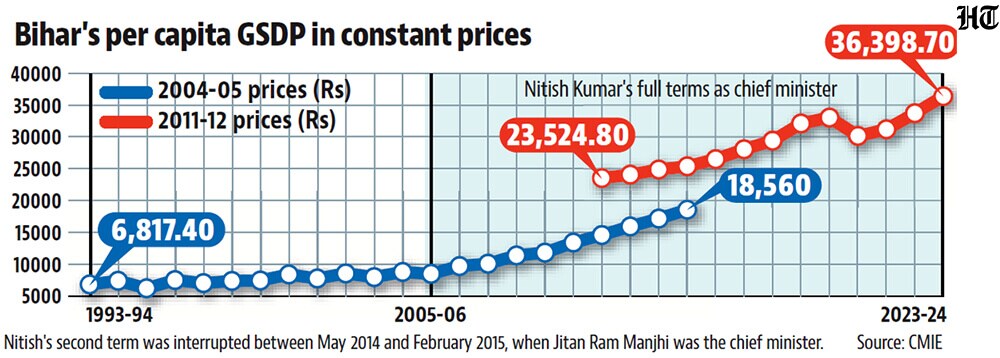
 Nitish’s early years in power were impressive, but largely because of Bihar’s poor pastNitish Kumar formed his first full-term government in Bihar when the Janata Dal (United) and Bharatiya Janata Party (BJP) alliance won a clear majority in the October 2005 election. While ‘law and order’ was a key promise of the Nitish Kumar led National Democratic Alliance (NDA), its economic record vis-à-vis the Lalu Prasad Rabri Devi years is also impressive. Centre for Monitoring Indian Economy (CMIE) data shows that Bihar’s per capita GSDP changed gears as soon as Nitish Kumar came into power. It was pretty much flat in the Lalu-Rabri years. This upward trend has more or less continued since.
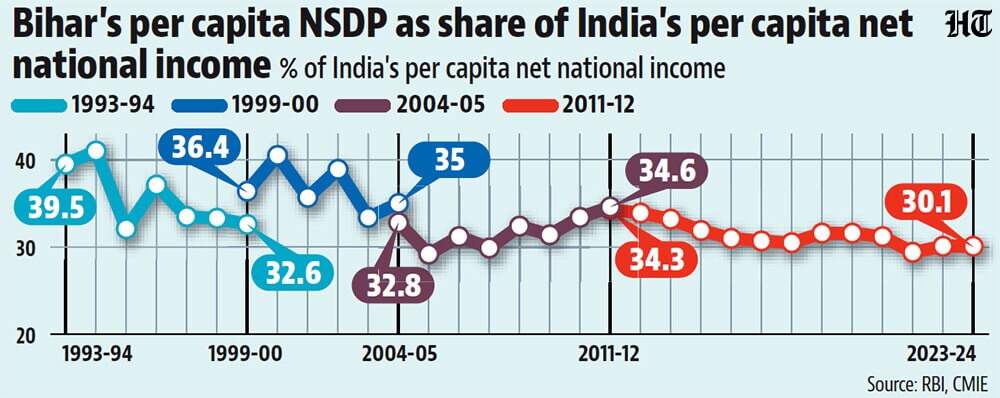
- Indeed, Nitish’s Bihar has only done well vis-à-vis its own pastThis is the biggest economic challenge Kumar faces after 20 years in power. Bihar has clearly moved ahead from its economic stagnation during the Lalu-Rabri years but it is still among the poorest states in the country. In fact, if one were to compare Bihar’s per capita Net State Domestic Product (NSDP) with All-India Net National Income (NNP) the average Bihari is actually worse off than the average Indian today than in the Lalu-Rabri years. The correct way to interpret it is not that Bihar has gone south, but the rest of the country has grown at a much higher rate than it has.
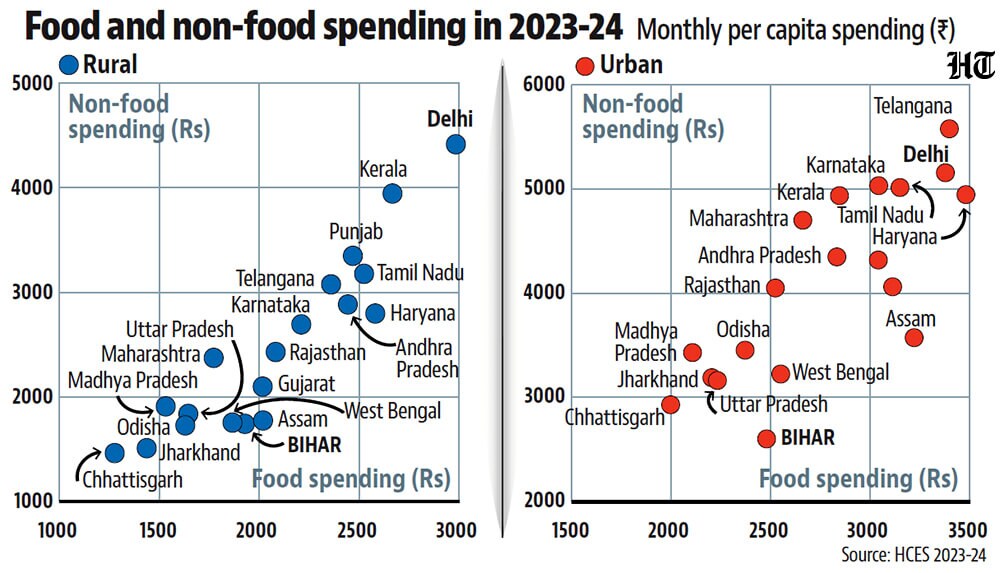
- This shows up in Bihar’s consumption gap with other statesData from the latest Consumption Expenditure Survey (CES) shows this clearly. Bihar’s monthly per capita consumption expenditure (MPCE) is ranked fourth lowest among the 19 major states – with at least five parliamentary constituencies – in India. While it does slightly better in terms of food expenditure, its gap is bigger in average non-food spending, especially in urban areas where it is the lowest non-food spending state. It is in the context of these numbers that even a ₹500 per month cushion via the latest power subsidy could be politically rewarding for a government. Whether the latest power subsidy will help Nitish Kumar regain power in Bihar is a question best answered after the election results. However, the fact that his 20 years in power have only improved Bihar compared to its own sub-par past rather than make it a frontrunner or even a catch-up state among others in India highlights governance challenges. A glimpse of this is also seen in the changing nature of Kumar’s populist schemes. From things such as distributing bicycles to school-going girls in his first term, which symbolised not just a monetary transfer but also freedom and safe environment for young women; to prohibition, which convinced the typical woman voter to support Nitish for exorcising alcoholism as a social evil; and the latest power subsidy, which follows the beaten track of populism, Kumar’s politics and populism shows a return to the tried-and-tested. To be fair to him, 20 years is a long time in politics and government for anyone to keep reinventing themselves.



Unlock a world of Benefits with HT! From insightful newsletters to real-time news alerts and a personalized news feed – it's all here, just a click away! -Login Now!


