E-Paper



What share of population could be off the grid? | Number Theory
.

 Prefer HTon Google


India launched its first universal proof of identity, the Aadhaar card, in 2010. There are 1.42 billion Aadhaar cards in India today, although only 1.33 billion are estimated to belong to living people. To be sure, the first attempt at issuing widespread identity cards began a decade and a half before, with the Election Commission issuing photo voter identity cards. The ongoing Special Intensive Revision (SIR) controversy in Bihar might end up discounting both the Aadhaar and an already issued voter identity card as the required documentary proof. This brings up an interesting question. How many people in India would be off-the-grid if one were to discount the two most common identity proof documents?
There are various documents such as birth certificates, passports, domicile certificates, etc that can suffice for proof of citizenship in the SIR. While documents such as passports are held by a very small part of the population (around 6% according to government data), there is no nationwide number for things such as birth certificates and many before a certain age are extremely unlikely to hold one. One of the default ways to get an (accepted) documentary proof of citizenship in India is to finish secondary school, as the certificate one gets for it is often treated as a documentary proof of date of birth. Also, people who have at least finished school are significantly more likely to get other proofs. Chances of a citizen staying off the grid are next to nil if they have at least finished secondary school.
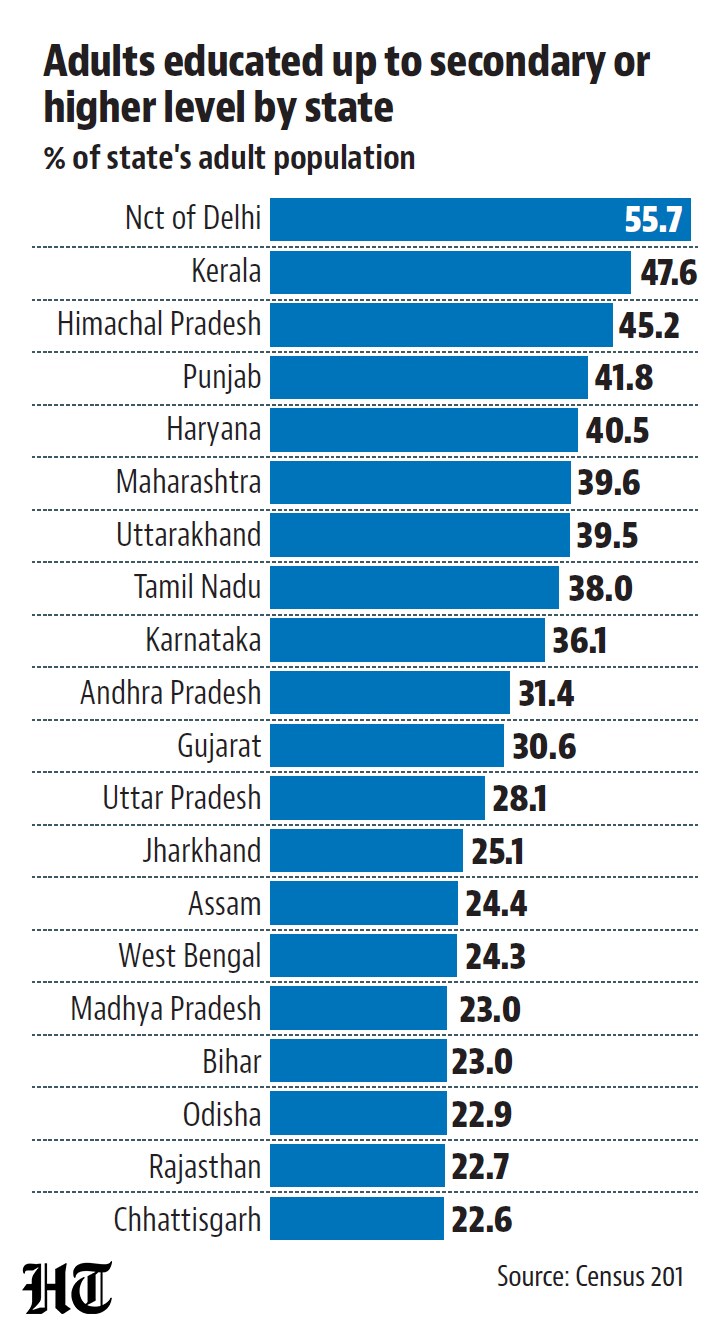
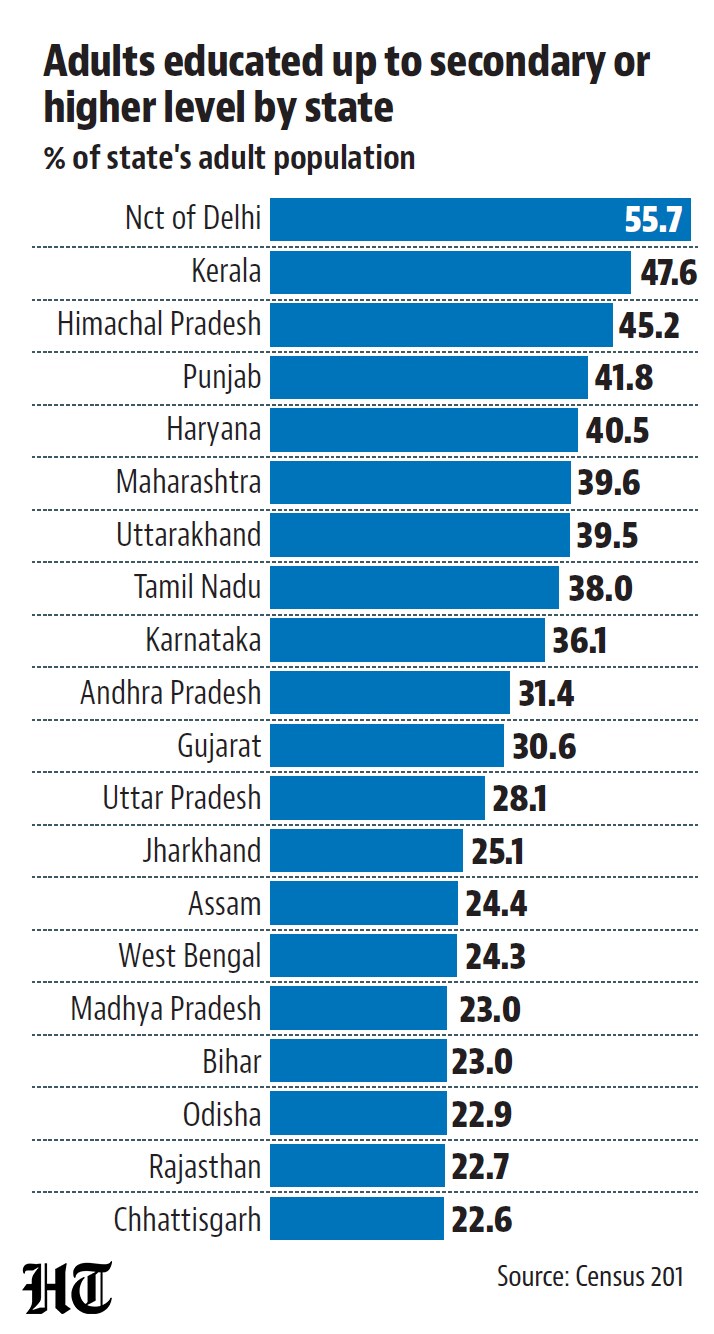
 Only 31% of adults likely had matriculation certificates in 2011The 2011 census data shows that only 31% of adults had completed secondary level of schooling, which is usually the first level of education where a student in India is registered with a recognised board (read government). The proportion of secondary school educated adults was lower among rural Indians, women, and among Scheduled Castes (SCs) and Scheduled Tribes (STs). The census does not record Other Backward Classes (OBCs) and non-SC-ST-OBCs separately. A breakup by religion shows that while Hindus are close to the national average in finishing secondary school, as expected from their share in population, Christians, Jains, Sikhs, and Buddhists are ahead of the national average. Only Muslims and other minority religions are far behind the national average.
- Even relatively rich states had a poor level of secondary school pass adultsStates like Chhattisgarh, Rajasthan, Odisha, Bihar, and Madhya Pradesh had just around 23% of adults educated up to that level. However, it is not the case that the more urban or rich states were very far from having universal secondary school education (and therefore a certificate).
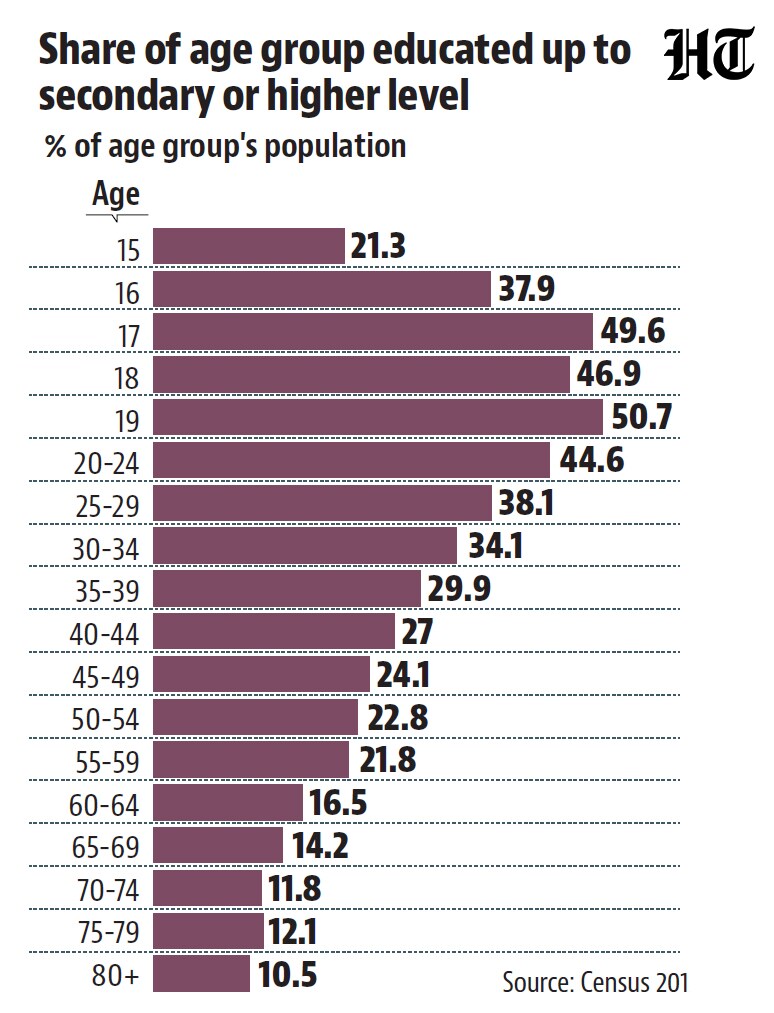
- Younger people are more likely to have finished secondary school but it is still far from universalThis can be seen from the age-wise breakup of secondary educated people in the 2011 census. The overall proportion for adults with at least secondary education is largely low because of older age groups. The proportion was 40.7% for the 15-19 age group, 44.6% for the 20-24 age group, and 38.1% in the 25-29 age group. This number decreased for every subsequent age group becoming as low as 14% for the population aged 60 and above.
- This is exactly why something like SIR can create more problems than solveIndia has been pushing the envelope on documentation of citizens on various fronts now via things such as Aadhaar, registration or births and secondary school certificates. Because a lot of these databases are nationally connected, they are easier to verify than proofs such as domicile certificates or ration cards. Legality notwithstanding, any move that makes the progress of the past couple of decades redundant in the eyes of the state will only erode the collective belief in the system and create unnecessary panic.