
 E-Paper



IIT Kharagpur study hints why pan-India lockdown was necessary to prevent COVID-19 outbreak
This comes at a time when nearly 600 people across the country have been detected with the deadly virus and 13 have already died.


Preliminary results of a study done by researchers from IIT Kharagpur has shown that at least one out of every five people interviewed, were planning to move to other cities even when the deadly COVID-19 disease had already started taking a toll in India.
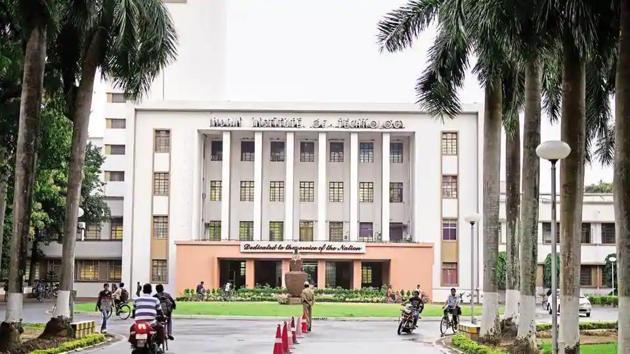
This comes at a time when nearly 600 people across the country have been detected with the deadly virus and 13 have already died. Lakhs of people are still under home and hospital quarantine. The first COVID-19 case was detected in Indian in January this year.
“It was alarming to note that nearly 20% respondents expressed their desire to leave the current city of work despite a city-lockdown to prevent the spread of coronavirus. Such acts would have increased the chances of a coronavirus outbreak manifold in the country. Hence the three week pan-India lockdown was necessary for greater societal interest,” said Bhargab Maitra, who heads the Ranbir and Chitra Gupta School of Infrastructure Design and Management and a professor of civil engineering at IIT Kharagpur.
These are just the preliminary results of an ongoing online study that was conducted in more than 400 cities in 28 states and four union territories across India. More than 3500 citizens took part in the survey carried out between March 15 and March 22.
The study also showed that the number of respondents opting for work from home have shot up steady from 40% to 75% during that one week.
“The Janta Curfew which was observed on March 22, also served as a preparatory stage, before Prime Minister Narendra Modi announced the 21-day pan-India lockdown. More than 30% of the respondents said that they aware about possible city quarantine and were getting prepared for it,” said Saurabh Dandapat, one of the researchers.
The researchers also said that the awareness among the people about the risk of travel in public transport has increased over the time. But there were still some aberrations.
“Data reflect that while on March 17 only around 60% respondents were considering cancellation and postponing long distance travel for various purposes including vacation, the share increased to 75% on March 22. Although this indicates a positive attitude, however, a significant share of respondents was still planning to travel which might increase the risk of spreading the virus,” said researcher Kinjal Bhattacharyya.
The five-member team comprising Maitra, Dandapat, Bhattacharyya and two more researchers Annam Sai Kiran and Kaustubh Saysardar will now launch the second phase of the study to analyse behavioural changes among citizens during the pan-India lock down period.
“It seems that out of the 20% people who wished to move out of the current city, some would move by choice while others could be forced. But even out of the 80% people who didn’t wish to leave the city this could be just out of sheer societal responsibility,” said Angshuman Sarkar, associate professor of sociology at government girls general degree college and the former head of the sociology department of the then Presidency College.


