
 E-Paper



U.K.’s Johnson to say all schools in England to open from March 8
U.K. Prime Minister Boris Johnson will announce that all schools in England will reopen from March 8, as he sets out how the national coronavirus lockdown will be lifted gradually over the coming months.

 Prefer HTon Google


UK Prime Minister Boris Johnson will announce that all schools in England will reopen from March 8, as he sets out how the national coronavirus lockdown will be lifted gradually over the coming months.
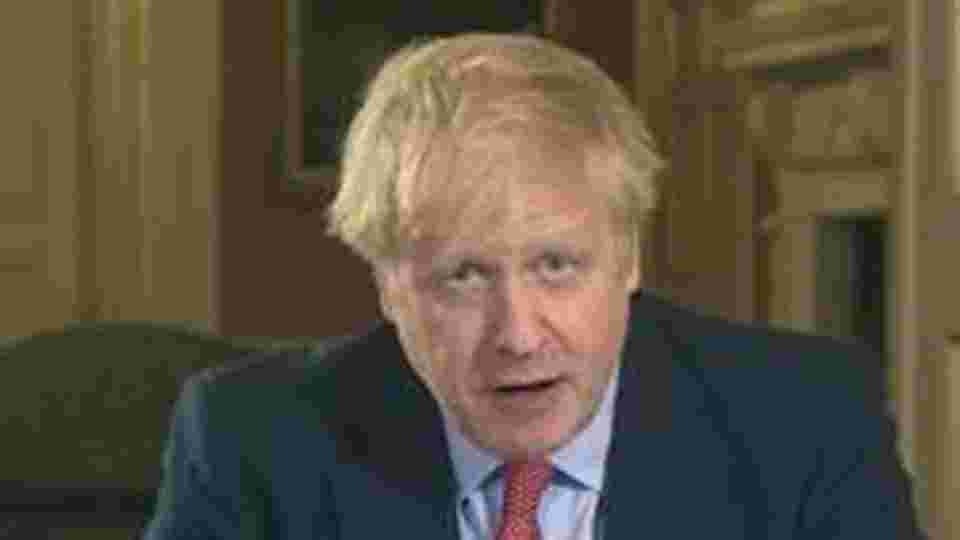
Along with the reopening of schools to all pupils, people will be allowed to meet one-on-one to sit down for a coffee or picnic outdoors, and after-school activities outside can restart from the same date, officials said.
In a statement to Parliament, Johnson will say more social contact will be allowed from March 29, when outdoor gatherings of either six people or two households can take place, including in private gardens, and sports such as tennis and soccer can resume.
“This is a cautious, slow and deliberate reopening,” Vaccines Minster Nadhim Zahawi told Sky News on Monday. “We have to be careful, we want it to be sustainable.”
The reopening of schools will be welcomed by parents who have been juggling their jobs with home-schooling their children since England’s third national lockdown began in early January, and employers who have seen productivity suffer.
With the economy suffering its worst recession in more than 300 years and cases and deaths falling rapidly, Johnson is facing growing calls -- including from his own Conservative backbenchers -- to lift lockdown curbs.
That pressure is mounting amid a significant acceleration of the U.K.’s vaccination program, with all adults to be offered a shot by the end of July and everyone over 50 by mid-April. One in three adults have had a vaccine as of Sunday, Health Secretary Matt Hancock said.
Britain’s Next Answer to Covid Is to Prepare to Live With It
High Priority
Johnson will discuss the reopening plan with his cabinet of senior ministers Monday morning, before giving a statement to the House of Commons in the afternoon and hosting a televised press conference in the evening.
In an emailed statement released Sunday night, Johnson said: “Our priority has always been getting children back into school which we know is crucial for their education as well as their mental and physical wellbeing, and we will also be prioritizing ways for people to reunite with loved ones safely.”
He said the government would be “cautious” in its approach “so that we do not undo the progress we have achieved so far.” Reopening schools and allowing more social contact outside will form the first step of the government’s four-step process to lift national restrictions.
There will be a gap of several weeks between each of these steps to analyze the impact on caseloads and hospitalizations. Restrictions will be eased uniformly across England, and there will be four tests that must be met before moving onto each step. These are:
- That the vaccine program continues successfully
- Vaccines are sufficiently effective in reducing hospitalizations and deaths among those who have had the shot
- Infection rates don’t risk a surge in hospitalizations that would put “unsustainable pressure” on the National Health Service
- New variants don’t fundamentally change the government’s assessment of the risks
These four tests are currently being met, the prime minister’s office said, so the first step will proceed from March 8. This is when the top four priority groups for vaccination will have received a “degree of immunity.”
Outdoor activities will be opened earlier than indoor ones because there is lower risk of catching the disease, according to Johnson’s office.
Why Even With Vaccines, Covid Will Always Be With Us: QuickTake
Trend Reversed
Covid-19 cases surged to record levels in Britain early this year as an easing of social distancing during the holiday period coincided with the spread of the highly infectious U.K. variant. The latest lockdown, coupled with the vaccine program, has reversed that trend. More than 17.5 million people have received their first dose of the vaccine.
Health authorities reported 9,834 new cases on Sunday, down from the peak week in January when cases averaged almost 60,000 a day. Hancock told the BBC that cases of both the South African and Brazilian variants were falling in the U.K., thanks to “enhanced contact tracing and the measures at the border.”
Mark Harper, who chairs the lockdown-skeptic backbench group of Conservative MPs, said he wanted to see all restrictions lifted by the end of April. “We think at that point people should be able to get on with their lives,” he told the BBC on Sunday.
But John Edmunds, an epidemiologist who sits on the government’s advisory scientific committee, raised warnings over the mass reopening of schools. There will be “major disruption in schools until we have vaccinated our children,” he told the BBC.
The U.K.’s opposition Labour party called on ministers to extend eligibility for the £500 self-isolation payment to anyone without access to workplace sick pay. They said this would help more people stay at home and prevent a fourth national lockdown.


