
 E-Paper



Faction feud delays Congress’s candidate list in Kerala
Even as PC Chacko’s exit has exposed the rift within the state unit, Kerala Congress leaders have been camping in Delhi for the past three days but talks are still inconclusive

 Prefer HTon Google


Despite the Congress high command’s warning against faction-based ticket distribution, infighting within has delayed the party’s candidate list for April 6 assembly elections in Kerala.
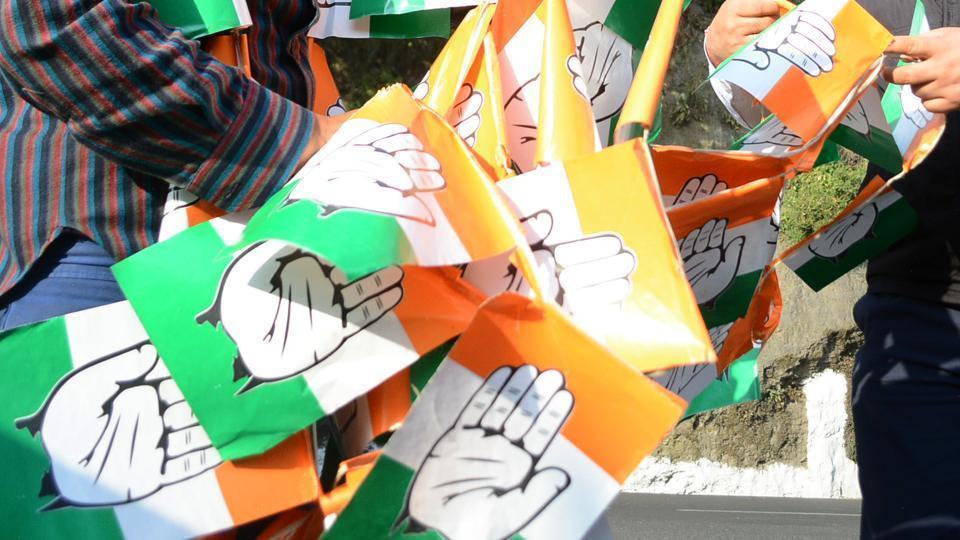
Even as PC Chacko’s exit has exposed the rift within the state unit, Kerala Congress leaders have been camping in Delhi for the past three days but talks are still inconclusive. Reports from Delhi suggest that the party high command has asked leaders to arrive at a consensus by Thursday so as to announce the list by Friday.
Party insiders claim the central leadership has pulled the up state leaders for suggesting the same old faces, overlooking women and young leaders. At least four pre-poll surveys have predicted an edge to the ruling Left Democratic Front, adding to the party worries. Meanwhile, Congress-led United Democratic Front (Kerala) comprises multiple parties like the Indian Union Muslim League, Kerala Congress (Joseph), Revolutionary Socialist Party, and other smaller parties in the state.
Former All India Congress Committee (AICC) general secretary Chacko’s exit, which he blamed on the faction-ridden state unit, has left other senior leaders concerned. Former Kerala Pradesh Congress Committee (KPCC) president VM Sudheeran said he was hurt and former vice-chairman of the Rajya Sabha, PJ Kurien, said the time was ripe to contain factionalism. “I agree with what Chacko said. Two prominent groups -- one led by Oommen Chandy and the other by Ramesh Chennithala, decide everything. If you are out of these two, you are in no man’s land,” he said, adding that the party was supreme, not factions. Senior leader K Mohan Kumar also decried group politics.
Also Read | Espionage to smuggling, scandals spice up every poll in Kerala
However, many other leaders tried to downplay it, saying factionalism subsided over the years and it was wrong to see the situation through the same old prism. “Factions have existed for over three decades. But it is wrong to say that it is above the party,” said former AICC secretary and legislator PC Vishnunath. He said some of the leaders who blame group politics were once part of some factions.
“This time the party shows a united front. All three senior leaders -- Chandy, Chennithala and KPCC chief Mullappally Ramachandran -- talk in same voice and act in unison. Unlike earlier, there has been no drama this time,” said PCC general secretary leader Joseph Vazhakkan.
Congress’s faction feud began in the state in 1980s after veteran leader K Karunakaran and his rival in the party, A K Antony, started cultivating people close to them. Soon two factions emerged “A” and “I,” one led by Antony and other by Karunakaran. Intense faction feud later damaged party’s prospects on several occasions -- in 1994, CM Karunakaran had to resign after the infamous Indian Space Research Organisation spy scandal surfaced. His rivals in the party played a key role in ousting him.
Karunakaran later used all opportunities to discredit his rivals in the party. In 2005, he split the party to form a new outfit, Democratic Indira Congress, but returned to Congress fold two years later. But it took four more years for the party to admit his son K Muraleedharan, a member of Parliament now, in 2011. Though senior leader AK Antony had disowned the group in his name, it is still known as “A” group nursed by his friend Chandy.
“When you compare with earlier incidents of infighting and back- stabbing, the situation has improved in the Congress,” said writer and political theorist J Reghu.


