E-Paper



Phulpur only assembly seat of Prayagraj to secure over 60% voting
Voting percentage in rural assembly seats of Prayagraj was more than their urban counterparts with Phulpur being the only seat to record 60.40% polling percentage.

 Prefer HTon Google


Just one of the 12 assembly seats in Prayagraj that went to polls on Sunday recorded over 60% voting percentage with rural voters of the district outnumbering their urban counterparts in terms of poll percentage.
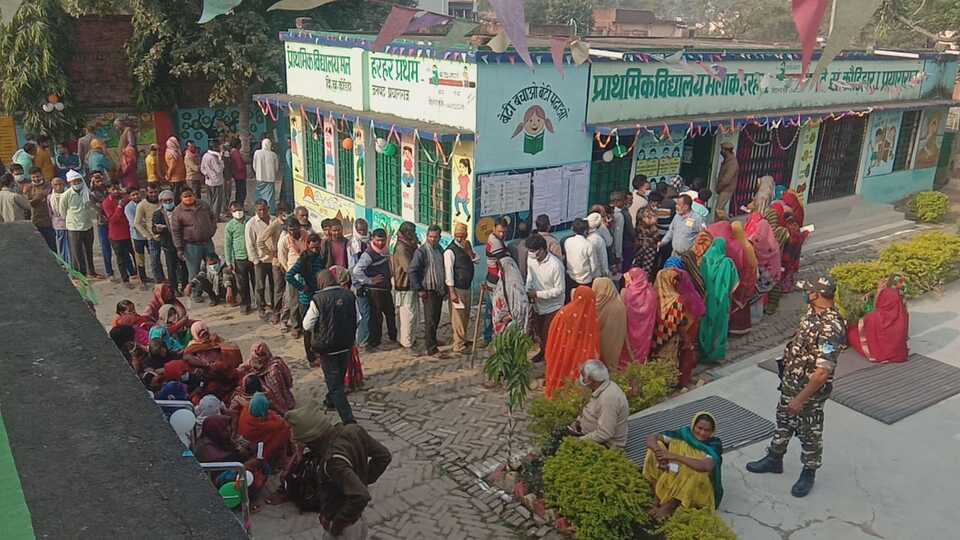
While the combine polling percentage on all assembly seats was 53.77%, the polling percentage in the rural areas-- Meja, Karachhana, Bara, Phulpur, Handia, Pratappur, Soraon, Phaphamau and Koraon-- was 56.86%. In contrast, the combine voting percentage in the three urban seats-- Allahabad North, Allahabad South and Allahabad West-- was mere 45.93% that was over 11% less than the rural areas.
Among all the assembly seats, Phulpur was the only seat which passed in first division. It recorded polling percentage of 60.40% which was closely followed by Bara recording 58.50%.
Talking about the last five elections (since 1996), these three urban seats have recorded far less voting percentage as compared to rural seats.
Among them, Allahabad North was the worst performer with just 39.56% voting percentage. In 2017, the polling percentage of this seat was 41.90% and in 2012 it was 40.90%. In 2007 it was 24%, in 2002 it was 25.48% and in 1996 the polling percentage was 32.75%.
This is when Allahabad North is dominated by the intellectual class of the city. Allahabad University, the only NIT of the state (MNNIT) etc are all located in this assembly seat. Most of the voters of this constituency do not vote even after their names being on the voter list.
In 2007, the region had earned a bad reputation across the state as it was the least voted assembly constituency in the state with just 24% voting.
The polling percentage in Allahabad West, however, improved this election as compared to 2017. This year it was 51.20% whereas in 2017 the polling percentage was 47.44%.
In Allahabad South, the polling percentage improved marginally. In 2017, it was 45.16% whereas this year it improved to 47.05%.
In sharp contrast, the rural areas, including both trans-Yamuna and trans-Ganga regions, have been scoring well in the last five assembly elections ie from 1996 to 2022.
The polling percentage in the new assembly seat of Koraon, which came in to being in 2012, had recorded high polling percentage both in 2012 and 2017 recording 61.66% in 2012 and 59.58% in 2017.
In this year’s election, the seat recorded 58.28%, almost repeating its 2017 performance.
Handia assembly seat, which was leading with 48% polling till 3pm in Sunday’s poll, improved slightly with the voting percentage finally touching 52%. Among the other rural seats of the district, Phaphamau and Soraon witnessed 56% and 57.56% of voting respectively while Karachhana in trans-Yamuna area also did well with 57% of voting. The neighbouring Meja constituency recorded 56% polling. Similarly, Pratappur witnessed 56.02% voting.