
 E-Paper



Significance of Nandigram contest in Bengal elections
Is there more to the Nandigram contest than the usual optics of two political heavy weights contesting against each other?

 Prefer HTon Google


On March 7, Prime Minister Narendra Modi formally kicked off the Bhatariya Janata Party’s (BJP) campaign in West Bengal with a rally at Kolkata’s Brigade Parade grounds. While speaking at the rally, Modi took a jibe at the incumbent chief minister and All India Trinamool Congress (AITC) leader Mamata Banerjee. “We don’t want anyone to get hurt. But your scooty landed in Nandigram instead of going to Bhawanipore; nothing can be done now,” he said. He was referring to Banerjee’s decision to shift from Bhawanipore to Nandigram assembly constituency (AC), where she will face Suvendu Adhikari, the incumbent MLA, who was until recently, among the most important AITC leaders in the state.
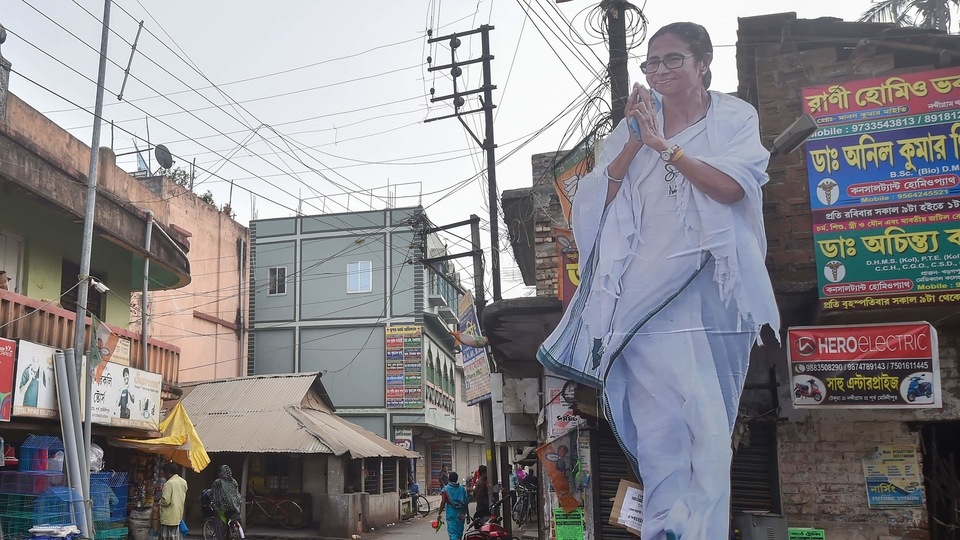
Is there more to the Nandigram contest than the usual optics of two political heavy weights contesting against each other? A cursory look at West Bengal’s political geography and a recap of the state’s recent political history shows that the perception around the Nandigram contest might be a key factor in setting the political narrative in the state both before and after the results. Here are two charts which explain this.
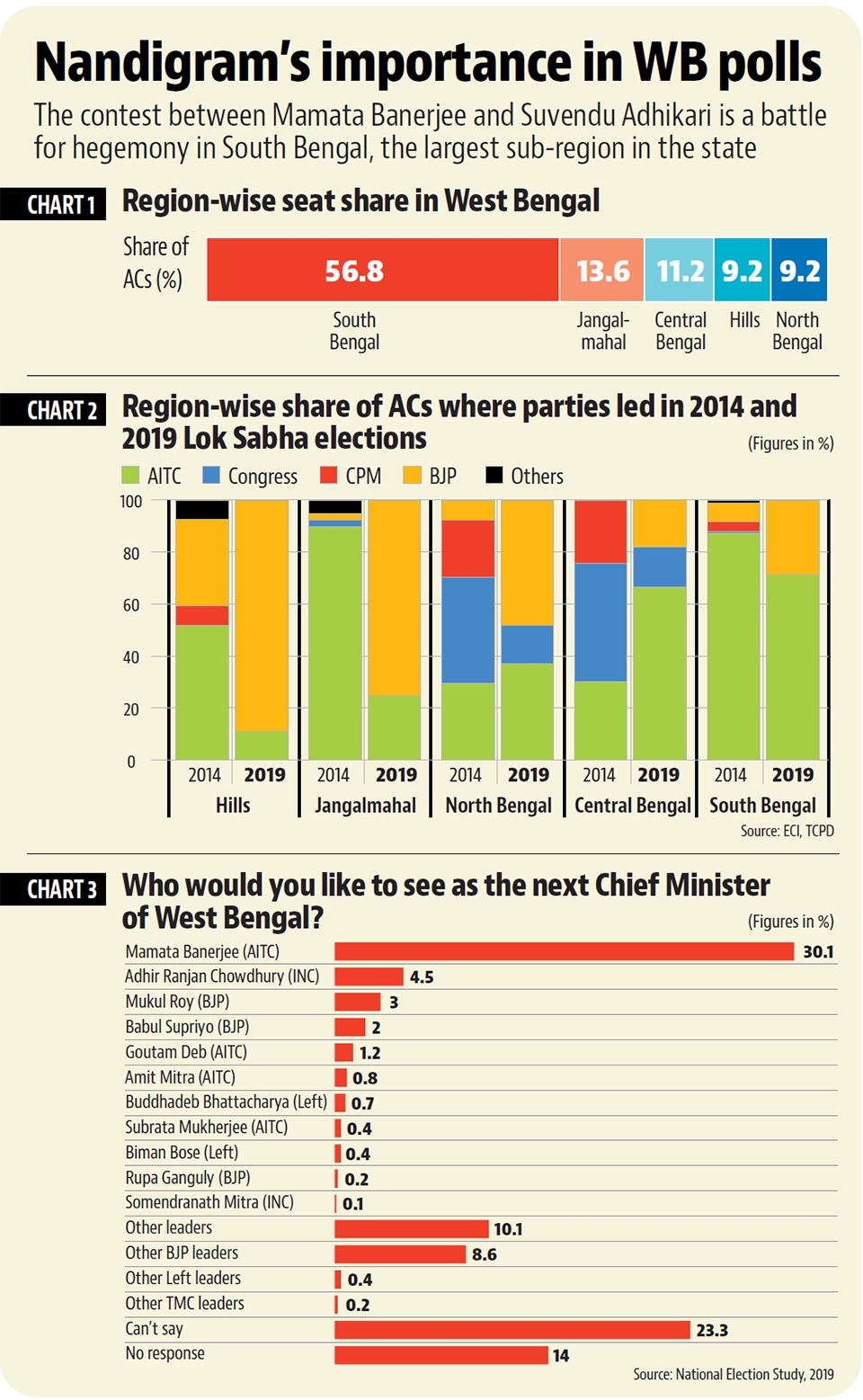
South Bengal will decide whether the BJP can unseat the AITC or not
The BJP inflicted a shock to the AITC when it won 18 Lok Sabha seats with a vote share of more than 40% in the 2019 Lok Sabha selctions. The AITC, even though it increased its vote share by around four percentage points between 2014 and 2019, saw its seat tally go down from 34 to 22.
It is the 2019 Lok Sabha performance which has made the BJP a serious contender for power in the state. The BJP’s advances in the 2019 elections, while they were impressive by all means, were heavily skewed geographically speaking. While the party did very well in the hills, north Bengal and the Jangalmahal region, it failed to cross a critical threshold in the south Bengal region. South Bengal is the most populous region of the state and accounts for 167 out of the 294 assembly constituencies (ACs) in the state. Unless the BJP makes significant advances in south Bengal, it is difficult to envisage it unseating the AITC in the state.
See Chart 1 and 2: region-wise seat share in West Bengal and performance of different parties in sub-regions
The significance of Suvendu Adhikari’s defection
One of the BJP’s biggest challenges in West Bengal is the lack of a popular Bengali face. This is not very surprising, given the fact that the BJP has not had much of a presence in the state until recently. It is to make up for this organizational/leadership deficit that the party has been actively wooing defectors from existing political forces in the state; especially the AITC. That the BJP has inducted both Mukul Roy and Dinesh Trivedi, the two AITC leaders who succeeded Mamata Banerjee as the Railway Minister in the United Progressive Alliance (UPA) government, after she took over the chief minister’s post, underlines the BJP’s willingness to co-opt the AITC’s existing leadership. However, neither Roy, nor Trivedi are a match for Banerjee’s popular appeal among the state’s electorate.
The 2019 National Election Study (NES) conducted by CSDS-Lokniti underlines this point. The gap between the predicted vote share (assuming assembly elections were held tomorrow) of the AITC (40.4%) and BJP (28.4%) – the NES significantly under estimated the BJP’s vote share if the Lok Sabha results are any indication – was significantly smaller than the gap between Mamata Banerjee and any other leader, when it came to who should be next chief minister of the state.
See Chart 2: NES 2019 responses on next chief minister of West Bengal
When read with geographically skewed political outcome in the 2019 Lok Sabha elections, it means that Banerjee’s popularity in the south Bengal region must be even bigger. By managing to get Suvendu Adhikari to switch sides -- he was reportedly upset with Banerjee’s nephew Abhishek Banerjee being potrayed as her heir-apparent -- the BJP has managed to get hold of a leader who has an established mass following among the AITC voter base in the politically crucial south Bengal region.
Nothing can be a bigger endorsement of the importance of Adhikari’s defection than Banerjee’s decision to shift to Nandigram and face him in the polls


