
 E-Paper





The show opens with a scenario we’ve seen a zillion times. A police squad breaks through a door to capture a murderer.
Adolescence,’ Netflix’s Hit Show, Takes On Teen Male Rage
‘Adolescence,’ about a 13-year-old boy accused of murder, subverted crime shows and ignited a debate about social media and boys.
Published on: Mar 27, 2025, 11:06:53 IST

WSJ

 Prefer HTon Google
Share via
Copy link
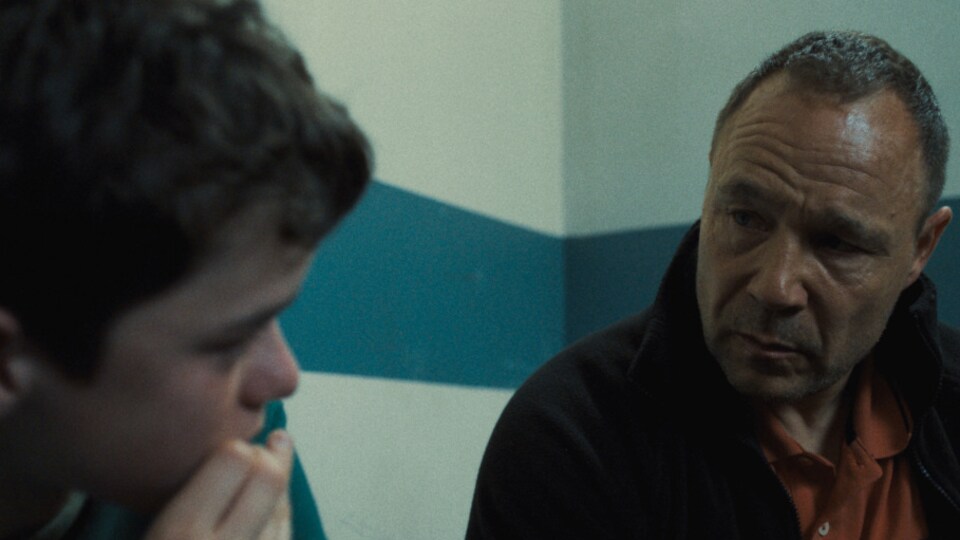
But in “Adolescence” the suspect is a 13-year-old boy. And the scene doesn’t stop—an uninterrupted camera shot continues tracking his arrest and every moment that follows in the hourlong episode.
“I just thought that would grab an audience straight away,” says Stephen Graham, who plays the boy’s father and co-created the four-part miniseries.
It worked. In the two weeks since its release on Netflix, “Adolescence” has become a flashpoint for society’s fears about the state of its teens, especially boys. The fictional drama—about a smart kid from a solid family accused of stabbing a female classmate in an English suburb—has ignited both alarm and backlash, and calls for real-world action.
Viewers are debating the story’s depiction of alienation, bullying and the reach of an internet subculture where masculinity meets misogyny. And they’re reckoning with its message about the huge blind spot parents have on the lives their children lead on their phones and behind bedroom doors.
“Adolescence” delivers these themes by subverting our collective obsession with crime shows. It breaks with the formulas of the police procedurals, murder mysteries and true-crime documentaries that dominate TV. There are no whiplash plot twists. The four-chapter story has time gaps and no courtroom showdowns.
And the uninterrupted camera movement that carries viewers through every episode—a filmmaking technique known as a one-shot—means there are no cuts to other times or places. Viewers are embedded with characters dealing with the fallout from a horrific crime in real time.
Instead of “whodunnit,” the makers of the show say they set out to answer the question “why.”
“If we can create a conversation when you finish Episode 4,” Graham says, “then our objective is complete.”
With 66.3 million views in its first two weeks, Netflix says, “Adolescence” has become the global streamer’s most-watched limited series ever for that time span. It’s also the most-watched title of any kind from the U.K. in a two-week period.
“Adolescence” also seized attention with the performance of actor Owen Cooper. He was 14 years old and making his TV debut when he played Jamie Miller, the murder suspect who wets himself in fright when armed police storm his bedroom.
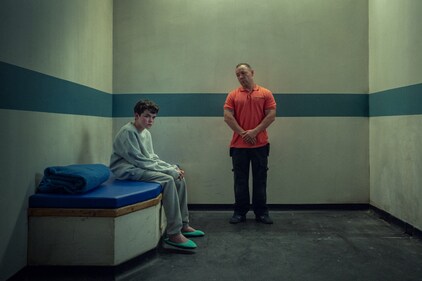
The first episode dwells in the confusion and fear of Jamie and his family as he gets processed at a police precinct, encountering people from a nurse drawing Jamie’s blood to a public defender assigned to his case.
After detectives play murky surveillance footage that shows Jamie assaulting a girl named Katie, the boy sobs and swears to his father that he’s innocent. Later, a motive emerges, with Jamie accused of killing Katie in a retaliatory rage.
Screenwriter Jack Thorne, who created and wrote “Adolescence” with Graham, says he had to override his instinct to set up and solve a murder case for the audience.
“Having done this for 20 years, I’ve got those questions inside my head, like a metronome ticking away,” he says. “The whole point was to leave people hanging on possibility rather than settling on the definite.”
The show’s one-take format required events and information to flow in sequence. Writing the scripts was like devising a relay race, Thorne says. “The camera cannot move without a character taking you somewhere,” which meant traversing hallways and staircases “and all those places that as a writer you don’t want to be in.”
The “Adolescence” team, including director Philip Barantini and cinematographer Matthew Lewis, spent three weeks making each episode.
The first week was devoted to rehearsing the actors’ dialogue and movements, plus rewriting. A second week of rehearsals incorporated camera choreography and more revisions to fix problems. In the third week, they’d shoot the episode start to finish, at least twice a day.
Filming Episode 2, in which detectives visit Jamie’s unruly school, involved several hundred background actors in motion, a fire drill, a fight and a student fleeing the cops.
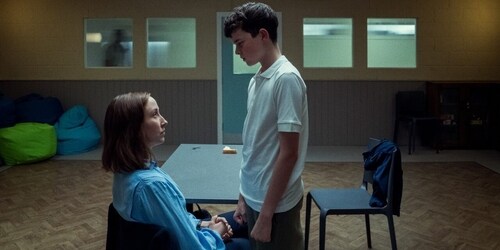
Episode 3 had the fewest moving parts but a high degree of difficulty for the actors. It depicts one session in lockup between Jamie and a therapist (Erin Doherty) as the boy veers from playfulness to fury. Graham had asked Thorne to write the episode as if it was a David Mamet play.
Producers then picked the best run-through to include in the series, with no edits after the fact, they say. In Episode 1, audiences are seeing the cast and crew’s second take. The final episode, which follows Graham’s character, Eddie, through the morning of his worst birthday, is the 16th take.
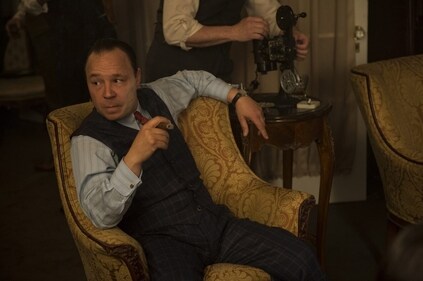
As Jamie’s male role model, Eddie is the show’s other lodestar character, and Graham is its most familiar face. He’s a British actor with a bulldog look and a long resume, including HBO’s “Boardwalk Empire,” and Martin Scorsese’s “Gangs of New York” and “The Irishman.” In “This Is England,” an indie film from 2006, he had a standout performance as a skinhead leader.
Graham has “a soul a mile wide” and “a face worth 50 pages of dialogue,” says Thorne, who has worked with the actor on five previous projects and wrote the wrenching finale episode of “Adolescence” as a showcase for his range.
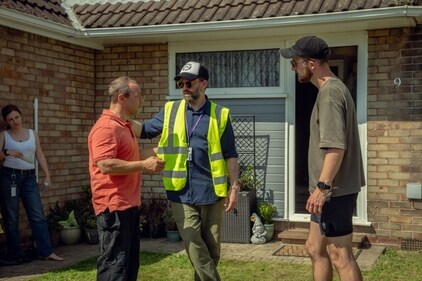
In 2020, Graham formed Matriarch Productions with his wife, actress and producer Hannah Walters, who appears in Episode 2 of “Adolescence.” They set out to tell stories about working-class people “like us growing up,” says Graham, who was raised in Liverpool and now lives with Walters and their two adult children in rural Leicestershire.
Their first release, “Boiling Point,” a film featuring Graham as a chaotic chef, also used the one-take format. Hollywood production company Plan B Entertainment, co-founded by Brad Pitt, approached them about making another show in that style. Graham says “Adolescence” was inspired by real-life teen stabbing cases in the U.K. and his fascination with a docuseries called “24 Hours in Police Custody.”
The creators of “Adolescence” are having a mixed experience in the zeitgeist. Thorne says parents have been thanking him for eliciting overdue conversations with their teens. At the same time, the writer says he’s being attacked online by people angry with the show for projecting problems on males.
For Graham, stepping out as a producer after decades of supporting roles as an actor, “Adolescence” could be his “Baby Reindeer”—another out-of-nowhere, conversation-starting Netflix hit from England, which went on to be an awards magnet.
“I can’t fathom it,” Graham says, “but I’m just really grateful that it’s had the impact it has.”
Write to John Jurgensen at John.Jurgensen@wsj.com

Get the latest Entertainment News from Bollywood, Hollywood, television, music and web series. Follow celebrity updates, movie reviews, trailers and box office collections on Hindustan Times.


