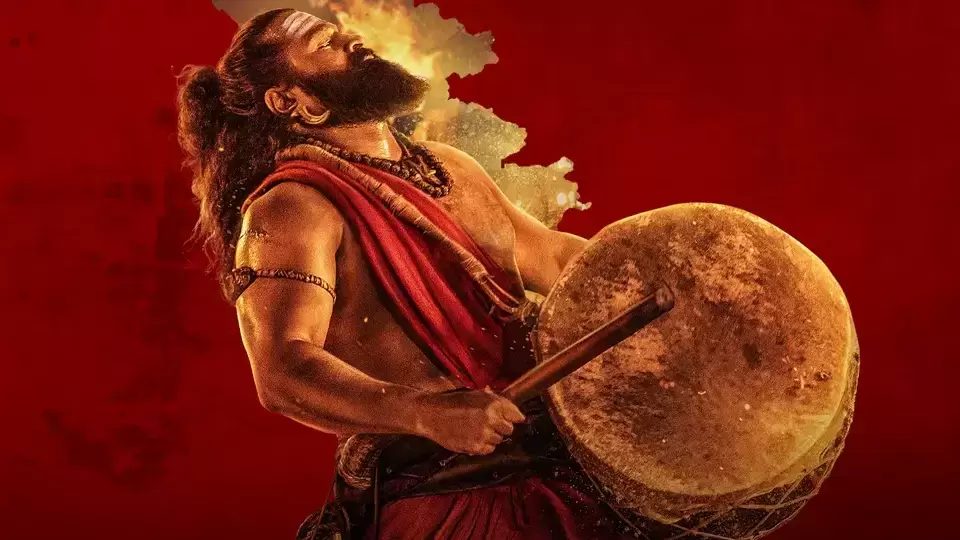
Kantara Chapter 1 review: Folk goes mass as Rishab Shetty, Rukmini Vasanth excel in uneven but visually splendid prequel
Kantara Chapter 1 review: Rishab Shetty almost excels in pulling off a worthy prequel aided by fine performances and visuals, but hurt by an uneven narrative.
Halfway into Kantara: Chapter 1, I could not help but feel that the film, like the original Kantara, was an elaborate setup for a visually splendid payoff. The film tests your patience, exhausts you, and frustrates you before eventually rewarding you with what is one of the most visually stunning climaxes in recent times. Yet, while the original Kantara held it all together, Chapter 1 seems to be nudging the viewer to just wait for that payoff and ignore the bumpy ride along the way. Does it take the sheen away a bit? Certainly. Is Kantara Chapter 1 still a watchable film? Immensely so! Despite the unevenness and drab moments, Rishab Shetty yet again scripts a theatrical spectacle that can only be experienced, not explained.
Kantara Chapter 1 review: Rishab Shetty takes on the daunting task of following up to Kantara.
What is it about
Kantara: Chapter 1 is an origin story that explains the backstory of the daivas and the guliga we saw in Kantara. Rishab plays Berme, a warrior from Kantara, a hamlet that is at odds with the neighbouring Kadamba kingdom. The ruler Vijayendra (Jayaram) has enforced an uneasy truce with Kantara, but his ambitious and wayward son, Kulasekhara (Gulshan Devaiah), wants to annex Kantara and capture the resources in the forest. Even as the princess Kanakvathi (Rukmini Vasanth) tries to find a middle ground, blood spills, and Kulasekhara and Berme come face to face.
What works and what doesn't
While the 2022 film Kantara was a rooted film about traditions and folk tales of coastal Karnataka, Kantara: Chapter 1 is an ambitious, large-scale story of greed, war, and destiny. It is magnified several-fold as compared to the first part. The prequel is more mass than folk, giving both the heroes and the villains enough time to saunter on the screen and indulge in some elevation. If Kantara had some nuance, Chapter 1 has the subtlety of a sledgehammer. It is loud, bold, and in-your-face, perhaps a little too much at times.
What makes Kantara Chapter 1 a little intolerable at times is how uneven and scattered the narrative gets, particularly in the first half. It moves at a leisurely pace, flitting between the two settings and often indulging a bit too much in the characters' frivolities. The humour seems forced, and the romance a little rushed. Yet, the moment the action kicks in, the film gets back on track.
Movie Review
Kantara: Chapter 1
3/5
Period action drama
Tracing the origins of the daivas and guliga in Kantara, the Rishab Shetty film focusses on the standoff between the village and a neighbouring kingdom centuries ago.
Kantara Chapter 1 relies upon its visuals, cinematography, and splendid scale to patch over the roughness in the narrative. Rishab Shetty and Rukmini Vasanth's performances help too.
Rishab Shetty balances the folk traditions that have inspired the film with modern sensibilities better this time around. Chapter 1 gives its women more agency than the first film ever did. But even this one can't resist the knight-in-shining-armour trope. However strong the woman is, a man must rescue her in the end. Rishab Shetty's writing seems to allow women to have power and independence only when they rebel or antagonise. Otherwise, it is reduced to tokenism. However, still props to the writer-director for giving a female character more prominence this time around, and even giving her some of the most powerful moments in the film.
But the real clincher for the film is the visuals. The VFX work is quite splendid for a film of this budget. The CGI tiger and monkeys, in particular, have been rendered beautifully. But it's the film's play with fire and the depiction of the guliga and daivas that steal the show. The powerful climax is elevated by Rishab Shetty's performance, but the VFX plays an important role there. What is also noteworthy is the cinematography. Much of the film is shot at night, but Kantara: Chapter 1 thankfully discards the newfound penchant for too much darkness on screen.
The performances
I expected Rishab to shine again on screen, and he does. In scenes where he transforms into the guliga, he is a man possessed and delivers a breathtaking, captivating performance yet again. But for me, the other star was Rukmini Vasanth. The second half of the film allows her to take on a central role in the narrative, showing shades that films in this genre seldom allow female stars to. And the actor excels. Gulshan Devaiah has been wasted in the first half, but he briefly gets to show his true mettle after the interval.
Rukmini Vasanth in a still from Kantara: Chapter 1.
Chapter 1 a critique of consumerism as it is a commentary on greed and maintaining the ecological balance, all themes that were present in the first Kantara too. Here, they have been presented with a medieval lens, though. And Rishab Shetty does well as these are the only moments in the film that have some nuance and subtlety. But the visuals and performances, coupled with the splendid presentation of folkore, is enough to patch the holes left by the roughness in the narrative. This makes Kantara: Chapter 1 one of the most visually stunning and watchable Indian films in recent times.
Abhimanyu Mathur is Deputy Editor, Entertainment at Hindustan Times. With almost 15 years of experience in writing about everything from films and TV shows to cricket matches and elections, he inhales and exhales pop culture and news. Currently, he watches movies and TV shows and talks to celebrities for a living, while occasionally writing about them as well.
A journalism graduate of Delhi College of Arts and Commerce, Delhi University, Abhimanyu began his career with Hindustan Times at the age of 20, swapping classrooms for newsrooms at an early age. He began his journey in the early days of digital journalism, later switching to the madness of print journalism.
Work has led him to far off places like Japan and Jordan, as well as to the interiors of Haryana and the Indo-Pak border. He dabbled in city reporting in places like Meerut, Gurgaon, and Delhi, covered the Olympics and Cricket World Cups, before finding his calling in entertainment and lifestyle during the pandemic. A Rotten Tomatoes Certified Film Critic, he is equally at home covering stories on ground as he is interviewing celebrities and studios, and sometimes prefers to shepherd teams in delivering traffic through the day.
Even as his role has evolved from reporter to supervisor over the years, his first love remains writing (and of late, talking on camera). With a good understanding of cinema and its trends, and a keen eye for detail, he continues to spark conversations around showbiz for readers around the world.Read More

 E-Paper