
 E-Paper



Medical docudrama The Brown Heart looks to spotlight the curse of heart attacks among South Asians
The Brown Heart effectively combines medical evidence with personal stories, receiving positive feedback from viewers and medical professionals.

 Prefer HTon Google


Drs. Renu and Nirmal Joshi, based in Pennsylvania, the US, have directed a docudrama titled The Brown Heart about the epidemic of heart disease in South Asians and what can be done to protect the community against cardiovascular disease. Filmed in the US, UK, India and Pakistan, the film showcases the experiences of people and families affected by the scourge of heart disease. With the incidence of cardiovascular disease affecting the younger South Asian demographic rising, the need for awareness of genetic and lifestyle-induced factors and what can be done to reduce risk is imperative.
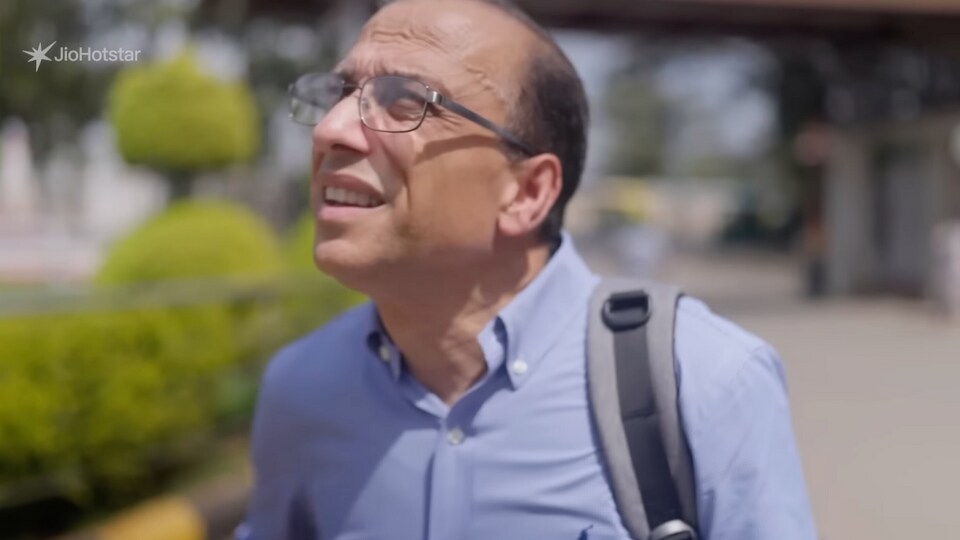
The 130-minute movie, which is in English with subtitles in Hindi, is available on Jio Hotstar. Here’s an interview with the directors.
The Brown Heart has a lot of technical medical information. Is it for the general audience?
Nirmal Joshi: When we started about two years ago, our intent was to reach the mainstream audience-people of South Asian origin anywhere in the world- India, Pakistan, Bangladesh, Sri Lanka and other countries with South Asians. Our primary focus was India because of the sheer number of people there.
We were worried about how to distil down such a complex topic into something that people are able to understand. We went through repeated iterations to make sure we dumb it down to the point where laypeople understand it. But at the end of the day, we took a chance. What we found is that our Indian community (in the US) is very, very educated, and they are very ripe for consuming content that is reasonably complex, and they're able to get it pretty well. I'm not sure if 100% of it resonates, but the feedback overall has still been that it's very understandable.
Renu Joshi: The movie does a pretty good job of balancing medical evidence with the patient stories. That is how the people have perceived it. The feedback that we have got is that this is the first time they have seen personal emotional stories followed by medical evidence. Also, the medical community is a hard community to please. They all think that they know it and know it well. There are many cardiologists in India and in the US who watched the movie and told me that they learnt a lot. My American cardiologist told me that he learnt so much about the South Asian community and their cardiac health in general.
How will this movie in English reach and benefit the blue-collar populace of South Asians with a sedentary lifestyle?
Nirmal Joshi: Currently, the movie has subtitles in Hindi and English. This is one constructive criticism we have got about the film. We made a conscious choice to do it in English because of the extensive medical terminology. We are now ready to dub it in multiple languages. We have a three to six-month contract with Geo Hotstar. After that, we are free to do whatever we want, and my intent for the next round is to get the film fully dubbed using AI and other tools in multiple languages, like Hindi, Telugu and Gujarati. It would have been really nice if the initial film had come out both in Hindi and in English to begin with. That's a limitation.
What other feedback have you got on the film?
The feedback we have gotten overall is on the content. The term being used is that the movie is a wake-up call. Through the lens of human stories, very complex medical concepts are presented. It's not just the head; there is a lot of heart in it, which touches people. Also, the multiple graphics presented help the cause and show the content in a way that people are able to understand.
Renu Joshi: One criticism we received is that the movie is very long. We had originally thought about doing a web series of about four hours, each section being 45 to 50 minutes.
Nirmal Joshi: Another outlier criticism is that the whole thing (movie) is a plot to get doctors to do more tests. When I travelled across India and talked to the people I interviewed and others, one of the things that I discovered was the ongoing mistrust of healthcare providers overall—not just doctors but lab personnel, too.
I don't look at it like toxic criticism. I look at it like a constructive barrier to be overcome. 90% of the feedback has been remarkably positive. I wish we are able to have more viewership,
Besides spreading awareness to the target audience, did you have any other goal with the movie?
Renu Joshi: Our goal is to save lives. That is the only goal we have because it's all charity-based and non-profit. We haven't really raised any money for the movie; everything is charity-driven. Even if 5% of people will change their diets and exercise after watching the movie, our job is done.
Any plans on engagement at the Institutional levels, for example, on food labelling?
Renu Joshi: I'll probably strictly focus on the Indian food labelling, because I think that's where most of the problem is. When I go to an Indian store, no more than two roasted snacks are available because of low demand.
The other big problem is Indian sweets. Indian sweets are killers. I am delighted to see some brands coming up with sugar-free sweets. All India Institute of Medical Sciences (AIIMS) in Delhi has a full millet cafeteria.
We want to engage with the state and central governments in India. We have not given up on our governmental proposals. We'll keep talking. We're going to India in September, and our goal is again to meet with government officials to see what can be done about scaling education about healthy eating to prevent lifestyle diseases amongst Indians. I agree that intervention is needed at an institutional level and more promotion at the government level on healthy nutrition choices.
Nirmal Joshi: There is so much to be done at that level, but there is so much red tape to get past that it is virtually impossible to even reach the people. Even for the film, my attempts to reach the health ministry have been stonewalled.
What are some of the societal trends that might be leading to high Cardiovascular incidence in the Youth?
Eating out is a big trend in India as in the US. The younger generations are not cooking at home as frequently as previous generations. Eating out generally translates to unhealthy stuff for the most part. More healthy choices are becoming available, but attitudes to eating out are still very, very unhealthy. People have a lot of misconceptions about food, like that what is natural is okay. For example, ghee, full-fat milk are okay. There are these societal norms that are significant barriers.
In the US, many restaurants now have calorie information next to the dish on the menu. When we see the calories, it influences our judgment as to which one to have—for example, a large versus a medium helping.
How are you trying to reach the young South Asian demographic with this important information?
Nirmal Joshi: Our target audience-although it's all South Asians, but primarily those between the ages of 25 to 40. When you intervene at that age, you're trying to help them make a lasting change. But, this demographic has an attention span for 15-second bytes, 32-second bytes and so on. As soon as the film was released, we put out 50 reels on Instagram. But the problem is that people don't consume health content easily. Unless a celebrity is saying something, it's not cool.
We know this barrier, and the key is not to get flustered by it, but to work with it. Because what you find is if simply telling people made them change, every smoker would have stopped smoking, every alcoholic would have stopped drinking alcohol. We are highly optimistic. Our job is to remove as many barriers as we can.

Get more updates from Bollywood, Hollywood, Music and Web Series along with Latest Entertainment News at Hindustan Times.


