
 E-Paper



Robert Redford was a new kind of movie star
Mr Redford worked steadily, but acclaim for his acting eluded him: he received just one Oscar nomination, for “The Sting”


 Prefer HTon Google


“I’M ROY HOBBS—your new right-fielder.” Standing in a baseball dugout, wearing a leather jacket over an Oxford shirt and a tie, Hobbs has crows’ feet and a lined face. He looks a good decade or two older than the rest of the New York Knights, as the team’s manager notices: “Fella, you don’t start playing ball at your age. You retire.” But when Hobbs changes into his kit, he is transformed. When he takes the field, his swing is fluid; he moves with efficient, feline grace.
Robert Redford was approaching 50 when he played Hobbs in “The Natural” (1984). He had been a movie star for nearly two decades. What is a movie star? It is not the same thing as a great actor. John Turturro and Frances McDormand, for instance, routinely deliver terrific performances, but could probably walk down the street without being recognised. Dwayne “The Rock” Johnson and Tom Cruise could not, but nobody is waiting for their “Hamlet” (or at their age, “King Lear”).
Movie stars are always themselves: they do not disappear into roles so much as they put their characters on their shoulders and carry them around. Mr Redford, who died on September 16th at the age of 89, fitted that mould perfectly. Viewers believe in Hobbs because he is Robert Redford, who retained his boyish charm into middle age.
Had the film remained more faithful to Bernard Malamud’s novel, in which Hobbs is a vain, embittered failure, Mr Redford could not credibly have played him, because Mr Redford’s characters rarely failed. At the end of “The Sting” (1973), he sat up, having apparently been shot, and wiped the faked blood from his mouth. “Butch Cassidy and the Sundance Kid” (1969) ended on a held shot of him and Butch, guns blazing, as they faced impossible odds. Even “All Is Lost” (2013), one of his final films—in which he played a man lost at sea, was the only cast member and had almost no dialogue—ended with him grabbing an outstretched hand as his boat burned above him.
He was also a reliable romantic lead, especially early in his career. His breakout role was as a conservative lawyer in “Barefoot in the Park” in 1967, opposite a free-spirited Jane Fonda. Six years later he starred as another star-crossed lover in “The Way We Were”: he played the part of an easy-going WASP while Barbra Streisand was a Marxist activist. Mr Redford’s best romantic role came in 1985 when he portrayed Denys Finch Hatton, a big-game hunter, opposite Meryl Streep’s strong-willed aristocrat in “Out of Africa”.
Sydney Pollack, who cast Redford in “The Way We Were”, “Out of Africa” and “Three Days of the Condor”, the paradigmatic mid-70s paranoid thriller, compared him to “old-fashioned movie stars who were…heroic in a kind of understated way”. Unlike some of his contemporaries, such as Al Pacino and Robert DeNiro, Mr Redford did not scream or shout. His most marked characteristic as a star was a certain reliable steadiness, which is not terribly exciting on its own but made him a good foil. “The Sting” and “Butch Cassidy” paired him with Paul Newman, who was a decade older, and whose garrulous charm paired perfectly with Mr Redford’s laconic watchfulness. Mr Redford played the older half in “All the President’s Men” (1976) opposite a prickly, irascible Dustin Hoffman.
The Sundance Kid rides on
Mr Redford worked steadily, but acclaim for his acting eluded him: he received just one Oscar nomination, for “The Sting”. He earned more as a director, winning an Oscar in 1981 for “Ordinary People”, a haunting portrayal of a family that falls apart after one son dies and another tries to kill himself. In all he directed nine films, none of them runaway hits, most of them the sort of thoughtful dramas that win dutiful praise from critics, but fade with time.
His most enduring legacy, therefore, may be his championing of independent film-making and environmental causes. Born in Santa Monica, he took a dislike to Los Angeles and expensive, formulaic Hollywood films. He bought land in Utah, where his first wife grew up. He built a ranch and, in 1981, founded the Sundance Institute to help independent film-makers hone their work. Four years later the institute took over a small film festival in Park City; it became the world’s leading festival for independent films and hosted the premieres of movies by Steven Soderbergh, Quentin Tarantino, Guy Ritchie and Sofia Coppola, among others.
Mr Redford fought for land conservation in Utah and beyond, becoming a trustee of the Natural Resources Defence Council. He campaigned for the Alaska National Interest Conservation Act, passed in 1980, which protected swathes of park land in Alaska. He fought against the construction of a huge coal-fired power plant on land in Utah that is now part of the Grand Staircase-Escalante National Monument. In his wake other Hollywood actors, including Leonardo DiCaprio and Woody Harrelson, have used their fame to fight for environmental causes.
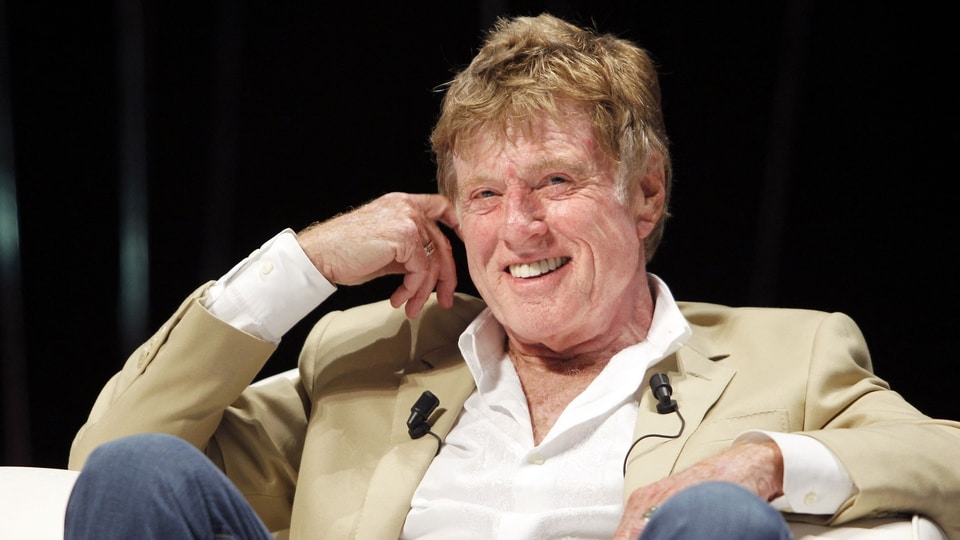
Unlike many film types, Mr Redford aged gracefully; his loping walk suited an elder statesman of the American West. Unusually for an actor known for his looks, he was good-humoured about his physical decline. “I was blessed to look well and retain a youthful look, but that was just genes,” he said. He was disappointed when critics focused on his wrinkles at the expense of everything else. Mr Redford was a movie star. But he wanted “to be permitted to be human”, on screen and off it.


