
 E-Paper



Ravi Adhikari opens up on bringing back iconic SAB shows and why AI can't be used to 'create from scratch' | Interview
Ravi Adhikari, the Managing Director of SAB, talks about the brand's legacy and his vision forward in the age of artificial intelligence.

 Prefer HTon Google


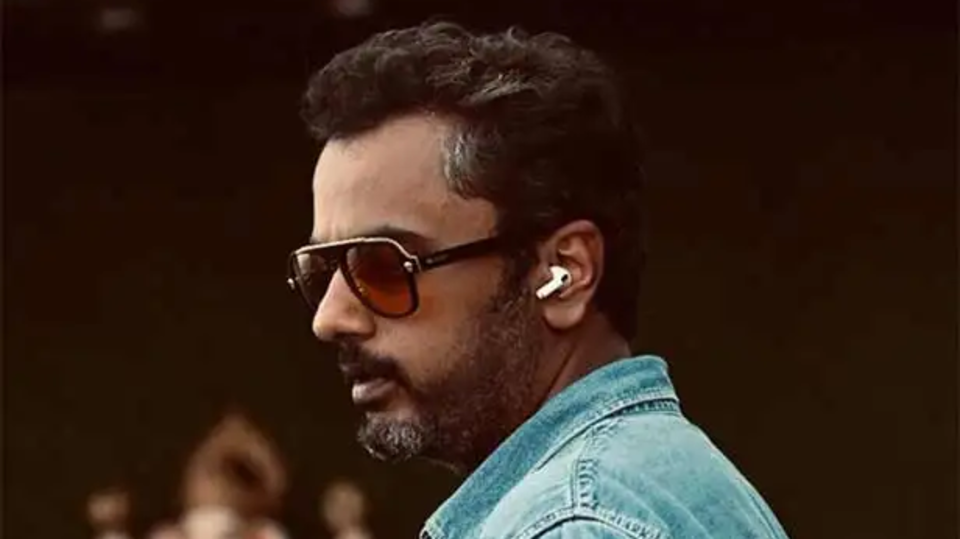
For those who grew up watching TV in the 90s, the Sri Adhikari Brothers logo is imprinted on their memories. Before it became a TV channel, SAB was a production house associated with some of the most iconic Hindi TV shows of the 90s. Three decades on, the TV landscape may have changed, but SAB soldiers on, now shepherded by a new generation. Ravi Adhikari, the son of co-founder Gautam Adhikari, is leading the charge in the era of OTT and AI. In a candid conversation with Hindustan Times, Ravi speaks about managing the legacy of India’s first listed media company, striking a balance between emotion and business, and how his production house is using artificial intelligence not to replace human creativity but to enhance it.
On legacy and emotion over business
Taking over a massive legacy like SAB is a task that carries both pride and pressure. For Ravi Adhikari, the journey is defined by a creative process that is almost entirely driven by passion rather than cold calculation “For me, business is not an emotion. We, creators, are more emotionally inclined with every project, and that is my issue. Whatever I do, I get emotionally involved. When it comes to business, it’s about creating more wealth than money right now. That is why I am talking about our IPs, the shows. If I compromise on the product just to earn a few extra bucks on this particular project, then the business is not going to work (in the long term),” he says.
The nostalgia Blueprint: Why 90s shows still connect
SAB produced some of the most iconic television shows of the 90s, from Shriman Shrimati to Suraag. Most of these shows maintain a dedicated audience decades later. Ravi points out that their success didn’t rest on high production values, but on pure, raw connectivity with the characters "No show or film will give you numbers just on production value. That is just good-looking stuff. If the story or the character doesn't work, or it doesn't connect, it will never work. Else Bombay Velvet would be the biggest film today,” he argues. He says that in the 90s, "creativity was born out of scarcity." For him, characters are what people carry with them long after the credits roll.
“Whenever you watch a movie or show, what you take back is a character, it's not the story. People watch Sholay for Gabbar, for Jai-Veeru, or for Basanti. You watch Rockstar for Jordan. That connects with people. That is what made shows like Shriman Shrimati so relatable. It was a show about coveting your neighbour’s wife, yet it never crossed a line. Parents would watch it with their children. That was always handled in a very clean, family-friendly way.” He says this relatability stood in stark contrast to the highly stylised, aspirational daily soaps of the 2000s, where characters slept fully decked out in makeup and jewellery to sell a dream rather than reality. “Our characters didn’t go to sleep wearing jewellery. Reema Lagoo used to be in a nighty, and Rakesh Bedi sir in a kurta pyjama. There was no thought towards aesthetics,” he says with a smile.
Bringing back the classics for the modern era
Ravi proudly informs us that SAB boasts a vast library of over 5,000 hours, comprising more than 10,000 episodes. He now looks to bring back some of the most iconic shows from this library, but through a contemporary lens rather than just nostalgia. “If I am doing a crime show like Suraag, there is still crime today. But what we have changed is the kinds of cases there. It's not just about murder anymore. We have cybercrimes and lots of other things. The audience is also very exposed to all sorts of shows from around the world,” he explains.
AI can collaborate, not create
In today's creative landscape, discussions surrounding Artificial Intelligence (AI) are polarising, to say the least. Ravi believes in keeping up with the times and using AI. However, he is firm that AI can never replace the human spark. The filmmaker is excited about the hybrid future of AI, particularly for preserving and reviving legacy. "I am trying [to use AI to revive past shows]. Like in Sreeman Sreemati, Jatin Kanakia, and Reema Lagoo are not there. How can I get them back?” He said the idea came to him when he heard about Paul Walker’s character returning in the Fast and Furious franchise a decade after his death. “They are creating Paul Walker, reanimating him with AI. So, I thought, why can't I do this?” he says.
But Ravi emphasises that AI is a collaborator, an assistant. It can never replace human creativity. “If you just have an AI subscription, you are not a maker,” he asserts. “You need a man behind the machine. So, yes, and we are concentrating on that, because it's not that I need to take people’s jobs. It's not that; it is a collaboration tool for us. For a maker, if you are not evolved with today's time, then you will obviously perish. AI is a tool that makes things easier for me. I don't have to depend on many people or large budgets. It is helping me show my vision by filling the gap between visualisation and execution. AI-generated IP will have its own segments. There will be a flood of AI content, and you will want that differentiation. People will emphasise their show is ‘made by humans’.”


Get more updates from Bollywood, Taylor Swift, Hollywood, Music and Web Series along with Latest Entertainment News at Hindustan Times.


