
 E-Paper



‘Unabomber’ review: The education of a terrorist on Netflix
Jacob Tremblay, Russell Crowe, Shailene Woodley star in a film that splits its story between manhunt for Kaczynski, his years as Harvard student decades before


 Prefer HTon Google


When Ted Kaczynski was still killing people with unsigned explosives, the Associated Press would slug its stories UNABOM, after the FBI’s internal code for the case—(UNiversity and Airline BOMing). That tag eventually morphed into “Unabomber,” the title of this tidy, taut, but quite liberal account of a murder spree that took three lives and an investigation that took 17 years.
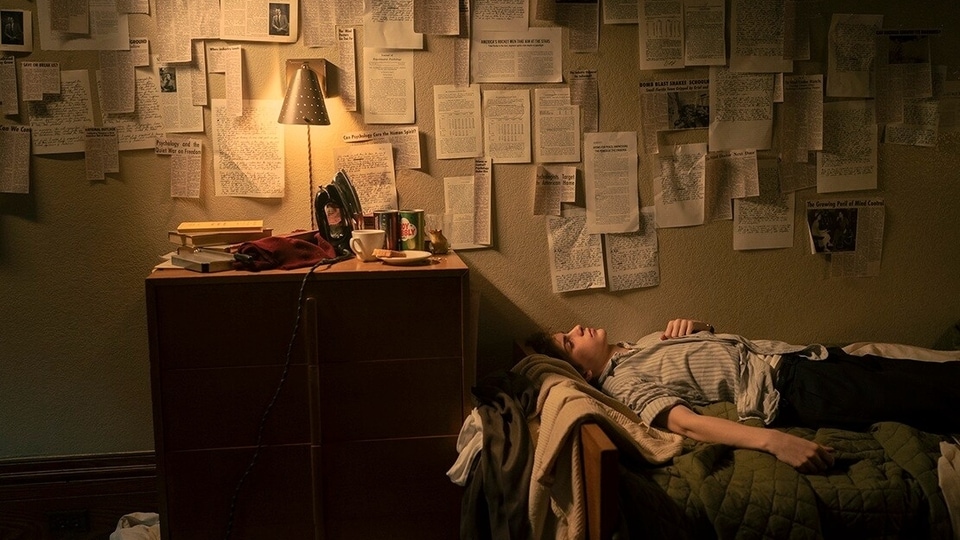
The death toll of the so-called Unabomber is a bit misleading, since he also injured 23 people beginning in 1978 and terrorized a nervously uncertain group of potential victims—his mailings went to people in science, business, advertising, transportation and academia. After major newspapers acceded to Kaczynski’s demand that they publish his 35,000-word “manifesto” in 1995, the bombings stopped. And the investigation took on a new life.
That is roughly the point where “Unabomber” picks up the story, in its version of present tense—with fictional FBI agent Joanne Miller (Shailene Woodley) taking on and solving a case that her dismissive male counterparts have spent years trying to crack. But the film, directed by Janus Metz (“Andor”) and written by Sam Chalsen and Nelson Greaves, splits its time between the investigation driven by Miller and the education at Harvard University, beginning in 1958, of the young Ted Kaczynski (Jacob Tremblay, “Room”).
It is Miller, backed up by the suspicions of Kaczynski’s brother, David (Matthew Kevin Anderson), who insists that the stylistic similarities between the manifesto and other Kaczynski writings are the link between the angry hermit in the Montana cabin and the person sending IEDs through the USPS. (Criminal profiler James R. Fitzgerald is usually credited with this breakthrough, with the proviso that there was a whole team on the case.)
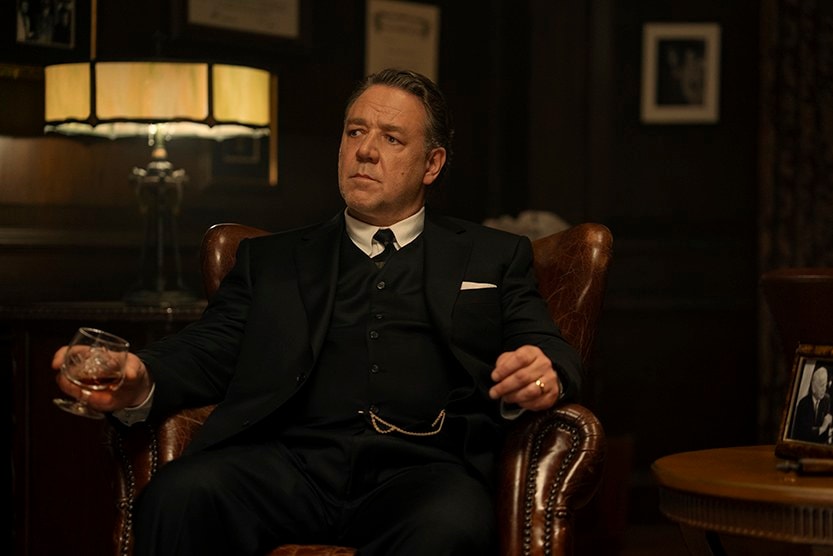
“Education” is less accurate than “indoctrination” or even “radicalization” in describing what the young, unformed Kaczynski undergoes at Harvard. Director Metz and his cinematographer, Yves Bélanger, give the university the kind of burnished look familiar to Ivy League memoir films, but that’s something of a setup. In Cambridge, Mass., the socially awkward, possibly asexual, wannabe philosopher Kaczynski is taken under the untrustworthy wing of real-life professor Henry Murray (Russell Crowe), whose “agency”-funded psychological experiments are intended to explain the brainwashing of American POWs during the Korean War. Mr. Crowe, retaining a trace of his Hermann Göring from “Nuremberg,” is transparently deceitful to everyone but his besotted student, who agrees to be one of Murray’s guinea pigs. But the process, as intended, humiliates Kaczynski. And this along with his sophomoric views on industrialization—and dehumanization via corporatization—are the reasons why, years later, he would be blowing people up.
“Unabomber” walks a fine line between explaining and excusing, but the opening sequence stings—the retrieval of a package from a mailbox in 1994 suburban New Jersey by Susan Mosser (Tanya Clarke), which she delivers to her husband and penultimate Unabomber victim, Tom (Michael Buie). The scene is not just about creating enormous tension, which it does. (Marco Beltrami’s music helps enormously here, and elsewhere.) It’s about the implicit cowardice behind the explosion to come. It’s hard to redeem a character who does something like that, regardless of how vile Murray and his lover/collaborator Christiana Morgan (Annabelle Wallis) are, or how naïve the young Kaczynski might have been. You root for the right people in “Unabomber,” even if the heroine is fictional and the talented Mr. Tremblay makes youthful frustration and rage a bit too sympathetic.
Unabomber
Friday, Netflix
Mr. Anderson is the Journal’s TV critic.


