
 E-Paper



Central Vista verdict sets template for pollution mitigation features in new projects
The Supreme Court has also directed the Union environment ministry to consider issuing general directions for installation of smog towers as an integral part of all future major development projects

 Prefer HTon Google


Smog towers and smog guns are likely to be an integral air pollution mitigation feature in all future major development projects, especially in cities with high air pollution.
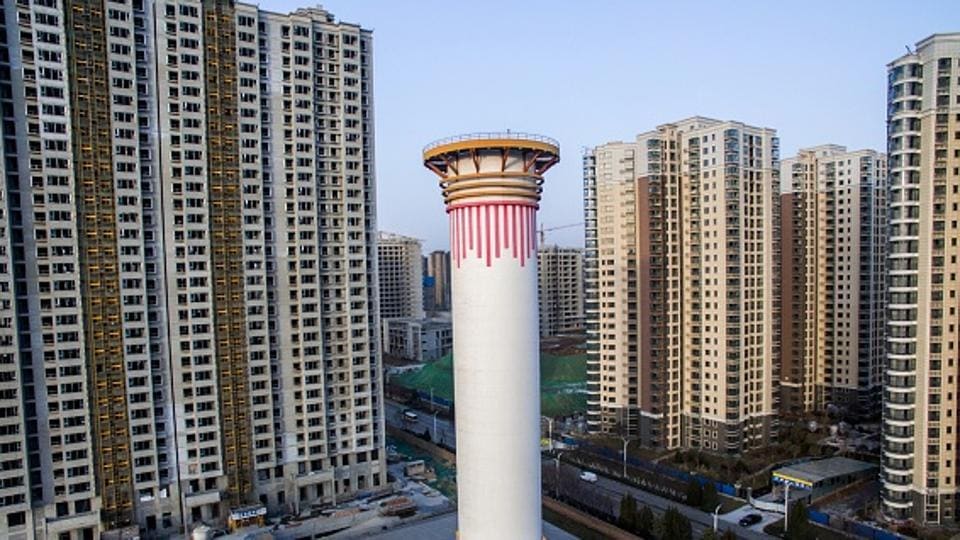
The Supreme Court (SC) in its judgement on the Central Vista redevelopment project on Tuesday has directed that “the project proponent may set up smog tower(s) of adequate capacity, as being integral part of the new Parliament building project; and additionally, use smog guns at the construction site throughout the construction phase, in progress on the site.”
SC has also directed the Union environment ministry to consider issuing general directions for installation of smog towers as an integral part of all future major development projects, particularly in cities with high pollution levels.
However, experts are of the view that the environmental footprint left by a massive redevelopment project like the Central Vista cannot be neutralised effectively only by controlling air pollution during the construction phase.
“Unless there is a solid plan for controlling traffic emissions, short term strategies for future projects will not help. Also scientifically, there is no evidence that smog guns and smog towers work. In all future development projects, a holistic air pollution control strategy is needed for continuous control and mitigation,” said Sagnik Dey, Professor, Centre for Atmospheric Sciences, IIT-Delhi.
A senior official of the environment ministry said, “We will integrate the directions of SC in all future projects.”
Environmental and legal experts contend that the cumulative long term ecological impacts of the Central Vista project haven’t been studied and the grand project was broken down into components for ease of getting clearances. This, they fear, could set a precedent for future townships and major development projects.
Also Read: Central Vista plan gets SC nod in 2-1 majority verdict
The Parliament project got the environmental nod in June. In December, the environment ministry’s expert appraisal committee (EAC) granted conditional terms of reference (TOR) for development or redevelopment of common central secretariat buildings and central conference centre along with Prime Minister’s Residence, SPG Building and Vice President’s Enclave—all part of the Central Vista project--- as separate projects. This still doesn’t include the New India Garden which is likely to come up near Yamuna and is also a part of the Central Vista project.
The 18 conditions specified by EAC for the central secretariat buildings include listing environmental, social and economic benefits of the project; cumulative impact of all development activities within Central Vista avenue including baseline environmental quality along with projected incremental load due to construction; environmental data on land, groundwater, surface water, air, biodiversity, noise and vibration, socio economic and health impacts; a detailed demolition plan, groundwater recharge and a traffic management plan; a recommendation from the Delhi Urban Arts Commission (DUAC).
Also Read: Dissenting judge laments lack of public consultation
While the total built-up area has been reduced from 18,37,057 sq m to 17,21, 500 sq m, the cost of the redevelopment project for the Central Secretariat buildings has increased by ₹1,656cr, from R11,794cr to R 13,450 cr. Minutes of EAC’s meeting suggests around 4,58,820.0 sqm built up area will need to be demolished. The buildings currently at the site include Indira Gandhi National Centre for Arts (IGNCA), Shastri Bhavan, Krishi Bhavan, Vigyan Bhavan, VP Residency, National Museum, Jawahar Bhavan, Nirman Bhavan, Udyog Bhavan, Raksha Bhavan, INS Hutments.
Experts have also stressed that the environment ministry considers the cumulative impacts of large building and redevelopment projects.
“Clearly the bench could not come to an agreement on whether the EC approval to the Parliament is legal or not. As Justice Khanna’s dissenting view shows, he is not persuaded by the government’s claim that the Parliament should be viewed as a stand-alone project when it is in fact only one component of the tender for Central Vista redevelopment,” said Manju Menon, senior fellow, Centre for Policy Research.
She added that with the dissenting judgment on this matter, the integrated nature of large building and construction projects, has now gained a lot of legal importance.


