E-Paper



In 1901, two Oregon naturalists documented bird and sea lion killings; six years later, Theodore Roosevelt made Three Arch Rocks a wildlife refuge
Two young naturalists documented bird slaughter at Three Arch Rocks in 1901, and the president turned the Oregon coast islands into a refuge in 1907.

 Prefer HTon Google


Looking out into the ocean from the beach in Oceanside, Oregon, one sees some small rocky islands just off the coast, appearing to be part of a scenic view rather than an actual sanctuary. However, according to the U.S. Fish and Wildlife Service, the nine rocks and islands that make up the refuge total 15 acres. The Three Arch Rocks National Wildlife Refuge is home to the largest and most diverse seabird colony in Oregon, with common murres among the species that nest there.
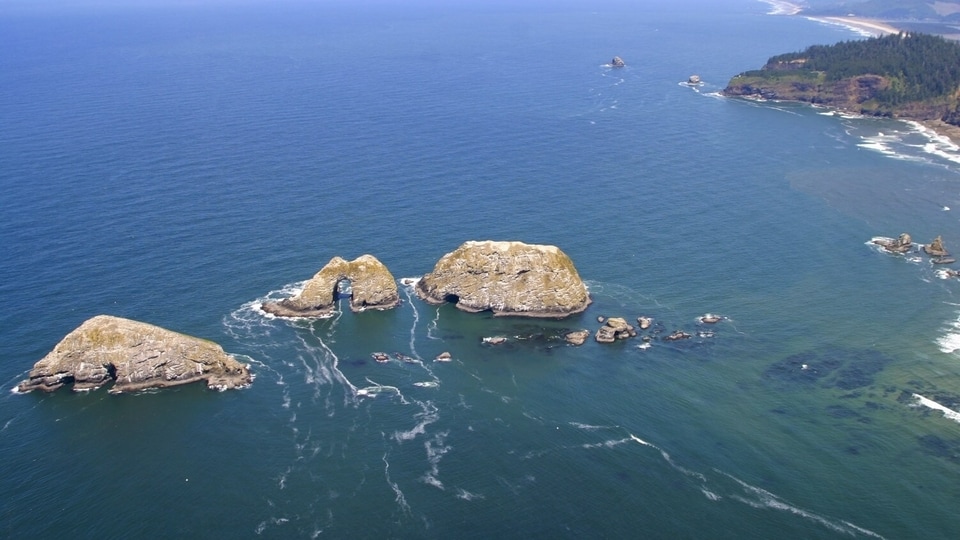
The refuge also plays an important role in national history. Established on October 14, 1907, it was the first national wildlife refuge west of the Mississippi River, following efforts by two young naturalists, William L. Finley and Herman Bohlman. Steller sea lions also inhabit the islands, which serve as the only pupping site for the species on the north Oregon coast.
How Finley, Bohlman documented seabird colony
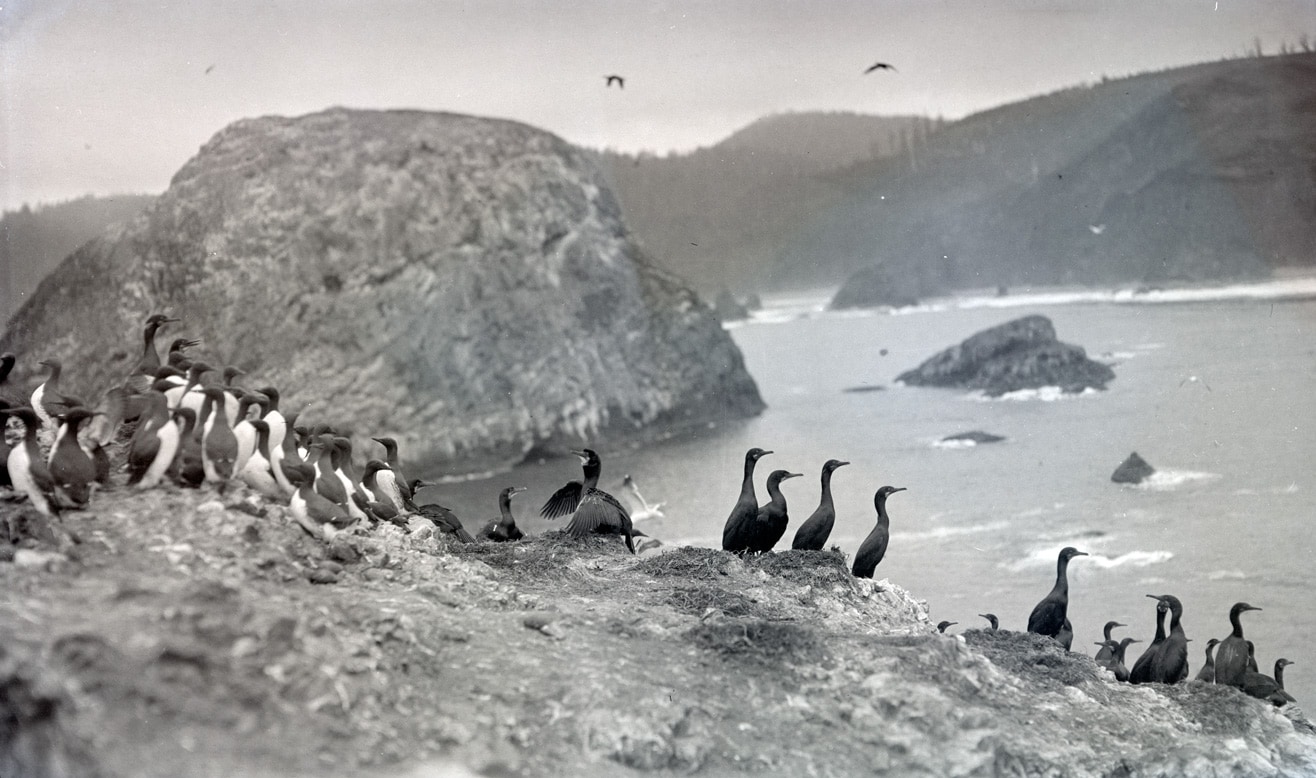
Captain Meares gave the name Three Brothers to the rock formation in 1778. More than a century later, two Portland naturalists brought attention to the islands and their wildlife. The Oregon Encyclopedia, a project of the Oregon Historical Society, describes how Finley and Bohlman spent several weeks in 1901 photographing scenes of birds and sea lions being killed on the rocks. In June 1903, they returned and spent 14 days camping on the westernmost rock, observing and photographing wildlife from the island's steep slope.
Up close, the pair found that murres crowded together by the thousands, up to seven birds per square foot, and built no nests. Their pear-shaped eggs could spin in place without rolling off the cliff. Pigeon guillemots tucked into crevices on the lower levels, Brandt's cormorants built grass nests on flat surfaces, and tufted puffins dug burrows in grassy slopes. The rocks sheltered 60 percent of Oregon's puffins. Constant wind, air currents, and the height of the rocks also helped puffins and guillemots, whose short wings and heavy bodies suited diving better than flying, take off and land.
The variety went beyond nesting styles. The Oregon Encyclopedia describes the rocks as supporting nesting seabirds of 13 species, with the different birds able to share the limited space because they feed in different areas, at varying depths and on different foods. Murres, guillemots, cormorants, and puffins breed in spring and summer, while brown pelicans and sooty shearwaters arrive in summer and fall, and Western grebes appear in winter.
Steller sea lions are among the largest animals using the rocks. Bulls can weigh up to 2,500 pounds and measure as much as 11 feet long. They hunt at night 15 to 20 miles out at sea before returning to the rocks to rest, molt, mate, and give birth. The species has low productivity and is listed as threatened under federal protection. On windy days, the roar of the sea lions can be heard in Oceanside.
How the photographs reached Washington
Finley presented the naturalists' findings and photographs in Washington, D.C., and President Theodore Roosevelt issued Executive Order 699 on October 14, 1907, reserving Three Arch Rocks as a preserve and breeding ground for native birds and animals. The Oregon Encyclopedia notes that it was only the third sanctuary created in the nation. On October 23, 1970, Congress designated Three Arch Rocks as a wilderness area under Public Law 91-504.
Today, the refuge is part of a much larger conservation system. The National Wildlife Refuge System, founded in 1903, now includes more than 570 national wildlife refuges, according to the U.S. Fish and Wildlife Service. The system focuses on conserving wildlife and habitats while also providing opportunities for compatible recreation. Three Arch Rocks itself is closed to public entry throughout the year because of the sensitive nesting habitat it protects for seabirds and marine mammals.