E-Paper



Number Theory: How big is $100 billion in terms of climate finance?
What does the amount of $100 billion mean for climate finance? Here are four charts which explain this in detail.
Published on: Sep 22, 2023, 10:26:56 IST

 Prefer HTon Google
Share via


Copy link

“We recall and reaffirm the commitment made in 2010 by the developed countries to the goal of mobilizing jointly $100 billion climate finance per year by 2020, and annually through 2025, to address the needs of the developing countries, in the c

How big is $100 billion in terms of climate finance
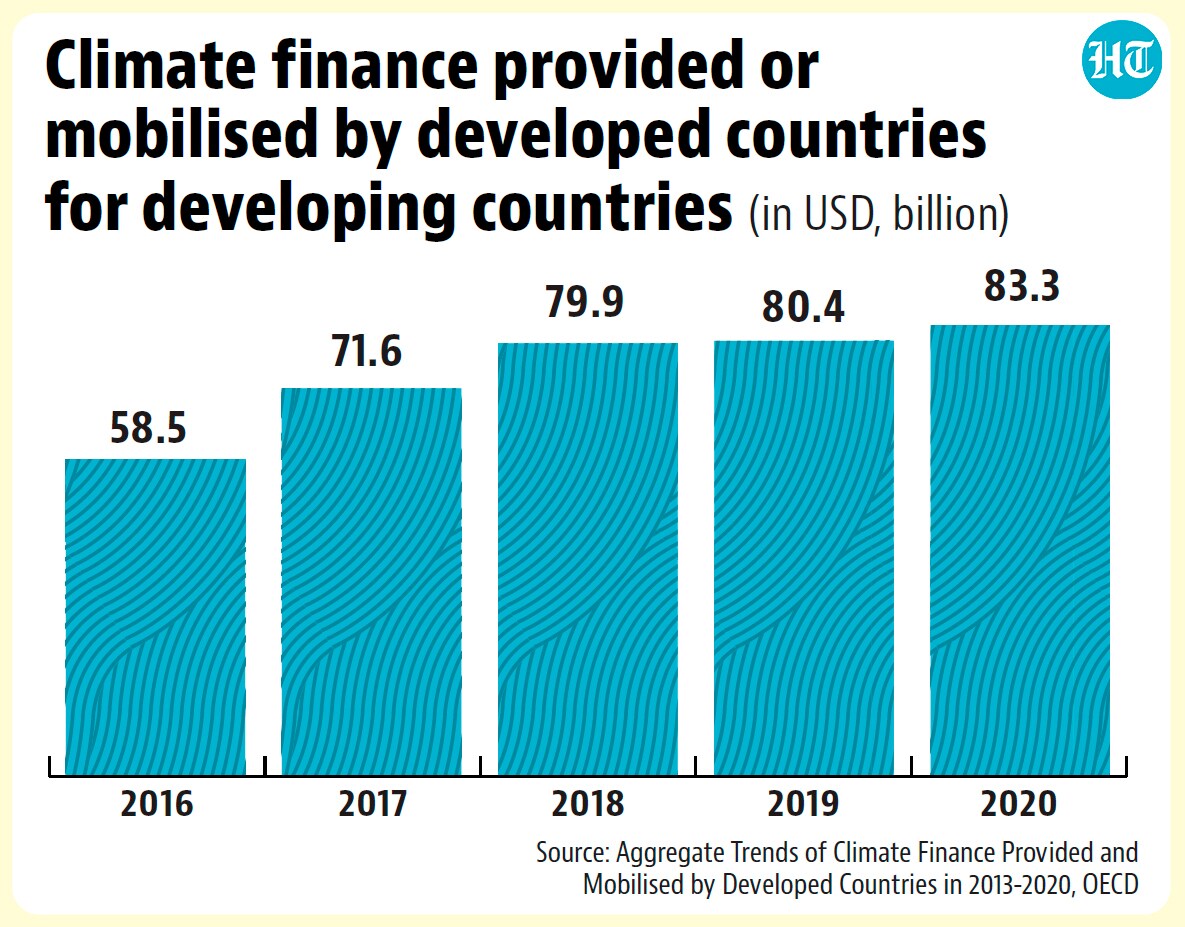
 The promise of $100 billion was supposed to materialise in 2020There is widespread consensus that the business-as-usual scenario will only worsen the climate crisis to the extent of making its harmful consequences irreversible. The reason why collective action towards mitigating this problem lags what needs to be done is a dispute about who will foot the bill. Developing countries rightly claim that part of their climate crisis mitigation costs must be paid for by developed countries which have played a big role in cumulative carbon emissions. While developed countries have accepted this argument in principle, they have been less forthcoming in matching it with actual financial contributions. It was in this context that developed countries agreed to provide $100 billion a year in climate finance to developing countries by 2020 in the 15th Conference of Parties (COP) held in 2009. Data from the Secretary General of the Organisation for Economic Co-operation and Development (OECD), a forum of market-based economies tasked by donor countries for tracking this finance, however, shows that this target was not achieved by 2020. This target was reiterated and extended to 2025 in the Paris COP held in 2016. The G20 declaration says that it is likely to be realised in 2023.
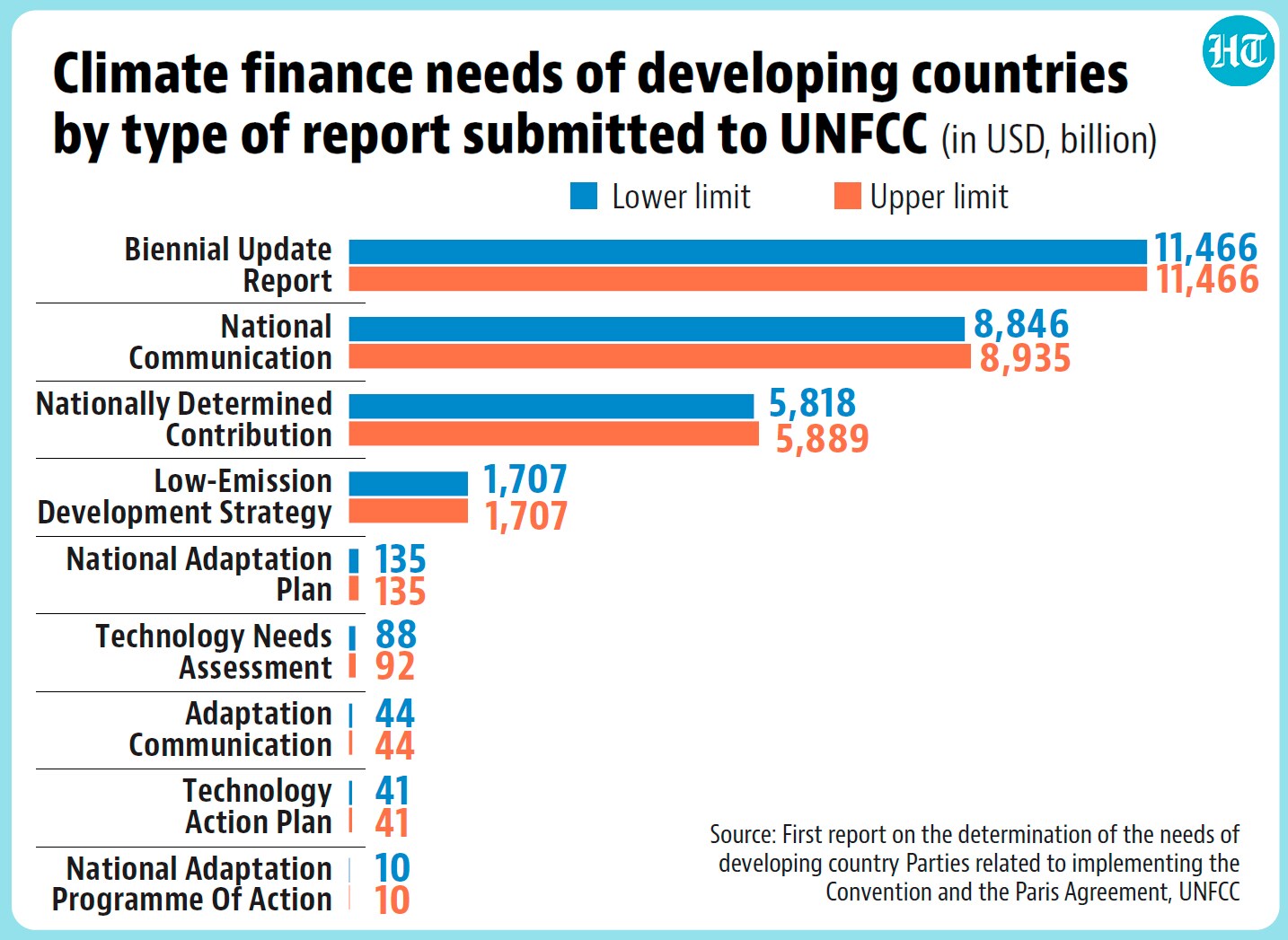
- $100 billion per year is a small fraction of developing countries’ climate finance needsWhile developed countries may finally honour their commitment in 2023, it comes nowhere close to the climate finance needs of developing countries. The G20 summit declaration is categorical on this. “...note the need of $5.8-5.9 trillion (per year) in the pre-2030 period required for developing countries, in particular for their needs to implement their Nationally Determined Commitments (NDC),” the declaration said. This means that $100 billion from developed countries will be less than 2% of the annual climate finance requirement of developing countries. To be sure, there is good reason to believe that actual climate finance requirement of developing countries is greater than what the NDC's capture. In at least one other set of reports, namely the National Communications reports that parties to the United Nations Framework Convention on Climate Change (UNFCC) submit, developing countries have calculated their annual needs to cost $ 8.8-8.9 trillion.
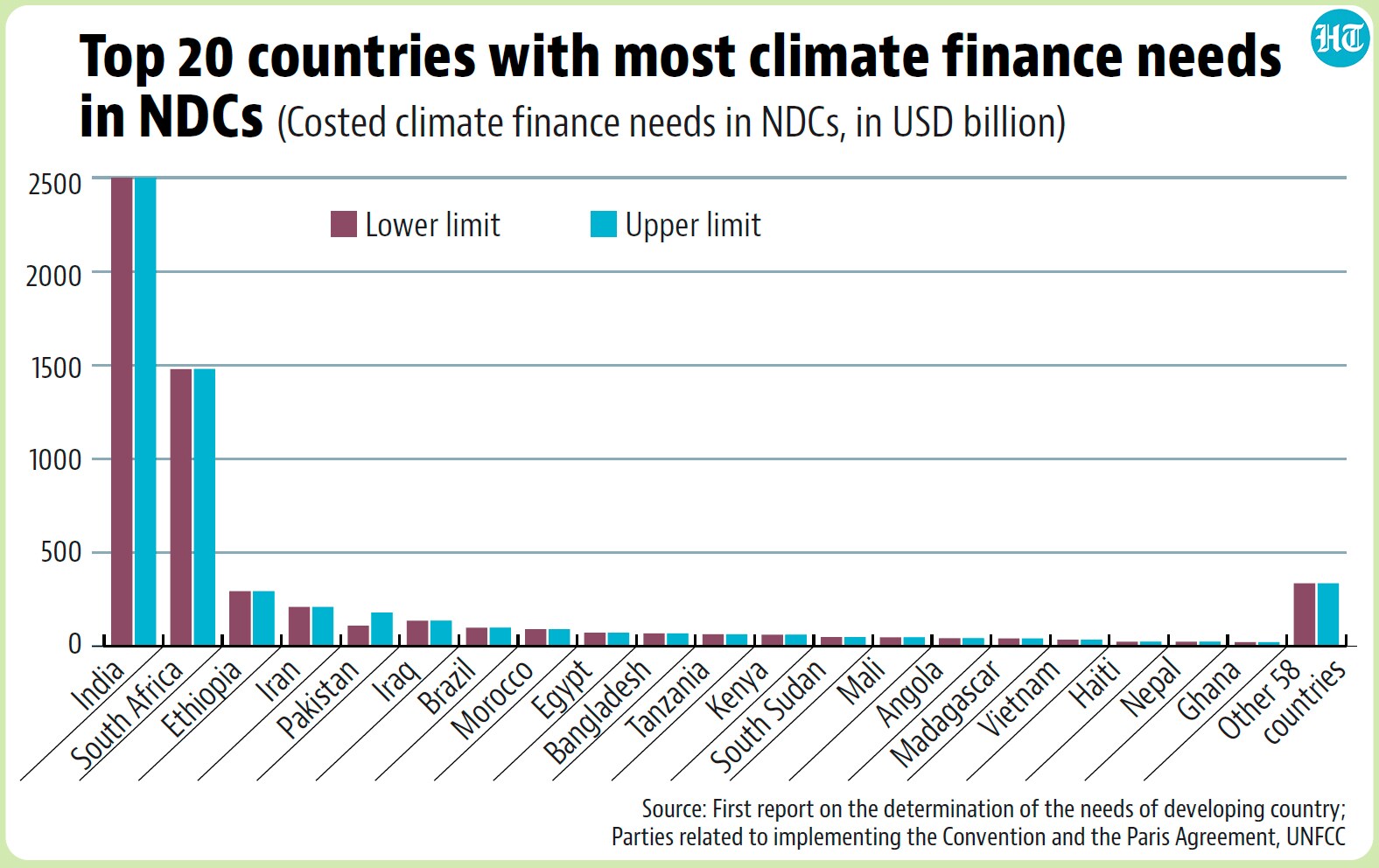
- And declared climate finance requirements do not capture everythingTo be sure, at least some of the gap between developed country finance and developing country needs for finance is the result of failure or inability to articulate costs in case of resource- or expertise-poor countries. According to the only UNFCC report that has tried to estimate developing country needs for NDCs, 153 countries listed 4,274 needs. Of these, costs were submitted for only 1,782 needs by 78 countries, which is where the $5.8-5.9 trillion estimate comes from. Even in this list of 78, it is just two relatively richer countries – India and South Africa – that represent two-thirds of this amount. The number was not available for China, which could bump this number significantly.
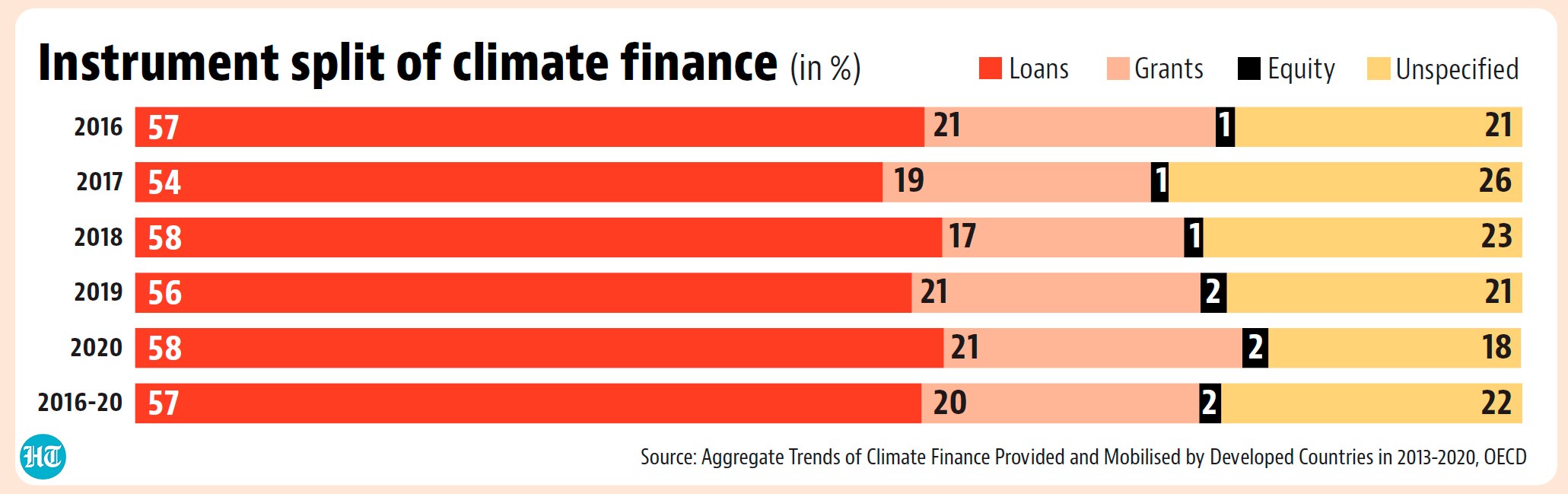
- Developed countries are not donating this money for climate changeThe failure of developed countries in meeting the $100 billion goal is more striking when one looks at its breakup by the instrument of finance. The OECD reports (comparable data in these reports is available for the 2016-2020 period) show that 57% of the money financed in this five-year period was through loans and only 20% through grants (the breakup was not available for 22% of the money). Clearly, developed countries will recover a majority of the $100 billion finance. Although the language of climate negotiations suggests that developing countries are asking developed countries to pay for their historical emissions, the latter are not in reality paying reparations for warming the planet. To be sure, it is possible that a large part of the loans is on favourable terms than market rates. The OECD report, for example, calculates 75% of bilateral public finance (which accounts for 40% of the 2016-2020 finance) as concessional. However, this share of concessional loans was not available for all categories of finance and its definition also depends on the donor’s and recipient’s context.
ontext of meaningful mitigation action and transparency in implementation”, noted the G20 New Delhi Leaders’ Declaration released on September 9.