
 E-Paper



Euro 2016: No personalities or clear plan, England suffer shock elimination
England’s shock defeat against Iceland and another early elimination from a major tournament once again lays bare all that is wrong with the national team in a nation boasting of the world’s biggest football league.


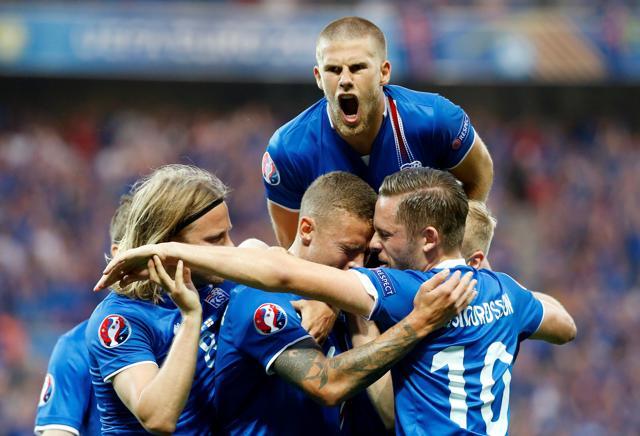
Iceland cometh. Before the week is out they may ‘goeth’ too but between then and now, it is time to celebrate for a country so small that their success has left even the English agape. And when England talk about how tiny a country is in the context of another early exit from a football tournament, you understand the extent to which their national team has underperformed. Again.
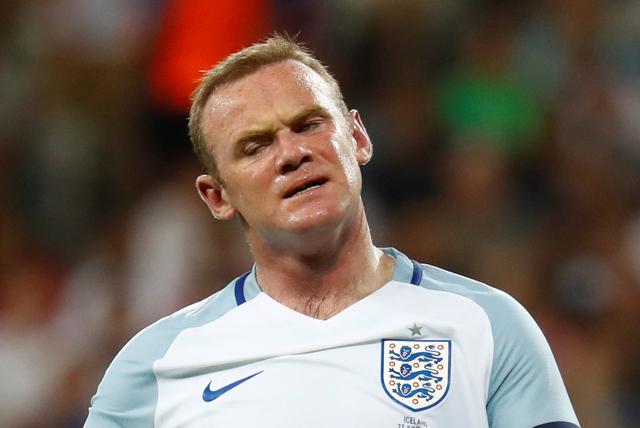
Roy Hodgson’s team in Euro 2016 hovered somewhere between being inept and insipid. They couldn’t beat Russia and Slovakia and barely managed to get over the line against Wales. And there would be no doubting which was the better team in Monday’s pre-quarter final.
Business as usual
There will be recriminations, for sure. The hunt for Hodgson’s successor has already begun, hours after the players left with the chant that they don’t deserve to wear this shirt ringing in their ears. But --- and this is important— come August, the big ball will start bouncing in the Premiership and, as Amir ‘Rancho’ Khan didn’t say in ‘Three Idiots’, all will be well. Till Russia in 2018, that is. And then, there will be more of the same.
Read more | Euro 2016: Iceland turn England’s gifts on them in biggest win
Okay, maybe the cynicism (or is it clairvoyance?) is unwarranted but since England’s underachieving as a football team continues to be inversely proportional to the popularity and quality of its Premier League, it does seem that they are related. It also seems that the world’s richest league does not really create the right conditions to groom a competitive national team.
The perfect picture
Buoyed by ever-increasing amounts they get from television rights --- the Premiership, according to a recent estimate mentioned in the English media, reaches 185 countries and 730 million homes --- English clubs prefer buying their way to success. No player is too expensive for Manchester City, Manchester United, Chelsea, Arsenal or Liverpool unless he is a Messi, Bale or Ronaldo. And because the league is so popular, the rich and powerful (mostly Americans and Arabs with the odd Asian thrown in the mix) see owning Premiership clubs as an investment and a way to announce their arrival to the world. That, in turn, means more money available to source players and coaches.
Read more | Embarrassing, the ultimate humiliation: English media on Euro 2016 ouster
For these foreigner owners, the English national team doesn’t and, really, shouldn’t matter. The performance of their clubs in Europe and the Premiership does. So, the idea to groom future Marcus Rashfords is not uppermost on their minds. In Germany, there is a ‘50+1’ rule which means the majority of the club’s ownership will remain with its members. All Bundesliga clubs barring Wolfsburg and Leverkusen, owned by Volkswagen and Bayer respectively, adhere to this rule.
Over 80% of Bayern Munich is actually owned by members, most of whom are Germans. It is not difficult to understand why Germany are world champions and swatted aside Slovakia on way to the quarter-finals. Real Madrid and Barcelona are fan-owned clubs too.
Working in tandem
For a country to have a successful national team, its federation and league should be on the same page. After the World Cup final in 2014, Germany coach Joachim Loew spoke of how the victory was the culmination of a plan set by him and Juergen Klinsmann nearly 10 years ago. The plan was to get Bundesliga clubs to play the way Klinsmann and Loew wanted the national team to play. Trying that in the Premiership would seem as impossible as getting England to win a major football tournament.
A tweet from FC Barcelona on Tuesday morning highlighted how all its age-group teams play a similar style of football. It was the style that helped Spain shed their underachievers’ tag and rule world football till Italy shut them out on Monday. If sport is said to be real time in fast forward, eight years of dominating football can seem like a lifetime, equalling what the great Brazil team did between 1958 and 1966.
Not aiming high
Spain and Germany have shown the kind of purpose England haven’t, be it under Hodgson, Fabio Capello or even Sven Goran Eriksson. With quarter-final berths in 2002 and 2006 World Cups and the 2004 European Championship, Eriksson has been England’s most successful coach this millennium and that alone tells you how low the bar has been set.
Except in 1990 and 1996 when England made the semi-finals of the World Cup and the European championship respectively, its national team has usually flattered to deceive. They didn’t qualify for the 1974, 1978 and 1994 World Cups and the 1964, 1972, 1976 and 2008 editions of the European championship.
Such an ordinary record, however, did nothing to temper England’s confidence going into the pre-quarterfinals. The team’s support staff had reportedly punched the air when they learnt Iceland would be up next. A report in the Guardian said Hodgson took a trip on the Seine instead of watching Iceland play live. It is a sense England bring to every major tournament, and like smoking, it seems like a bad habit they are struggling to rid themselves of. That Guardian report also mentions that Iceland has one Uefa B licence coach for every 825 members of the population. England has one for every 11,000, it states.
Add to this Hogdon’s seemingly erratic team compositions and the recipe for disaster is complete. Tournament football is decided by fine margins and no one knows this better than the man who decided to quit playing for his country at age 29 on Sunday. It is about maintaining a high level of consistency in seven games. To do that, you need either coaches as assertive as Italy’s Antonio Conte who plotted Spain’s downfall with a plan executed to perfection by a team that had the fitness and discipline to do that. Or, you need players such as Antoine Griezmann, Paul Pogba, Gareth Bale and Cristiano Ronaldo who can lift teams by their character and performance.
England had an ageing warrior in Wayne Rooney, a bungling goalie in Joe Hart, a shaky defence and a young squad. That translated into panic when the chips were down. That’s not how football matches at this level are won.


