
 E-Paper



Global Voices Lead Literary and Publishing Conversations at New Delhi World Book Fair 2026
The International Events Corner at the New Delhi World Book Fair 2026 fosters global literary engagement, connecting diverse authors and cultures.

 Prefer HTon Google


The International Events Corner at the New Delhi World Book Fair 2026 has emerged as a sustained space for global literary engagement, bringing together authors, poets, educators, playwrights, translators and cultural practitioners from across Europe, Central Asia, West Asia, Latin America, South Asia and USA. Through a series of conversations, readings, book launches and performances, the platform has foregrounded literature as a living medium for cultural exchange, historical reflection and contemporary debate, while reinforcing the Fair’s role as a meeting point of international ideas and creative traditions.
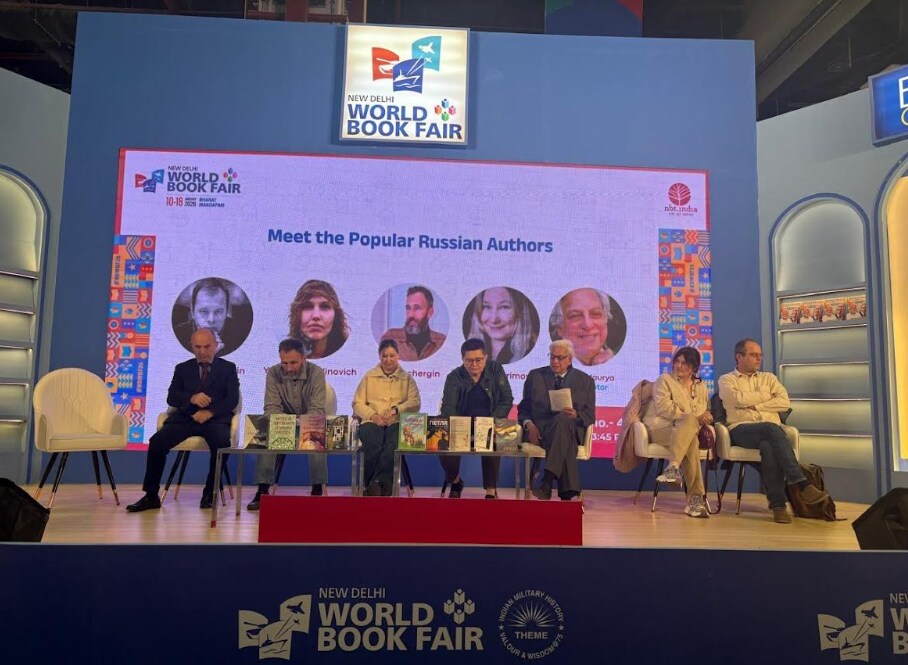
A recurring theme across several sessions was the relationship between literature and lived experience, particularly in contexts shaped by nature, memory and displacement. Russian author and forester Ilya Kochergin reflected on writing as a form of dialogue with the natural world, drawing from his book Emergency Exit, which chronicles his relationship with an ageing horse. His reflections situated literature as a space where human and non-human lives intersect, and where language must evolve to remain accessible to contemporary readers.
The conversation emphasised the need for literary forms that respond to modern alienation while sustaining ethical awareness around coexistence and care. The role of adaptation and cultural translation was equally prominent. The launch of Chhota Rajkumar, an Indian-language picture book adaptation of Antoine de Saint-Exupéry’s The Little Prince, illustrated how classic texts continue to travel across cultures through thoughtful reimagining. Published by Pratham Books and presented by the French Institute in India, the adaptation by Anushka Ravishankar and illustrations by Priya Kuriyan demonstrated how visual language, narrative compression and cultural context can collectively renew a globally recognised work for younger Indian readers. The discussion highlighted translation not merely as linguistic transfer, but as cultural interpretation that balances fidelity with relevance.
Poetry and multilingual expression formed another strong current throughout the international engagements. Sessions involving Spanish, Indian and Central Asian voices examined shared modernist traditions and the enduring resonance of poetic form. A discussion on the Generation of ’27, anchored in the work of Federico García Lorca alongside Indian poet Jibanananda Das, explored the circulation of literary influence across linguistic and national boundaries. Translation emerged as a central concern, particularly in how poetry retains emotional and cultural depth across languages. Poetry readings in Spanish, Basque, Catalan, Asturian, Bengali and Hindi further underscored linguistic plurality as an essential feature of contemporary literary exchange rather than a barrier. Children’s literature and pedagogy were addressed through international perspectives that emphasised accessibility and emotional sensitivity. Israeli educator and author Iris Argaman spoke about transforming large historical narratives into intimate, readable forms for children, arguing that literature for young readers must engage with difficult pasts without didacticism.
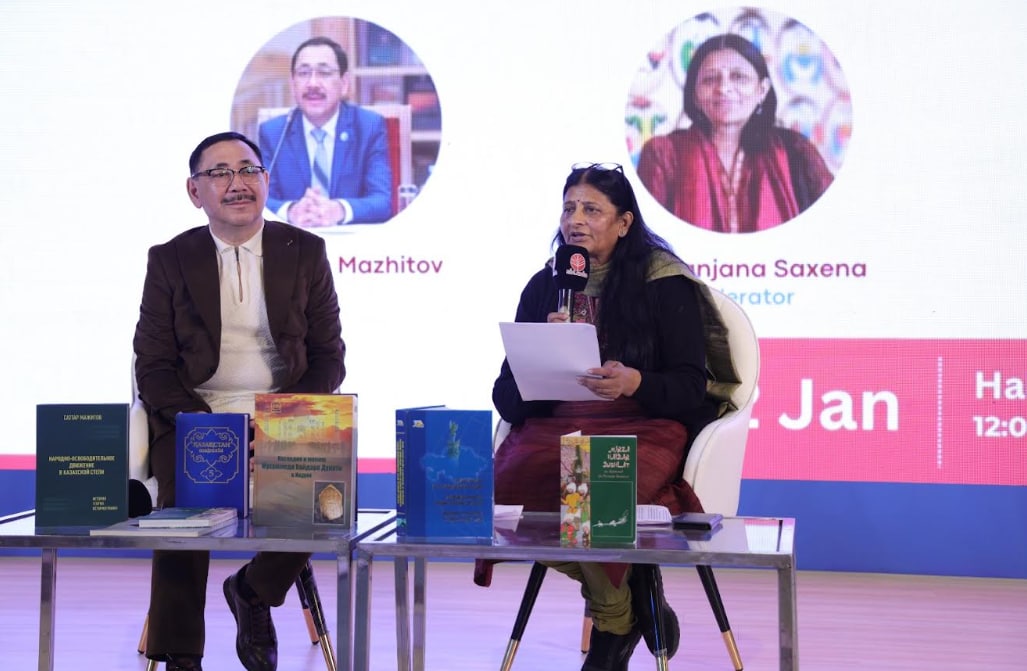
Her reflections highlighted reading as an experience grounded in curiosity and imagination rather than assessment, reaffirming storytelling as a formative cultural practice across societies. Questions of memory, identity and belonging resonated strongly across several international conversations. Authors and scholars from Kazakhstan engaged audiences in discussions on how personal and collective memory shape national narratives, particularly within postcolonial and post-Soviet contexts. Literature was presented as a means of negotiating continuity and change, allowing societies to reflect on their histories while addressing contemporary cultural realities. These discussions revealed shared concerns across regions, including the transmission of memory, the negotiation of identity and the role of youth culture in shaping future literary directions.
Theatre and performance added further dimensions to the International Events Corner. Russian playwright Yaroslava Pulinovich reflected on contemporary theatre as a mirror of everyday emotional realities, drawing attention to themes of vulnerability, youth and resilience. Her reflections situated drama as a space where reality and imagination coexist, offering audiences a means to confront social and personal questions. Similarly, cultural exchanges involving Gulf theatre traditions highlighted how dramatic forms travel across regions, with Indian narratives finding resonance within Gulf cultural contexts through shared values and historical interaction. Interdisciplinary approaches to literature were also evident.
A session combining performance, psychology and reflection explored themes of gratitude, inner strength and femininity through sound and rhythm, demonstrating how literary spaces at the Fair extend beyond the written word to encompass embodied and experiential forms of expression. Such engagements reinforced the idea that literature remains connected to broader cultural practices and modes of meaning-making. The ethics of technology in literary production emerged as a significant contemporary concern. An international panel on the limits and implications of AI-driven translation examined the tension between technological efficiency and human creativity. While acknowledging the expanding role of digital tools, speakers cautioned against the erosion of interpretive nuance and cultural sensitivity in literary translation. The discussion emphasised that translation is an act of creative labour requiring contextual understanding, and that technological intervention must be guided by ethical consideration rather than convenience alone.
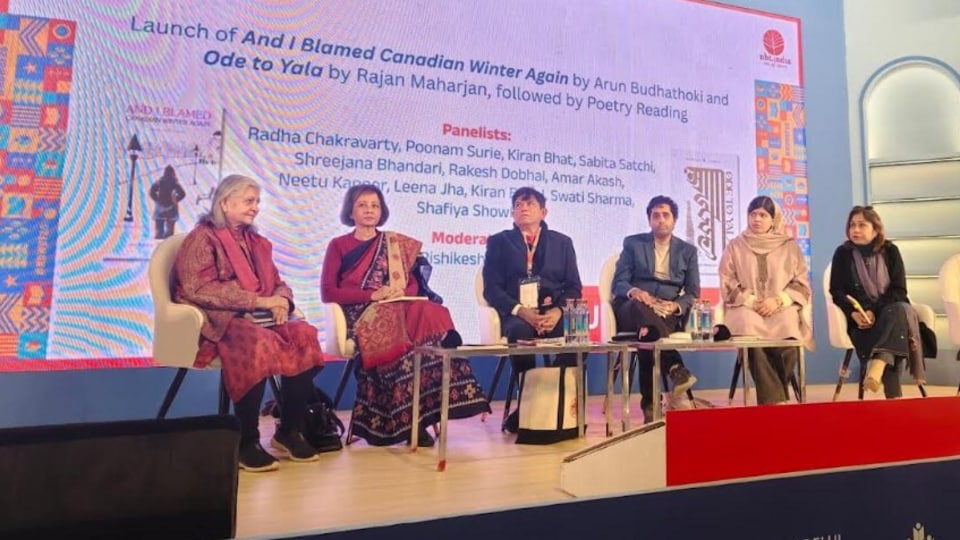
Book launches and poetry readings from Nepal and other regions further enriched the international programme, bringing themes of migration, displacement, labour and memory into collective reflection. These sessions highlighted literature’s ability to hold multiple narratives together, allowing personal experience and broader social realities to intersect through verse and prose. A particularly reflective engagement on memory and survival was offered through contemporary Israeli literature, where motherhood, grief and remembrance were discussed as central narrative forces. Literature was presented as a means of sustaining hope and continuity in the aftermath of historical trauma, reaffirming writing as both personal testimony and collective inheritance.
In another session, the deep literary and intellectual bonds between India and Iran were explored. Persian was highlighted as a living civilisation that historically connected the two countries, serving not only as a literary language but also as a medium for administration, science, and intellectual exchange across the subcontinent. It was noted that Indian studies remain incomplete without reference to Iranian culture, and that the Indo-Iranian connection was forged through books rather than political or economic interests, with the translation of the Panchatantra into Persian as Kalila wa Dimna in 517 AD cited as a landmark moment in this enduring intellectual relationship.
Taken together, the international engagements at the International Events Corner illustrate how the New Delhi World Book Fair 2026 has positioned literature as a shared global language. By bringing together voices from diverse cultural, linguistic and historical contexts, the platform has facilitated sustained dialogue on themes that cut across borders, including nature and coexistence, translation and ethics, memory and identity, and the evolving responsibilities of writers in a changing world. The International Events Corner thus continues to strengthen the Fair’s role not only as a space for books, but as a forum for cultural understanding and international literary exchange.
Note to the Reader: This article is part of Hindustan Times' promotional consumer connect initiative and is independently created by the brand. Hindustan Times assumes no editorial responsibility for the content.


