
 E-Paper



If not tackled urgently, Gurgaon may soon drown in its own sewage: Report
A report by Centre for Science and Environment - ‘Gurugram: A framework for sustainable development’ - warns that if treated water is drained out of the city and not recycled, then Gurgaon will soon drown in its own sewage.


In a report published on Thursday by the Centre for Science and Environment (CSE) and an NGO, Gurgaon First, it was revealed that according to the Haryana government the sewage generation in the city is expected to be around 533 million litres by 2021, while the capacity to treat sewage by the sewage treatment plants (STP) is only 255 million litres.
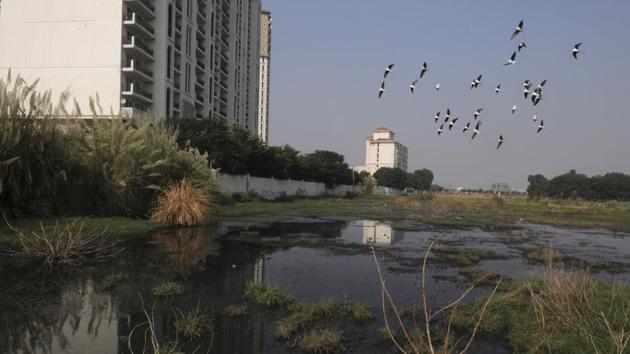
During a discussion at Gurugram Environment Conclave, waste solution experts quoted the CSE report and said that the treated water is drained out of the city and not recycled and thus the city will soon drown in its own sewage.
The problem becomes more acute as untreated sewage from various parts of the city reaches the STPs . “We need to focus on de-centralising the waste in Gurgaon. At present, it is based on a centralised system,” said Shubhra Puri, founder, Gurgaon First, NGO.
As no agencies are designed to process the waste, treating the sewage is an issue in the city. It was observed that untreated sewer is mostly released into storm water drains as the city has less than required sewage treatment plants.
The waste treated by the STPs, founded by the Haryana State Pollution Control Board, had aqueous pollutants at 182miligrams/litre, while average for municipal sewage after three stage treatment should be 20miligrams/litre, mentioned the report.
However, the panellists pointed out that though the city is struggling, but there have to be joint efforts by the government and residents to treat the waste that the city generates every day.
Dr Shyamala Mani, professor, National Institute of Urban Affairs, said, “Waste is not just a problem of the civic bodies, it is a issue that we all should deal with.”

Stay updated with all the Breaking News and Latest News from Mumbai. Click here for comprehensive coverage of top Cities including Bengaluru, Delhi, Hyderabad, and more across India along with Stay informed on the latest happenings in World News.


