
 E-Paper



Winning over children, one story at a time
For this group in Millennium City, storytelling is a tool to wean children away from the gadgets and technology that they are surrounded with.


Tired of the run-of-the-mill birthday parties, Aditi Malhotra wanted to do something unique for her daughter’s eighth birthday. After brainstorming over numerous options, she reached out to groups on social media and enquired if there was someone who’d be able to engage the children through storytelling. A big fan of reading, she wanted children to participate in something meaningful and engaging.
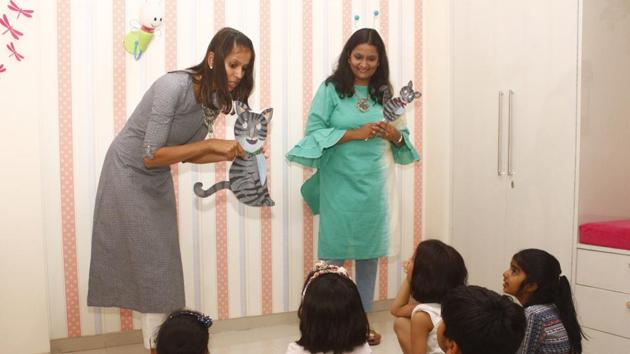
“I did not want children to indulge in the same activities that they usually do. Storytelling, I thought, could be a fresh change for them,” said Malhotra, whose search for a storyteller came to an end after meeting Seema Wahi Mukherjee. A city-based storyteller, Wahi Mukherjee, through an hour long session, kept her audience hooked at the party.
“The story was shared in an interactive manner and all participants were captivated. Forget children, the adults were also enamoured to such an extent that they did not want to do anything but listen to the story,” recalls Malhotra. Left spellbound by the session, her interest for storytelling grew manifold in the months that followed.
“I got interested in storytelling and even got a certification in the same from an institute. I didn’t even know that there was a way of getting trained in something like storytelling. My daughter also enrolled herself in regular story sessions during her summer break,” she shares.
Attending such storytelling sessions, Malhotra said, motivated her daughter to pick up books. “My daughter has started picking up books. She has started reading more and tries to create her own stories. The sessions have given her a new perspective of the world and she tries to see things in a new light,” she says.
Like Malhotra, many other city parents are now realising the importance of storytelling in sowing seeds of creativity in young minds. Storytelling, they say, help both adults and children appreciate the simpler joys of life. Storytelling has become a tool for them to wean away children from the gadgets and technology that they are surrounded by.
“The oral tradition of storytelling has been in our culture since time immemorial. While growing up, we used to hear stories from our grandparents or parents. However, with technology taking over, these practices have taken a backseat,” says Wahi Mukherjee, one among a growing group of storytellers in the city who are making the tradition of oral narration fashionable once again.
“We are losing ourselves to technology. We are hooked to media where we are passively watching everything in a hypnotic trance. Storytelling is an interactive process that allows listeners to come together on a shared platform with the one giving voice to the story. It involves imagination and gives a chance to everyone to become involved with the story,” Wahi Mukherjee explains.
Her love affair with storytelling started after the birth of her son. Somewhere between creating and narrating stories to her toddler son, she found a calling for storytelling. “I used to tell stories to my son when he was a toddler. I realised that I quite enjoyed telling him these stories, and this was something I was keen on pursuing. It was only a matter of time before I decided to gradually take up storytelling professionally,” she says.
Like Mukherjee, Surbhi Bothra and Shilpa Jain also realised their inclination for storytelling while telling stories to their children. Residents of the same condominium, the two neighbours shared a passion for storytelling and decided to come together and start a venture. After getting trained in storytelling, the two started their sessions a little over a year ago. These sessions are conducted at various condominiums, playschools, and NGOS across the city. The sessions are divided into three different age groups -toddlers, 4-7 years, and 7 and above, and are primarily aimed at providing life skills to children through stories.
“We realised not all parents have the time or leisure to tell their children stories. Either they didn’t have the time or lacked the skills through which they could deliver these stories effectively,” says Jain. She and Bothra collaborate and create stories on different themes.
“If a story is read out loud in an ordinary manner, it can get boring. We try and add a lot of fun through voice modulation, dramatisation, and composing jingles. It is a fun activity,” says Bothra.
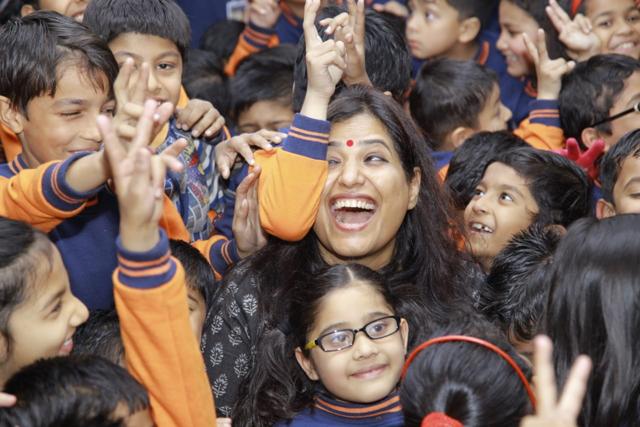
The popularity of storytelling has also brought into focus various institutes, where one can get trained to become a storyteller. These institutes offer certificate and diploma courses that can be completed in a time span of three-five days.
Besides who conduct storytelling sessions on a weekly basis, freelance storytellers are also carving a space for themselves. Divya Sethi works as a freelance storyteller and is using the art to help children appreciate the simplicity of life.
“When I compare my childhood with that of children growing up now, I realise that everything is readily available these days. With easy access to technology, kids have stopped imagining things. Storytelling stimulates their minds and helps them think about the limitless possibilities that stories offer,” Sethi says, adding that stories have the potential to leave a lasting imprint on children.
“Post completion of a story, a child once asked me a unique question. ‘Who do I draw if I want to be a better person?’ This simple question reflected so much wisdom. This is what storytelling does — brings out the best in people,” adds Sethi.
Storytelling, however, comes with its own set of challenges. While there has been a growing awareness about storytelling as a profession in the last three to four years, not everyone sees it as one. “People give mixed reactions when they get to know that I work as a storyteller. Their reactions range from: ‘Oh wow! You must be having so much fun’ to ‘Oh, you are a storyteller? That’s fine but what do you for a living?’ Initially, I used to be surprised at these responses but now I simply laugh it off,” says Wahi Mukherjee.
Some storytellers also believe tthe craft was becoming too commercial, and as a result, the art is losing its essence. “Storytelling, unfortunately, has become commercial. The sweetness behind the simple act is getting lost. A lot of passion goes into creating stories and the key is to ensure one is not compelled to compromise on quality of the story for money. If I feel it is being reduced to monetary transactions, I don’t take up assignments,” Sethi adds.
Wahi Mukherjee, meanwhile, says payment for storytelling needs to be regularised. “While some charge exorbitantly, others do free sessions since their profession and passion collide,” she said.

Stay updated with all the Breaking News and Latest News from Mumbai. Click here for comprehensive coverage of top Cities including Bengaluru, Delhi, Hyderabad, and more across India along with Stay informed on the latest happenings in World News.


