
 E-Paper



Gurugram to begin rapid antibody tests with 750 kits in Sohna containment zone
Gurugram so far has registered 37 Covid-19 positive cases, of which the highest number (14 cases) has been reported from Sohna.


Gurugram will launch rapid antibody testing to detect cases of Covid-19 from Monday in Sohna containment zone. Health officials said they will be use the Rapid Testing Kits or RTAs only for those who show symptoms of influenza like illness (ILI).
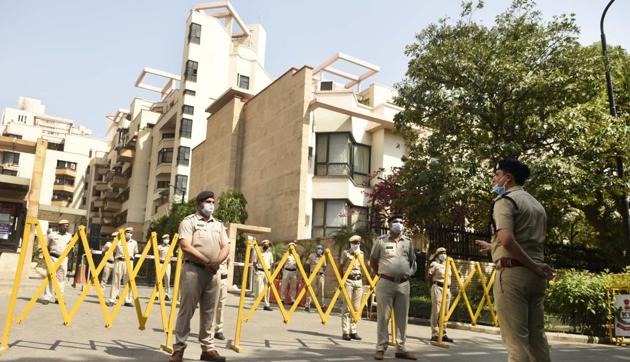
Gurugram so far has registered 37 Covid-19 positive cases, of which the highest number (14 cases) has been reported from Sohna. The 14 cases in Sohna includes 10 Tablighi Jamaat attendees, who are natives of Himachal Pradesh. The remaining patients are those who came in close contact with a Rajasthan-based Covid-19 caset.
On Friday, the Haryana government received 10,000 RTKs from the central government. As per plan, blood tests to detect coronavirus antibodies through RTKs will be done at three Covid-19 hotspot districts – Gurugram, Nuh and Hathin in Palwal.
“We have received 750 RTKs in the first phase and will be using it in the Sohna contamination zone. Our teams will be doing house to house surveillance and if any person with ILI symptom is traced, he/she will be taken to the Sohna sub-division hospital for antibody testing,” said Dr Jaswant Singh Punia, chief medical officer of Gurugram. There are six contamination zone in the city — Devil Lal Colony, Sun City Sector 54, Sector 39, Fazilpur village in Jharsa, Village Raipur in Sohna and Ward no. 11 Pataudi.
The medical team designated for Covid-19 cases at the Sohna health facility will be trained by three to four rapid response team members on procedures to use the kit. “By collecting blood samples, we can now analyse whether antibody to fight against coronavirus is present in the body. The presence of antibody means the person has contracted the virus. The testing process in not lengthy, it takes only 15-20 minutes to deliver results. If anybody is tested positive, then nasal and throat swabs will be taken for Real-Time Polymerase Chain Reaction (RT-PCR),” said Punia.
PGIMS, Rohtak, the nodal hospital for Covid-19 in Haryana, has prepared a detailed plan for the usage of RTKs after the Indian Council of Medical Research issued a letter to the states on April 4 on starting rapid antibody tests for Covid-19 in clusters with containment zones and large migration gathering or evacuees. As per the state guideline, even if a suspected case with flu-like symptom tests negative for antibody, his/her swabs will be taken for RT-PCR and the person have to isolate or quarantine themselves for 10 days. Antibody tests will not be done on those having signs of Severe Acute Respiratory Illness (SARI) and high risk cases. Their samples will be directly collected for RT-PCR.
The state is also conducting pool testing of Covid-19 samples. As per ICMR guidelines, pool testing allows tests of at least two to five samples together. “A specimen pool comprises of samples from multiple persons. They are mixed and tested together. It saves time and cost if the entire pool is negative. If one of the individual samples is positive, then all samples are tested separately. To ensure that the samples are not diluted in pooling and there are no false negatives, we are taking only three samples in a pool,” said Dr Dhruv Chaudhary, the nodal officer for Covid-19 in Haryana and the head of the department for pulmonary and critical care at PGIMS, Rohtak.
He said that not more than five samples can be pooled for there is a higher possibility of missing positive samples with low viral load.

Stay updated with all the Breaking News and Latest News from Mumbai. Click here for comprehensive coverage of top Cities including Bengaluru, Delhi, Hyderabad, and more across India along with Stay informed on the latest happenings in World News.


