
 E-Paper



Scientists develop nanosensor which can detect bacteria in food or water
Nanosensor developed by scientists can help detect E coli bacteria, says a new study in the journal ACS Infectious Diseases.


In a new research, scientists have developed a new nanosensor to detect the presence of pathogenicst rain of E coli bacteria in food or water. The study appeared in the journal called ACS Infectious Diseases.
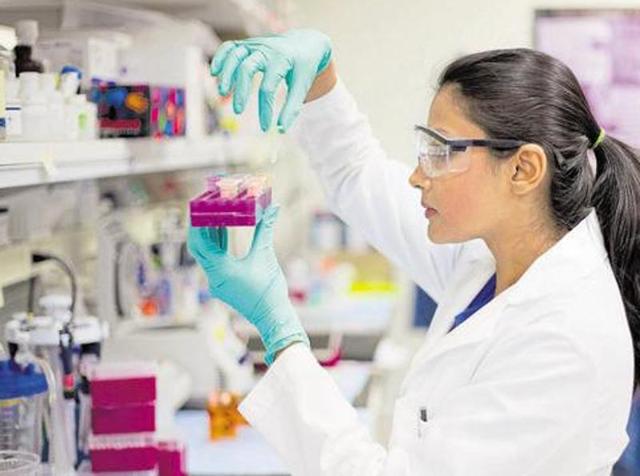
E. coli is the common cause of contaminating the edible items and can lead to severe food borne diseases.
According to the Centres for Disease Control and Prevention, millions of illnesses and more than 1,000 deaths every year in the US are attributed to food borne illness caused due to pathogens.
Conventional methods to screen food to find sickness-causing microbes can take as long as 24 hours, which is often too slow to efficiently catch tainted products before they hit store shelves.
Faster methods exist but have limitations.
Magnetic resonance, for instance, can detect extremely low levels of bacteria but loses its effectiveness at higher bacteria concentrations.
Fluorescence is the opposite.
Tuhina Banerjee, Santimukul Santra and their research team wanted to see if they could combine the two techniques to make a better detector.
The researchers developed a hybrid nanosensor incorporating magnetic resonance and fluorescence.
Lab testing of milk showed the detector could sense varying concentrations of a pathogenic strain of E. coli known as O157:H7 in less than an hour.
They also used their sensor to analyze E. coli levels in untreated lake water, which serves as a source of household water in some developing areas.
Additionally, the device could be customized to detect a wide range of pathogens beyond E. coli, the researchers say.
Catch your daily dose of Fashion, Taylor Swift, Health, Festivals, Travel, Relationship, Recipe and all the other Latest Lifestyle News on Hindustan Times Website and APPs.


