
 E-Paper



On India’s drawing board, a micro-level plan to eliminate malaria by 2030
The new plan aims to curb mosquitoes that spread malaria, significantly lowering transmission and disease burden among the country’s populace.


As part of its National Framework for Malaria Elimination, India has prepared a revised strategic plan that aims to eliminate the mosquito-borne infection by stopping local transmission by 2030.
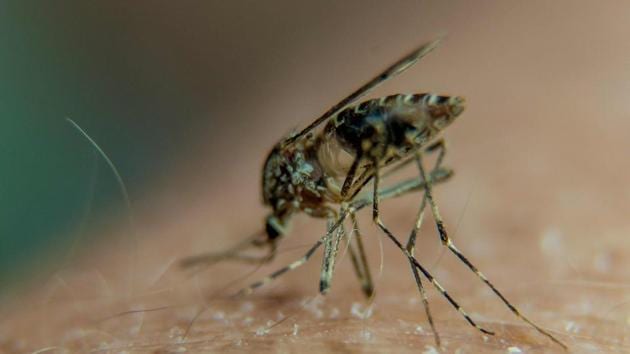
The new plan aims to curb mosquitoes that spread malaria, significantly lowering transmission and disease burden among the country’s populace. The Union health ministry will soon launch the plan for implementation across the country at the district level.
“The new plan will function at the micro level, which is why the focus will now shift from states to districts,” said Dr Neena Valecha, director of the National Institute of Malaria Research. “The district-wise approach will help us reach the unreached. Our institute will chip in with operational research and better methodology to ensure that the plan is effectively implemented.”
A WHO report stated that as many as 1.06 million people contracted malaria in 2015, resulting in 242 confirmed deaths. Such cases have declined consistently from two million in 2001 to 0.88 million in 2013, although an increase to 1.13 million was noted in 2014 due to focal outbreaks.
The incidence of malaria in the country, therefore, stood at 0.08% in a population of nearly 1.25 billion.
The theme of this year’s World Malaria Day will focus on prevention as a critical means to closing the gap and ensuring that India is rid of the disease. On the table are powerful strategies that have the potential to accelerate gains.
Vector control measures, such as ensuring that the affected communities have access to long-lasting insecticidal mosquito nets and carrying out indoor residual spraying, is key to the success of the exercise. Indoor residual spraying was estimated to protect 106 million people worldwide, including over 41 million across India, in 2015 alone.
It is essential to ensure that these tools find access to vulnerable groups. Malarial transmission in India occurs primarily among disadvantaged or neglected communities such as tribals and migrant populations who are relatively hard to reach. The government is focusing on empowering such communities to act, and fully engaging them in programme implementation.
“As part of a wider push, countries should invest in harnessing the latest technological advances. New vector control interventions, improved diagnostics and new anti-malarial medicines all hold out the prospect of accelerated progress,” said Dr Poonam Khetrapal Singh, WHO regional director for South-East Asia.
Meeting the region-wide target to eliminate malaria by 2030 requires agile thinking and a willingness to be bold. This means that all avenues must be explored, and all effective tools embraced. “This is particularly important, given the threat posed by multi-drug and insecticide resistance,” says Dr Khetrapal.

Catch your daily dose of Fashion, Taylor Swift, Health, Festivals, Travel, Relationship, Recipe and all the other Latest Lifestyle News on Hindustan Times Website and APPs.


