E-Paper


Dignity, ‘silver economy’: What Keralam's landmark rights bill provides for senior citizens and why it was necessary
Titled ‘Keralam Senior Citizens (Care and Protection of Rights) Bill, 2026, it is the first prominent piece of legislation mooted by the Congress-led government

 Prefer HTon Google


Keralam on Monday became the first state in the country to pass legislation to protect the rights and dignity of senior citizens, improve their access to government services, and draw a blueprint for a ‘silver economy’ by ensuring their participation.
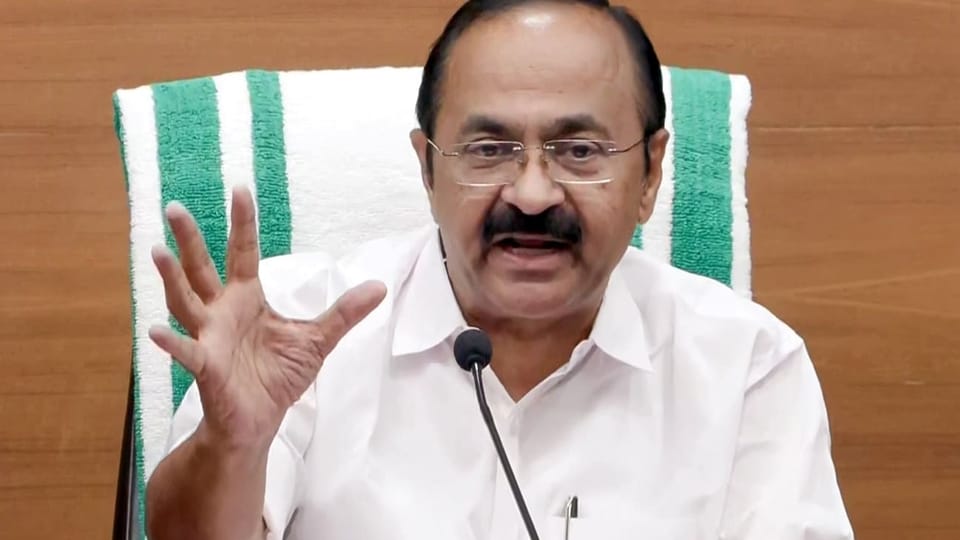
All members of the House in the Keralam Assembly, cutting across political lines, supported the bill piloted by chief minister VD Satheesan. Titled ‘Keralam Senior Citizens (Care and Protection of Rights) Bill, 2026, it is the first prominent piece of legislation mooted by the Congress-led government and remained a key promise of its election campaign.
Path to the bill
During its campaign for the Assembly elections in April-May 2026, the Congress had unveiled a set of ‘guarantees’, among which was the promise to set up a separate department for elderly welfare. The promise was guided by the demographic changes taking place in the state over the last few decades, with fertility rates dropping, rapid brain drain of educated and skilled youth, and life expectancy rising – all of which were resulting in an increase in the share of the elderly population.
The proportion of people aged 60 years and above in Keralam in 2026 is 18.7% compared to the national average of 11.4%, as per statistics of the Registrar General of India. In 2031, the proportion in Kerala is set to rise to 20.9%, compared with 13.1% in India. And in 2036, it will reach 22.8% in Keralam, compared with 14.9% nationally.
Also read: Keralam is India’s oldest state, and it's getting older: What its proposed elderly care law would do
In short, in just a decade, the population of 60 and above in the southern state will inch closer to one-fourth of the state’s population. In real numbers, estimates in 2021 put the elderly population at roughly 6.5 million.
A working paper of the International Institute of Migration and Development (IIMAD) said the demographic transition in Kerala of a rising ageing population was a result of the state reaching below-replacement fertility levels as early as 1987 due to progress in family planning measures and higher awareness of reproductive health. The success of the healthcare system has contributed to the transition.
On its first day in office in May, the State cabinet approved the plan to set up a department to coordinate schemes for the welfare of elderly persons, with the CM himself taking charge of it. However, the government argued that creating and running a department would be futile without a legal framework to protect the elderly population. The senior citizens bill was prepared keeping that in mind.
What the bill provides
According to the government, the Bill is guided by six principles – the right to dignity and respect; the principle of best interests; the principle of ‘ageing in place’ and home-based care; the principle of safety, security, and the social care ecosystem; the principle of independence; and the principle of participation.
These principles cover aspects such as the right of senior citizens to quality home-based care, access to income-generating activities and safe public spaces, the right to legal aid and the ability to report abuse and harassment.
As part of the legal institutional framework, the government will set up state-level and district-level senior citizen care protection units that will monitor schemes and policies for elderly persons, issue orders to redress complaints about senior citizen care centres and mobilise local organisations to carry out activities for the protection and care of senior citizens.
One of the key provisions of the bill clearly defines abuse of a senior citizen and sets penalties for those found guilty. A family member, legal heir or staff of a care centre causing physical or mental abuse or cruelty towards senior citizens can be imprisoned up to three years and fined ₹50,000. Those abandoning senior citizens without their consent can also be jailed up to three years and fined ₹50,000.
The legislation also provides, for the first time, mandatory registration of senior-citizen care centres, as well as training and certification for home caregivers. Such caregivers can undergo training in geriatric care according to a unified curriculum prescribed by the government. Only trained caregivers should be engaged for geriatric services, the bill states.
Importantly, the legislation ensures that land development plans or sketches adhere to senior-citizen-friendly designs. Residential buildings must have at least one room with facilities that are friendly to elderly persons.
To tackle rising cases of elderly persons falling victim to cybercrime, the bill provides for the establishment of senior citizen cyber cells in all cyber police stations in the state and for fast-track mechanisms for financial freezing and police documentation of cybercrimes.
A state reserve fund for the welfare of elderly persons will be established and may receive grants from the government, funds from local self-government institutions, CSR funds, or donations from private individuals.
The bill also specifies procedures for drafting a ‘living will’ by a senior citizen at home or at a care centre. A declaration regarding the ‘living will’ of the person should be made in the presence of the chairperson of the district-level senior citizen protection forum. While the original of the will be kept in the safe custody of the officials of the care centre or nearest kin of the person, a copy should be sent to the office of the district-level forum.
Rules have also been codified regarding cremation and last rites of elderly persons who may be incapacitated or indigent and residing at care centres.
Comparison with 2007 Central Act
The Maintenance and Welfare of Parents and Senior Citizens Act was passed by Parliament in 2007 and contains provisions requiring children/grandchildren/relatives to provide a monthly allowance for food, clothing, shelter, and healthcare for a senior citizen.
The Act envisages tribunals, presided over by sub-divisional officers, which will conduct inquiries and issue rulings on complaints filed by senior citizens who are unable to lead a life of dignity from their own earnings. The law also provides for the establishment of care homes where senior citizens can live with dignity.
The first case filed under the Act was in Tamil Nadu, where a couple complained against their son and daughter-in-law for neglect and usurping their homes and jewellery.
The Act was amended in 2019 to include several key provisions. One, the definition of parents was expanded to include parents-in-law and grandparents. Two, a cap of ₹10,000 for maintenance was removed, with the tribunal allowed to pass rulings for fair support based on standard of living. Third, dedicated nodal officers should be appointed at police stations to handle complaints from senior citizens.
In comparison, the bill passed by the Keralam Assembly visualises a broader legal framework that guarantees the rights of senior citizens and is not limited to their protection alone.
The bill, as explained earlier, has provisions confirming the rights of senior citizens to safe public spaces, access to income-generating activities and the right to legal aid. It also has a key provision connected to the ‘living will’, as enshrined by the Supreme Court.
The provisions mandating the registration of care centres and the certification of home caregivers have been enacted for the first time in the country.
CM Satheesan stated that the new bill does not contain provisions that are contrary to the 2007 Central Act or to the previous bill passed by the Assembly in 2025 to set up an elderly commission in the state.