
 E-Paper



India approves its first dengue vaccine Qdenga: How it works, who is eligible, and why it isn't a silver bullet
Qdenga, cleared this week for ages 4 to 60, is one of only a few dengue vaccines in the world. It is to be injected in two doses three months apart.

 Prefer HTon Google


India this week approved its first vaccine against dengue, a milestone in the country's decades-long struggle with a mosquito-borne disease that infects thousands and kills hundreds every year.
The Drugs Controller General of India (DCGI) has granted market authorisation to Qdenga, the tetravalent dengue vaccine developed by Japanese pharmaceutical company Takeda, its Indian arm announced on Monday.
The clearance allows the vaccine to be used to prevent dengue in individuals aged four to 60, regardless of whether they have been previously exposed to the virus.
Takeda Biopharmaceuticals India said it expects Qdenga to become available in the country in the first half of 2027, initially through private healthcare facilities. The company has partnered with Hyderabad-based vaccine maker Biological E since 2024 to expand manufacturing.
The approval lands ahead of the monsoon-linked surge in cases that India — and much of South and Southeast Asia — braces for every year. According to India’s National Centre for Vector Borne Diseases Control (NCVBDC), India had reported 6,927 dengue cases and 10 deaths till February this year.
The World Health Organization (WHO) recorded 232,425 cases and 233 deaths in India in 2024, part of a record global tally of 14.4 million cases and 11,201 deaths that year.
India accounts for nearly one-third of the global dengue burden, and reported cases in the country have risen 11-fold in the past two decades, according to Takeda Biopharmaceuticals India.
Also read: Weight loss, muscle mass, heart risk: Study decodes strengths & weaknesses of 19 GLP-1 drugs
What is Qdenga and how does it work?
Qdenga, also known as TAK-003, is a live-attenuated tetravalent vaccine — meaning it contains weakened but live versions of the dengue virus. "Live-attenuated" means the virus is intact, but has been attenuated to be too weak to cause the disease. Commonly known vaccines based on live-attenuated viruses include those for measles, mumps, rubella (MMR), yellow fever and the oral polio vaccine (OPV).
Qdenga is designed to protect against all four dengue virus serotypes (DENV-1, DENV-2, DENV-3 and DENV-4) — each of which can independently cause dengue in humans.
According to the European Medicines Agency (EMA), which cleared the vaccine for use in the European Union in December 2022, Qdenga uses the DENV-2 serotype as its genetic backbone.
Other components are “chimeric” or recombinant viruses — created by taking the DENV-2 backbone and swapping in the pre-membrane and envelope genes from DENV-1, DENV-3 and DENV-4, according to a 2025 review in the journal Vaccines (MDPI) [https://www.mdpi.com/2076-393X/13/5/532]. The envelope proteins are what the immune system also recognises and responds to, so this design effectively presents the body with signatures of all four serotypes.
When the vaccine is administered, the body’s immune system identifies the weakened viruses as foreign and produces antibodies against them, which can then neutralise the actual virus if there is exposure to the dengue-causing virus later on.
This design matters because dengue is uniquely difficult to vaccinate against. A person infected with one serotype develops lifelong immunity to that specific type but only short-lived cross-protection against the other three. A second infection with a different serotype can trigger a phenomenon called antibody-dependent enhancement, in which pre-existing antibodies paradoxically worsen the illness — a risk that has shaped the entire field of dengue vaccine development.
Qdenga attempts to address this challenge by inducing what researchers call “balanced” immunity to all four serotypes simultaneously in a single course, more closely mimicking the immune profile of someone who has recovered from natural infection.
But it is not an absolute fix. In the phase 3 trial, efficacy varied by serotype. TAK-003 demonstrated sustained efficacy against all four serotypes in people already exposed to dengue before vaccination, but in dengue-naïve (seronegative) recipients, clear efficacy was shown mainly against DENV-1 and DENV-2, with less certainty around DENV-3 and DENV-4, according to a 2025 review in Expert Review of Vaccines.
Also read: As India ages, health care must move closer to home
Eligibility, dosing and efficacy
Qdenga is administered subcutaneously as a 0.5-millilitre injection, given as two doses three months apart. The WHO advises against shortening this interval. If the second dose is delayed, the schedule need not be restarted.
The Indian approval rests on data from Takeda's global development programme that involved clinical trials across dengue-endemic and non-endemic regions. This included the Phase 3 TIDES trial (DEN-301), in which more than 20,000 participants across eight countries were enrolled — five in Latin America (Brazil, Colombia, Panama, the Dominican Republic and Nicaragua) and three in Asia (the Philippines, Thailand and Sri Lanka).
India was not among the trial sites, but they included Asian countries with dengue epidemiology broadly comparable to parts of India.
According to the trial data cited by Takeda, at 12 months after the second dose, the vaccine showed an overall efficacy of 80.2% against virologically confirmed dengue. At 18 months, it demonstrated 90.4% efficacy against dengue-related hospitalisation. After 4.5 years, two doses continued to provide 84.1% efficacy against hospitalisation, with sustained safety and efficacy documented for up to seven years against all four serotypes.
The results were published in stages in The Lancet (2020) and The Lancet Global Health (2024), among other journals.
New Delhi's clearance is also supported by a separate phase 3 trial (DEN-302) conducted among Indian participants. The trial, according to the company, concluded that the vaccine was "tolerated, safe and immunogenic" in adults, adolescents and children aged four to 60.
"The latest seven-year data for QDENGA show continued protection against dengue infection and hospitalisation across all four serotypes; an important milestone for communities and health systems," said Mahender Nayak, head of intercontinental markets at Takeda, in a statement.
Also read: 13.5mn kids didn’t get even single vaccine in Ist year in 2025: WHO-Unicef report
Common side effects
According to EMA, the most common side effects — affecting more than one in five people — are pain and redness at the injection site, headache, muscle pain, general malaise and weakness. Up to one in 10 recipients may experience fever. These effects are usually mild to moderate, resolve within a few days and are less frequent after the second dose than the first.
Post-market surveillance has thrown up some rarer signals. The WHO position paper on dengue vaccines, updated in May 2024, noted that although no cases of anaphylaxis were observed in the pivotal clinical trial of more than 20,000 participants, 16 cases were reported in the month after the vaccine's roll-out in Brazil in 2023 — a rate of 4.4 per 100,000 doses. The paper flagged this and noted that the product insert now includes precautionary measures against anaphylaxis.
Who should — and shouldn't — take it
The WHO recommends Qdenga for use in children aged six to 16 in areas with high-intensity dengue transmission. The Indian approval spans a wider age band of four to 60, tracking the EMA's authorisation from age four upwards.
WHO does not recommend routine programmatic use in children below six because efficacy is lower in that age group, and seropositivity — the share of people showing evidence of past infection — is generally low even in high-transmission settings.
The vaccine should not be given to:
- People who are pregnant, planning pregnancy within a month of vaccination, or breastfeeding
- People with congenital or acquired immune deficiencies, including those on immunosuppressive therapy such as chemotherapy or high-dose systemic corticosteroids
- People with symptomatic HIV infection, or asymptomatic HIV with evidence of impaired immune function
- Anyone with a history of hypersensitivity to a previous dose of the vaccine
The EMA also lists co-administration data supporting the use of Qdenga alongside yellow fever and hepatitis A vaccines; studies on co-administration with HPV vaccines are ongoing.
Where else is it approved?
According to Takeda, Qdenga has been approved in 43 countries since its 2022 launch, with more than 32 million doses distributed globally.
It received EU marketing authorisation on December 5, 2022, and WHO prequalification on May 10, 2024 — a designation that meets global quality, safety and efficacy standards and enables procurement by international agencies such as UNICEF and PAHO.
Takeda has said it is on track to reach a global manufacturing capacity of 100 million doses a year by 2030.
The other dengue vaccines
Qdenga is one of only a handful of dengue vaccines to have reached the market.
Dengvaxia (CYD-TDV): Developed by Sanofi Pasteur, Dengvaxia was the first dengue vaccine to receive marketing authorisation, in 2015.
According to the WHO's Global Advisory Committee on Vaccine Safety, it uses a yellow fever virus backbone that expresses envelope proteins of the four dengue serotypes. But subsequent analysis, as documented by the WHO in its 2017 safety update, showed that among people who had never previously been infected with dengue, the vaccine could increase the risk of severe disease on later infection — the antibody-dependent enhancement problem.
WHO now recommends Dengvaxia only for people with confirmed prior dengue infection. It is not approved in India.
Divya KS, an infectious diseases specialist at Apollo Hospitals, told Reuters that regulators may have required additional post-marketing safety data before approving it.
Butantan-DV, the single-dose vaccine: Developed in Brazil, this is a single-dose vaccine that Brazilian health authorities approved in November 2025, but which the country temporarily suspended after two deaths in June this year.
Of 501,044 people vaccinated between January and May, 3,703 — 0.7% — showed symptoms similar to dengue, and 42 had more severe reactions.
Three severe cases were recorded, including the deaths of a 58-year-old man and a 48-year-old woman. A 38-year-old woman was hospitalised in intensive care and later discharged.
"There is not enough data to establish a cause-and-effect link between the vaccine and these three serious cases, but it is a warning signal," Brazil's health minister Alexandre Padilha had said at a press conference.
Padilha described the events as "absolutely unexpected" given trial data showed 91.6% efficacy against severe dengue among 16,000 volunteers across 14 Brazilian states.
This vaccine has not been approved in India, and its regulatory status elsewhere is separate from Qdenga's. A single-dose regimen, if proven safe, could substantially simplify mass vaccination — a point of interest for public health systems, but not yet demonstrated at scale.
An indigenous vaccine and other candidates
Multiple dengue vaccine candidates remain in development. In India, the Indian Council of Medical Research (ICMR) is running phase 3 trials of an indigenous tetravalent dengue vaccine — called DengiAll and developed in collaboration with New Delhi-based Panacea Biotec — with over 10,000 participants across India.
DengiAll is derived from the same tetravalent dengue vaccine platform (TV003/TV005) developed by the US National Institutes of Health (NIH) that also underpins Brazil’s Butantan-DV.
Separately, Hyderabad-based Indian Immunologicals Ltd is preparing to begin mid-stage clinical trials of its own dengue vaccine candidate, managing director K. Anand Kumar told Reuters.
Dengue's risks & burden
Dengue is present in over 125 countries and is one of the fastest-spreading vector-borne illnesses globally. India reported over 289,000 cases in 2023, though experts believe the actual burden was likely higher because of underreporting and surveillance gaps.
Experts have consistently cautioned that vaccines alone will not solve the problem. "Qdenga can help reduce disease severity and hospitalisations, but it is unlikely to prevent outbreaks as long as the mosquito vector continues to circulate," Divya KS of Apollo Hospitals told Reuters.
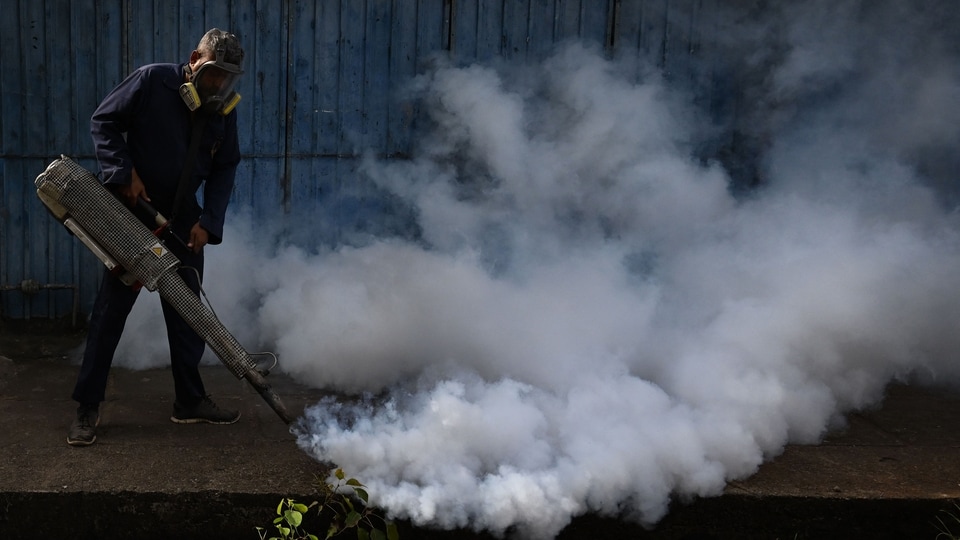
The WHO makes the same point, saying that vaccination against dengue should be seen as part of an integrated strategy, which needs to involve community awareness and engagement to stop the disease from spreading.


