
 E-Paper



Tobacco moment for social media? How a 29-state US suit against Meta could rewrite social media
The case by a coalition of US state prosecutors against Meta harks back to the litigation that brought down the American cigarette industry three decades ago.

 Prefer HTon Google


A coalition of state prosecutors. A whistleblower with a tranche of internal documents. Leaked copies of the defendant's own research showing it knew its product was harming children, and how the purportedly company chose profits over the fixes its own researchers had recommended.
That is broadly the parameters of case that opened in a federal courtroom in Oakland on Tuesday, when attorneys for California, Colorado, Kentucky and New Jersey began their opening statements against Meta for what they was wilful product choices that caused harm to children. It is also eerily similar to how the case that broke the American tobacco industry between 1994 and 1998 began.
The four states are leading a bipartisan coalition of 29 that filed a suit against Meta in 2023. Their argument is that Facebook and Instagram were built to hook children and teenagers; that Meta knew this from its own internal research and misled the public about it; and that the company harvested personal data on children under 13 without parental consent, in violation of the Children's Online Privacy Protection Act — COPPA — the 1998 US federal law that governs what platforms can and cannot do with data on under-13s.
Also read | US court rules Meta, other tech companies must face thousands of lawsuits over social media addiction
“You're going to hear that Meta knew a lot about kids' brains,” Megan O’Neill, a deputy attorney general for the California Department of Justice, said while delivering opening arguments. This includes how they are constantly seeking rewards, how they are sensitive to social feedback and “how they are still developing their ability to control impulses the way adults do.”
Meta has repeatedly said it believes it has a strong case in its defence.
The trial will run six to eight weeks in the courtroom of US district judge Yvonne Gonzalez Rogers. An eight-person jury has been seated in an advisory capacity, meaning they will hear the evidence and deliver a view, but the verdict itself will be handed down by the judge.
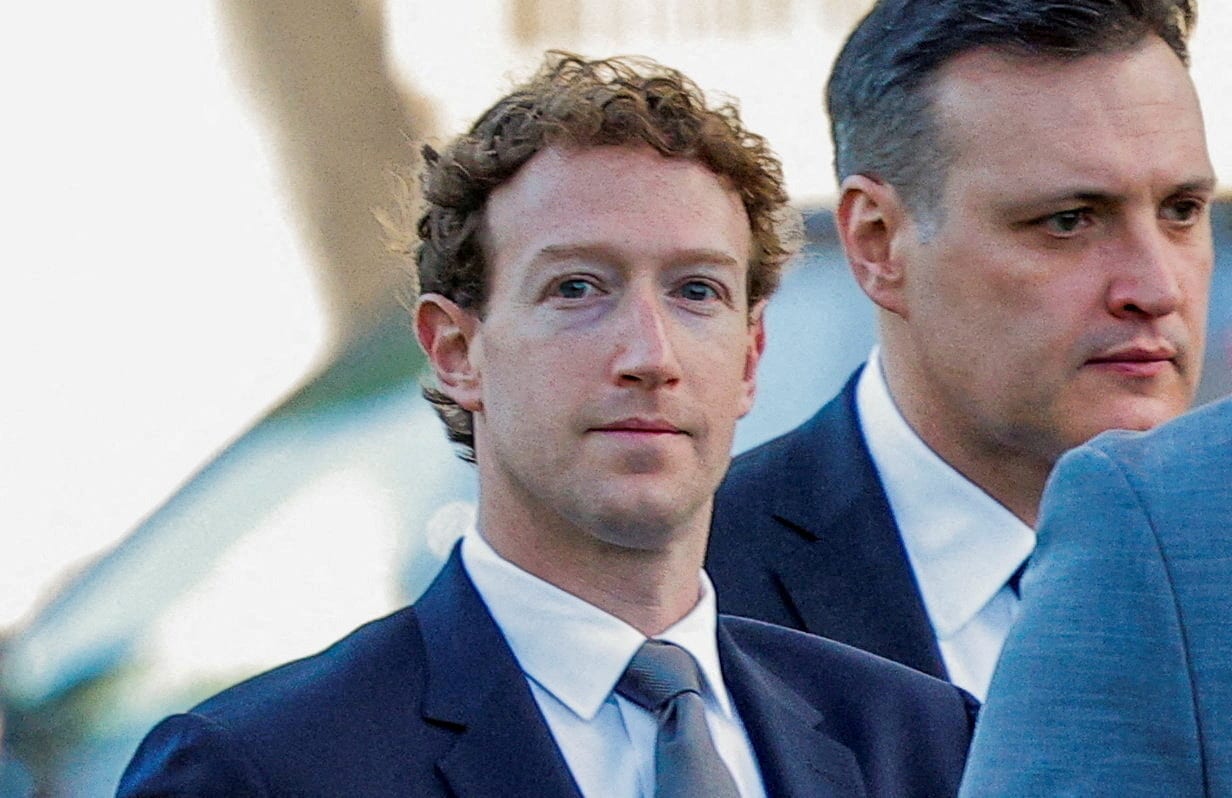
Mark Zuckerberg is expected to testify. So is Adam Mosseri, who runs Instagram.
The states are seeking cash damages that could, in theory, run into the hundreds of billions of dollars — Meta itself has floated $1.4 trillion as a ceiling, close to its own market capitalisation of $1.5 trillion, though the attorneys general have signalled the figure they will press for is nearer to $200 billion. They are also asking the judge to order design changes across Meta's platforms nationwide: real age gating, an end to the infinite scroll, and a redesign of features they say were engineered to keep young users engaged past the point of harm.
The tobacco template
In 1994, the attorney general of Mississippi, Michael Moore, filed the first of what would become the state Medicaid lawsuits against the major cigarette manufacturers. His theory was novel and, at the time, unproven: the states themselves had been defrauded, because they had been left to pick up the healthcare costs of a product the industry had long known was harmful. Every other US state eventually followed over the following four years.
The case rested on three pillars — a coalition of state prosecutors acting together, a whistleblower in Brown & Williamson's Jeffrey Wigand, and a stack of internal industry documents showing executives had known about the health harms and the addictive design of their product for decades. It ended in 1998 with the Master Settlement Agreement, which extracted $206 billion from the tobacco industry over 25 years and layered on the advertising and marketing restrictions that reshaped how cigarettes could be sold to Americans, particularly to children.
Also read | Meta faces Tennessee trial: Did Instagram's design make teens addicted?
The Meta trial is closer, at this moment, to Mississippi 1994 than to the 1998 settlement. But the approach is the same: There is again a multi-state coalition acting in concert, there is again a whistleblower — Frances Haugen, former a Facebook (then the parent company) product manager whose 2021 testimony to a US Senate committee triggered the multi-state investigation that produced this suit; and there is again a stack of the defendant's own internal documents that the states will now place before the court.
The states are also bringing a legal theory that the tobacco cases were the first to make work at scale: the design-defect claim. Simply put, the argument is that the harm was not incidental to how the product was used, but built into how the product was made. In the tobacco cases, the design-defect route allowed prosecutors to slip past the individual-choice defence that had defeated four decades of earlier lawsuits. In Meta's case, it offers a way around Section 230 of the US Communications Decency Act, the foundational internet law that shields platforms from liability for content their users post, but which does not straightforwardly shield them from claims about how their products themselves are engineered.
Meta's defence
Meta's public position — repeated in the statement its spokesperson released ahead of opening arguments, and echoed in its filings — is that the attorneys general have produced no proof anyone in their states was actually harmed; that the company has invested substantially in teen safety; and that the states are trying to penalise Meta for industry-wide problems, such as age verification, that no single platform can solve on its own. In a New Mexico state trial earlier this year, Meta's lawyers made a related argument: the company has been open about the limits of its safeguards, has published regular transparency reports on the material it removes, and has not deceived anyone about what its platforms are or are not.
The research out there
Jonathan Haidt, a New York University social psychologist whose 2024 book The Anxious Generation became one of the best-selling parenting titles of the year, argues that the spread of smartphones and social media from around 2012 is the primary driver of a collapse in adolescent mental health across the English-speaking world.
On the opposite end of the spectrum from Haidt is Candice Odgers, an experimental psychologist at the University of California Irvine. In a widely-cited Nature review of Haidt's book, Odgers and a large number of academics working on the National Academies of Sciences review contend that the measured effect sizes are small, the causation is unclear, and the trends are better explained by other things — the lasting effects of the 2008 financial crisis, shifting patterns in how young people express and report their distress, the wider mental-health crisis that is also affecting adults.
Haidt and Odgers, however, agree that the underlying mental-health numbers today are alarming.
Meta will plausibly lean on the Odgers side of that debate. The company could also rely on studies such as the Adolescent Brain Cognitive Development study — the largest longitudinal study of adolescent brain development in the US — which has not found dramatic effects tied to digital-technology use.
Also read: Meta Is Fighting a Mountain of Social-Media Lawsuits—at Just the Wrong Time
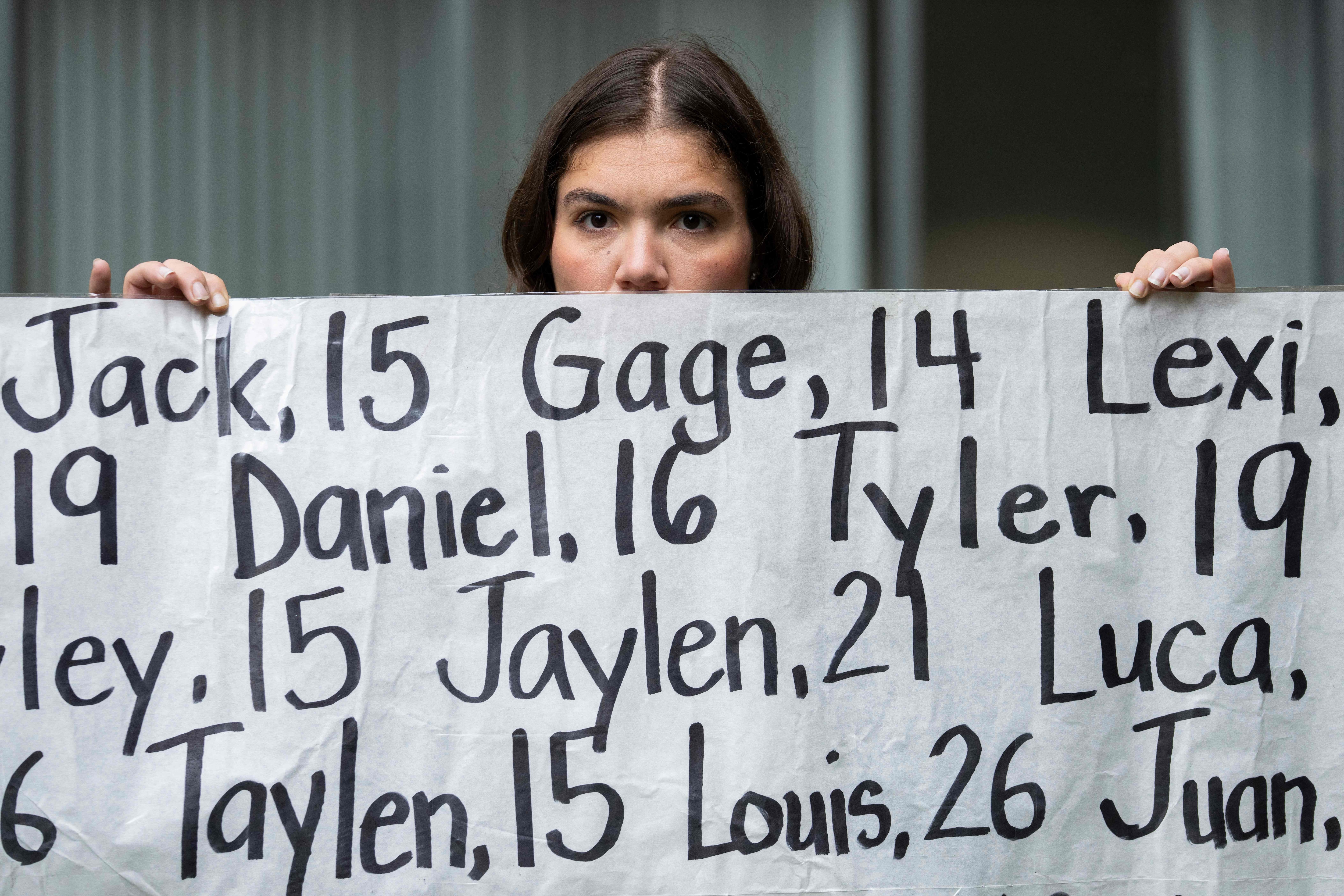
But what would be worth watching is whether the trial is restricted to a seminar-like debate about effect sizes and research design. The states, as they indicated on Tuesday, will introduce internal Meta research — the same research that produced the Wall Street Journal's "Facebook Files" in 2021, and which Haugen carried out of the company — that shows Meta's own analysts concluding Instagram made body-image issues worse for one in three teen girls who already had them. They will, as some AGs have indicated, potentially summon former Meta employees. They will bring emergency-room data on adolescent self-harm and suicide, school counsellors' testimony, and parents whose children died.
The design-defect theory may not need for the court to resolve the whole academic debate. It requires a compelling case to be made that Meta knew what its own research was indeed telling it, and that it chose profit over the changes that the research suggested it implement.
Three things over the coming weeks could signal where the trial heads. The first is Zuckerberg's testimony. He has appeared before US Congress several times, but this will be a different kind of exposure: adversarial cross-examination under oath, in a proceeding where his own emails and internal messages are on the exhibit list.
The second is the scope of the injunctive relief the four states press for at trial. An order to eliminate the infinite scroll, to impose real age verification, or to redesign the recommendation algorithm would set a template the remaining 25 states in the coalition could pursue in the next round of litigation.
The third is the size of the number the states put on the board when they specify damages. Meta's floated $1.4 trillion ceiling was, effectively, Meta pointing at its own market cap and saying the states were threatening to erase the company. The $200 billion figure the attorneys general are signalling is roughly the size of the tobacco settlement.
Tobacco took decades to move from Mississippi's first filing to the industry-wide restrictions that eventually followed. Meta now has to argue its way out of the same shape of case, in front of a jury, over six weeks in Oakland.


