
 E-Paper



Air pollution in the NCR: A prisoner’s dilemma
The article has been authored by Anurag Agrawal, dean, BioSciences and Health Research, Trivedi School of Biosciences, Ashoka University.

 Prefer HTon Google


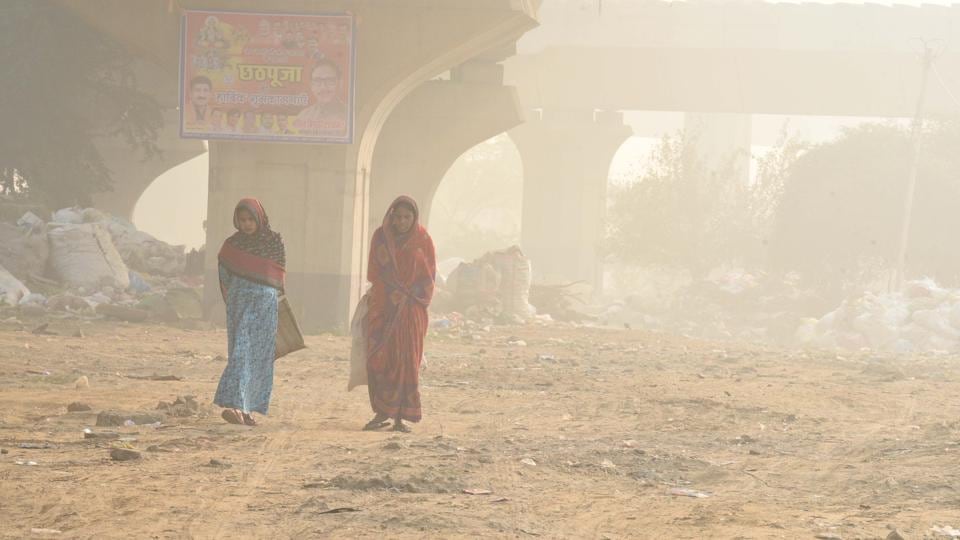
Trapped indoors, looking at the suffocating smog enveloping the National Capital Region (NCR), and deliberating upon whether going for a game of tennis is a rational choice, it seems very appropriate to consider a different ‘prisoner’s dilemma’. This dilemma, often discussed by game theorists and sociologists, describes the situation where two prisoners face a choice – a) staying silent under interrogation, hoping that the other also does so, leading to freedom for both after a short while, or b) quickly turning on the other in exchange for personal freedom, but long punishment for the other.
Unfortunately, theory shows that in most risk-reward scenarios, personal benefit typically lies in betrayal rather than cooperation. Therein lie the roots of the environmental mess we find ourselves in, where everyone knows what is right, but very few do it.
When seen in the context of stopping environmental pollution, everyone chooses between cooperatively sharing or shirking the burden. The cost, whether monetary or inconvenience, is paid by the individual, but the gain is shared by all, irrespective of their choice. Further, there may be no gain if others do not agree to pay the cost. To succeed, each person must feel that their cooperation is important, believe that others would cooperate similarly, and realize the costs of non-cooperation. Those who do not trust the others to cooperate, would feel foolish to cooperate, even if they believed in the costs of non-cooperation.
Air pollution in NCR has many components. Traffic, dust, construction, fly ash, stubble-burning, and weather all play an important role and no single factor can be singled out that sufficiently explains all our problems. However, at this time of the year, smoke coming from burning fields in Punjab and Haryana contributes most to the toxic haze that envelops the NCR. It is also analogous to the prisoner’s dilemma for the farmer and thus can be approached logically via game theory principles.
By choosing to cooperate, i.e. not burn the residual paddy, farmers incur significant monetary or convenience costs. The immediate repercussions associated with non-cooperation, i.e. burning the residual paddy, are unfortunately not very high. Further, any benefits are not guaranteed until most people cooperate, and accrue to everyone whether they cooperated or not. Thus, it would not be unreasonable for a logical farmer to consider cooperation foolish or futile, even if they understood the long-term risks of air pollution.
Much of our current effort focuses on conveying such risks. Many articles have been written about the irreversible harm of air pollution; the multiple organs affected, years of healthy life lost, and increased number of years lived with disability. Research from my group has shown that Indians have the poorest lungs in the world and I fully expect a future epidemic of chronic obstructive pulmonary disease (COPD) and increasing lung related disability as the life span of Indians increases. Yet, this knowledge will have little direct effect on changing the risk-reward dilemma of the farmer. What it can do, however, is to push the government to introduce changes that directly affect the dilemma.
What would these be? Cheap and easy alternatives for burning would reduce costs of cooperation. Innovative solutions are already being seen, ranging from microbial decomposition from stubble to compost within a month to tractor-mounted extension machines (Happy Seeder) that sow wheat while simultaneously removing straw. Finding uses for the straw, such as distilleries to generate ethanol from straw, is another option. None of these are cheaper than burning yet, but that could change. Closer monitoring, using satellite imaging, and firmer enforcement of existing laws would increase the cost of non-cooperation.
More radical solutions that do away with the dilemma altogether, by substituting paddy season with other crops, appear most attractive from a logical standpoint. Rice farming in the western Indo-Gangetic plain is an undesirable post green-revolution artefact that has deteriorated soil quality and depleted groundwater resources. Diversifying away from rice would also help to make diverse, nutritious foods more readily available, addressing India’s endemic malnutrition problem. The government can further support diversification through other innovative financial measures such as the Mera Pani Meri Virasat scheme of the Haryana government (https://hindi.nvshq.org/mera-pani-meri-virasat-yojana/).
All proposed solutions must also keep in mind that such dilemmas are not unique to farmers. We have seen severely dampened political enthusiasm to act against farm fires by the same people who asked for strong action earlier. Will we see political cooperation on this important topic, as opposed to betrayal to gain political capital, by supporting those who break the law? While one hopes it will be so, perhaps due to judicial intervention, it seems best to focus on making the choice easier for the person who decides whether or not to light the fire -- the farmer.
The article has been authored by Anurag Agrawal, dean, BioSciences and Health Research, Trivedi School of Biosciences, Ashoka University.


