
 E-Paper



Coal-CCUS combo can fortify India’s energy security and uphold NDCs
This article is authored by Kumar Subramanian.

 Prefer HTon Google


Amidst a global economy complicated by trade wars and shifting ESG regulations, India has been an exemplar when it comes to upholding sovereign climate commitments. By 2024, India had reduced its GHG intensity (greenhouse gas emissions per GDP) by 39% compared to 2005 levels, making substantial progress toward its Nationally Determined Contribution (NDC) goal of a 45% reduction by 2030. In fact, various models project that India will accomplish a 48-57% reduction in GHG intensity by 2030, far outperforming its commitment. As on mid-2025, India’s share of installed energy capacity from non-fossil sources surpassed 50%, five years ahead of its 2030 NDC target. Based on current trajectory, the nation’s total non-fossil capacity is also expected to better its 2030 goal of 500 gigawatts. Earlier this June, India promulgated its Carbon Credit Trading Scheme (CCTS), a market-based carbon pricing mechanism that will go live by 2026. This scheme will help cascade NDC accountability to high-emissions sectors and add further momentum to business sector decarbonisation.
Moreover, India is not merely focused on its own energy transition. It is leading global efforts towards sustainable energy cooperation. The International Solar Alliance (ISA), co-founded by India, promotes solar adoption across the Global South, embodying the nation’s commitment to a more sustainable and inclusive energy future.
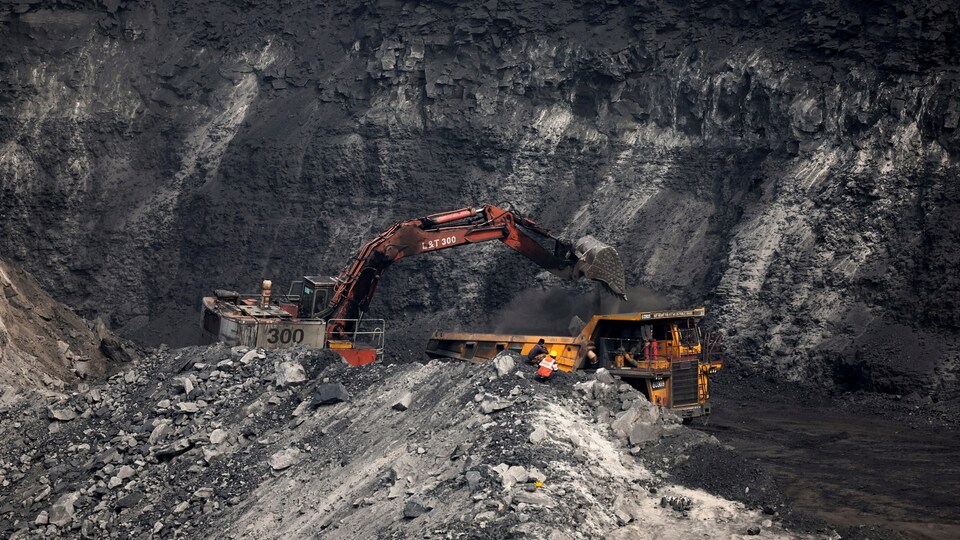
In lockstep with a laser-focused pursuit of its NDC mandate, India is also prudently enhancing its coal capacity. Earlier this March, India celebrated its milestone of producing one billion tonnes of coal in a single fiscal year – an accomplishment that drew a predictable chorus of criticism from parts of the international community, comprising largely the developed countries. What these critiques conveniently disregard are the nuanced strategic trade-offs that India has to weigh while navigating its energy transition – across decarbonisation, development and energy security.
Energy access and electrification will underpin India’s Viksit Bharat 2047 mission that aims for a fully developed economy with a Gross Domestic Product (GDP) exceeding $ 30 trillion. To support an economy of this size, our energy demand will reach nearly 35,000 trillion watthours (TWh), close to three times the present levels. Environmental highbrows may argue that almost all of this additional demand can be met by renewable energy sources. As evidence, they will cite a study conducted by the International Renewable Energy Agency (IRENA), that confirmed that 91% of new utility-scale renewable power projects commissioned in 2024 had lower generation costs than the cheapest fossil fuel alternatives. But this line of argument misses an important point.
Today, control over reserves and processing of renewable energy minerals is geographically concentrated among a handful of countries and India is not among them. In fact, China holds a near-monopoly or majority share in the processing of nearly 60% of the 17 critical minerals that are required for building wind turbines, solar panels, grid integration and battery storage systems. Amidst the current global geopolitical dynamic, India cannot expose its Viksit Bharat mission and energy requirements to disruptions in availability of renewable energy minerals from such oligopolistic supply chains.
Even the European Union (EU) that has held the moral high-ground on net-zero transition seems to have recognised the enormity of this problem. Its largest economy, Germany signed a Joint Declaration of Intent with Canada this August that included among other things, an energy partnership where Canada will develop LNG (Liquified Natural Gas) infrastructure to potentially supply Germany in about five years’ time. Germany also negotiated a deal with the European Commission this October to build another 12.5 Gigawatt of gas-fired plants to support the country’s power requirements during the near-term. Even the third largest economy in the world is hesitant to tie its energy future fully to renewables.
Coal is to India what gas is to the US and renewable energy minerals are to China, and should continue to be an integral part of India’s fuel mix. As of 2024, India’s unused coal and lignite reserves stood at nearly 430 billion tonnes, the fifth largest in the world. Till date, it has mined less than 5% of its proven geological reserves, much lower than the 15-20% for China and 6-8% for Australia. Even if India develops another 5% of its existing reserves over the next ten years, it should save the country 13 btoe (billion tonnes of oil equivalent), a staggering $ 6 trillion worth of savings in fuel imports.
India auctioned nearly 4 billion tonnes of coal geological reserves in 2024 and launched further auctions in October 2025. No country, whether developed or emerging, can challenge the soundness of these decisions, either on strategic or moral grounds.
No doubt, coal is not clean. Compared to other fossil fuels, coal-fired plants emit 50-80% higher GHG emissions for the same energy output. Coal plants also operate for 40-60 years. So, capacities installed now will be still running after 2060, locking in emissions and putting India’s 2070 net-zero pledge under risk. Should they be retired earlier, there will be massive, stranded costs. This is where Carbon Capture, Utilization and Storage (CCUS) technologies come to the fore. CCUS can help capture carbon dioxide emissions before release into the atmosphere. The captured carbon can be stored underground or used as feedstock for industrial applications such as sustainable aviation fuel, methanol, blue hydrogen, soda ash, recycled concrete and many others. NTPC, IOCL, GAIL and Tata Steel have already deployed CCUS in their existing facilities, thereby demonstrating technical viability and scalability of this technology.
The annualised capital and operating costs of installing a CCUS facility at coal-fired plants can be upwards of USD 50 per ton of carbon dioxide captured. Once India’s exchange trading system goes live in 2026, it is expected that the market price of carbon will be anywhere between $ 20-30 per tonne. For CCUS technologies to be economically viable, the costs have to be brought down to this range.
Favorable government incentives and policies can go a long way in bringing the cost curve down and promoting deployment of CCUS at scale. Akin to the National Hydrogen Mission, the Union Government is planning to launch a CCUS mission to establish India as a global hub for carbon capture, usage and export of industrial derivatives. Besides tax subsidies and concessional finance to indigenous CCUS technology developers, the mission should consider establishing CCUS industrial clusters where coal plants and other emissions intensive sectors such as cement and steel are co-located near downstream industrial facilities like chemicals and fertilisers. Such co- location models lower logistical costs, enable smaller modular investments, and accelerate learning through feedback loops.
India has to orchestrate a delicate balancing act between its Viksit Bharat 2047 mission and NDC commitments. By prudently utilising its coal reserves and combining them with CCUS technologies, our nation can take a holistic approach towards net-zero transition, energy self-sufficiency and economic development.
This article is authored by Kumar Subramanian, founding partner and managing director, Sculpt Partners, an advisory firm specialising in decarbonisation, carbon markets and climate risk management.


