
 E-Paper



How Indian cities can cut winter pollution peaks: A playbook for urban planners and local administrators
This article is authored by Ankur Bansal, founder and Ankit Jain, co-founder, GDi Partners.

 Prefer HTon Google


Every winter, as frost grips the northern plains of India, its cities - from the capital to fast-growing satellite towns - descend into a familiar, noxious haze. The air thickens, breathing becomes laboured, hospitals fill with asthmatics and heart-patients, and a pall of despair settles over everyday life. Yet, this need not be the recurring fate of urban India. With structured planning, committed governance, and inter-sectoral coordination, cities can treat the winter smog season not as an unavoidable burden, but as a manageable crisis. What follows is a playbook - rooted in science, informed by lived realities - for urban planners and local administrators determined to reclaim clean air for their citizens.
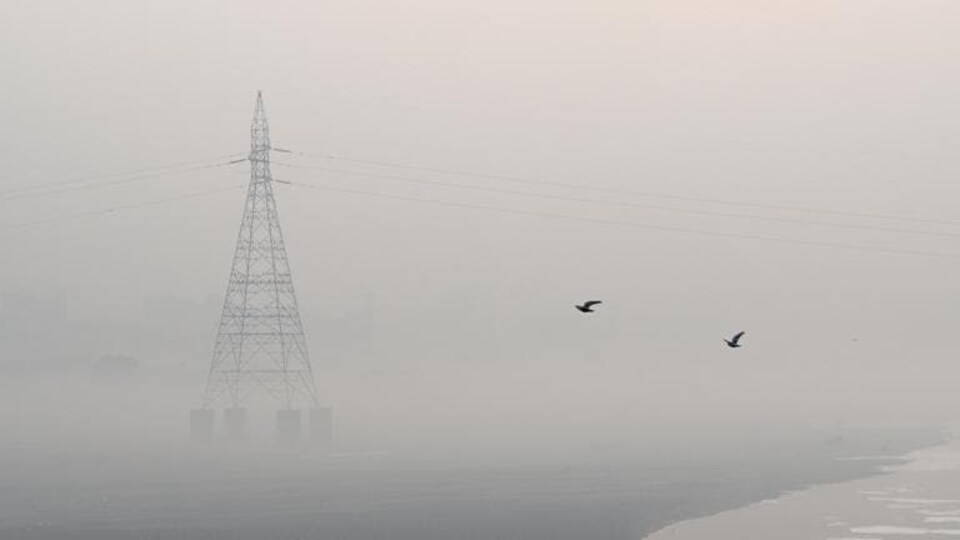
Winter smog isn’t merely the result of seasonal chill, it is the consequence of predictable atmospheric conditions colliding with chronic structural failures in how our cities (and surrounding regions) are planned, regulated and governed.
A great deal of discussion already focuses on the specific interventions required for improving air quality, controlling industrial emissions, accelerating vehicle electrification, enforcing construction and demolition norms, preventing biomass burning, and so on. However, the playbook for cutting winter pollution peaks must extend beyond sectoral interventions. It must include systemic reforms that governments and city administrators need to undertake to accelerate the clean-air journey of Indian cities.
While many cities today have Command and Control Centres (CCCs) established under the Smart Cities Mission, these facilities often lack integrated, analyzable and actionable air-quality data. Existing data streams — including air-quality monitoring networks, forecasting systems (where they exist), emissions tracking, traffic monitoring platforms, vehicle-electrification records and satellite inputs — currently operate in silos. As a result, they fail to offer a holistic view that can meaningfully inform policy and administrative action.
Cities could benefit enormously from AI-enabled, real-time Air Quality Decision Support Systems (AQ-DSS) that integrate industrial, vehicular, agricultural, biomass, meteorological and satellite data to enable predictive governance rather than reactive firefighting. Without such data-to-decision pathways, winter responses will remain fragmented and delayed.
It is no secret that government agencies in India function in silos, and the air-pollution challenge is no exception. Under the National Clean Air Programme (NCAP), most beneficiary cities (and, in some cases, states) have prepared Clean Air Plans (CAPs). Yet implementation continues to be hindered by institutional fragmentation.
To illustrate: while a Mayor or Municipal Commissioner is expected to take comprehensive action to tackle pollution, they often lack authority over the utilisation of funds under schemes and programmes beyond NCAP and Swachh Bharat Mission 2.0. Likewise, city-level officials of transport, industries, pollution control boards and autonomous agencies continue to operate independently of the Municipal Commissioner’s circle of control.
Unless city administrators are formally empowered to establish and lead multi-agency task forces including having influence over associated budgets they will not possess the operational authority to drive coordinated and holistic air-pollution action.
Although several national programmes aim to reduce sectoral emissions such as the PM e-DRIVE scheme targeting vehicular pollution, NCAP for dust and sources within urban local bodies, and Swachh Bharat Mission 2.0 for waste management and reduction of burning which is a significant funding gap persists for comprehensive air-pollution control.
Indian cities must therefore explore innovative financing mechanisms. Two states in the Indo-Gangetic Plain have demonstrated an approach worth noting: Uttar Pradesh and Haryana have partnered with the World Bank to design state-level Clean Air Programmes with budgets exceeding ₹3,500 crore for a five-year period. While a substantial portion of this amount is a returnable loan and limited when measured against overall needs. It has the potential to catalyse increased state-budget allocations. More states must adopt similar models to fund state-level action plans.
In another example from a different but related context, the city of Nashik recently issued Clean Godavari Bonds 2030 on the National Stock Exchange (NSE) to raise ₹200 crore for river rejuvenation and civic projects. The issuance was oversubscribed 3.95 times, signalling that financial markets could be receptive to well-designed environmental infrastructure instruments. Pollution-control projects could follow the same path, opening new financing possibilities for city-scale interventions.
The stakes are high. Winter smog is not merely a seasonal inconvenience - it is a public-health emergency. Without structural change, each winter simply resets the smog clock. Urban planners and local administrators are at a crossroads. The question is no longer whether smog can be tamed - we already know how it builds, and which levers can break the cycle. The real question is: Is there the political will, administrative discipline, and long-term vision to act upon the above playbook?
This article is authored by Ankur Bansal, founder and Ankit Jain, co-founder, GDi Partners.


