
 E-Paper



Inflection point for the Hydrogen Mission
This article is authored by Ajay Shankar, Distinguished Fellow, Teri.

 Prefer HTon Google


India was forward-looking in launching its Hydrogen Mission to take us into a new carbon emission free industrial economy. This alone would save mankind from the disaster of global warming. Green hydrogen produced without carbon emissions could be a substitute for fossil fuels in most of the ‘hard to abate’ sectors. We have now fortunately reached an inflection point where we can leapfrog and become an advanced green industrial economy as early as in the next decade.
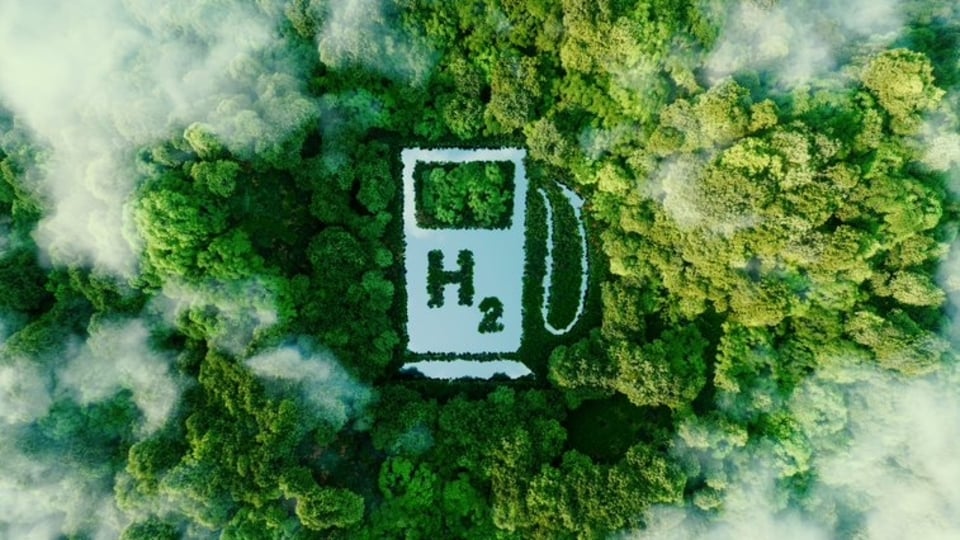
India has a decisive cost advantage as the price of solar power and storage in the country is one of the lowest in the world. The price is now lower than new thermal power when our domestic coal is the cheapest fossil fuel in the world. With this cost advantage of carbon free electricity, the input cost of converting the water molecule into green hydrogen through electrolysis, is now amongst the lowest in the world.
This has been clearly seen in the recent SECI bid for the supply of green ammonia, whose primary production cost is green hydrogen, in which the contract price of ₹53.3 per kg, is comparable to the price of imported urea, far lower than expected. This also demonstrated that inviting bids for a long-term supply contract for a new product is the best way to get low prices. It is bringing in private investment for the first time for the manufacture of green ammonia. Inviting bids for long term supply would bring in private investment for green hydrogen and all downstream carbon free products using green hydrogen. This is an effective policy instrument where there is no demand in the market. Becoming a producer of cheap green hydrogen has made India potentially a globally cost competitive producer of all downstream products using green hydrogen instead of fossil fuels in the hard to abate sectors. India can look forward to becoming a major exporter of all green industrial products with zero (or near zero) embedded carbon.
How has India achieved this? It did so by evolving its own unique energy transition process. First, the state decided to drive the transition. Then it used the policy instrument of getting competitive private investment into green production. The key to our getting prices lower than expected has been the complete risk mitigation embedded in the contracting process. The bid price offered by all bidders is one at which they would make profits. The long-term procurement contract eliminated offtake risk as the entire output from the new plant would be purchased for 25 years. This practically risk-free investment has no difficulty in raising equity and debt. Financing is not a constraint for developers.
The time has now come for the development of downstream green plants in each of the major hard to abate sectors, such as steel and fertilizer, where the carbon emission per unit of output is zero or as low as is technically feasible. This is best done by inviting bids for long term purchase of the entire output for, say, 25 years from the date the new plant starts production. Provision of land and environment clearance to potential bidders would further reduce risk and result in lower prices. Offer of the supply of green hydrogen that would be required may result in even lower bid prices. Separate competitive procurement of green hydrogen for each project would then be required. As these prices would be higher than the market price for the same product made by using fossil fuels, the government at the outset would need to decide to absorb these higher costs. This is affordable. It could use the more expensive green steel or green cement in government funded projects; the higher cost having a marginal impact on project costs. No explicit budgetary subsidy would then be needed. Development of these green projects is a more complex task which needs a dedicated implementation agency, SPV (Special Purpose Vehicle), in the Hydrogen Mission.
If work on one project for each hard to abate sector starts next year after the contract for long term supply is awarded, then these plants should begin production in the early 2030s. Their prices are likely to be among the lowest in the world. India can then become a leading exporter of carbon free manufactured goods to the EU with no burden under CBAM under which imported goods have to pay a levy to the extent their embedded carbon exceeds their prescribed standards. This would facilitate the global journey to net-zero. India would also find itself moving to net-zero much faster.
(The views expressed are personal)
This article is authored by Ajay Shankar, Distinguished Fellow, Teri.


