
 E-Paper



Regenerative agriculture: India’s climate-resilient path
This article is authored by Laveesh Bhandari and Sushil Saigal.

 Prefer HTon Google


Recent unseasonal rains damaged 250,000 hectares of rabi crops. Such events highlight the broader challenge of the climate crisis. Not only erratic monsoons, but intensifying heat waves as well are impacting the country’s agriculture in unfamiliar ways.
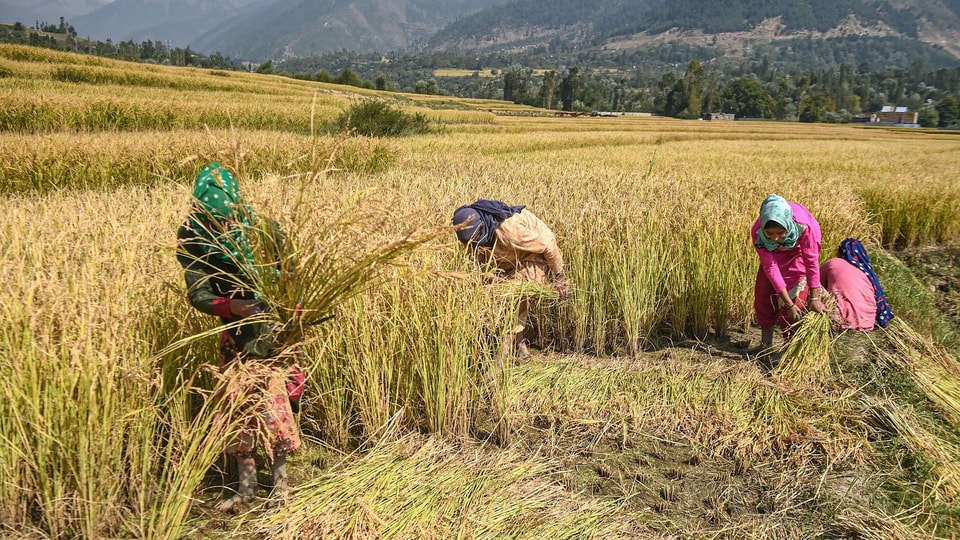
As climate variability intensifies, farmers are among the most impacted, as shifting conditions require reshaping a wide range of decisions including those around fertiliser application, irrigation times, and harvest schedules, to name a few. Associated with such events is also the volatility of prices and timely availability of relevant inputs. No longer can farmers rely on time tested traditional practices.
In times of unpredictable weather, the natural response of governments is to look at buffers in the form of welfare measures and subsidies. And indeed, many such mechanisms are in operation ranging from cash benefit transfers to subsidised inputs to climate related insurance mechanisms.
However true adaptation focuses on creating independence from such disruptions, which essentially involves changing the technology of farming altogether. Drought resistant seeds are one example, changing the cropping pattern and moving towards more hardy crops such as millets is another. And indeed, there are ongoing government efforts in these areas.
In such a scenario, regenerative agriculture provides an opportunity to not just look for sustainability but to do much better. Regenerative agriculture improves the ability of the land, air and water resources in such a way that they are better able to sustain the natural world. In other words, regenerative agriculture focuses on enhancing the quality of the soil, increase its ability to hold organic matter and thereby also hold greater moisture. If done well, regenerative agriculture enables soil to hold far more carbon than it would otherwise, enables greater biodiversity, holds greater moisture which, in turn, sustains crops better, and may even contribute to cleaner air. Therefore, regenerative agriculture offers an opportunity to rethink agricultural systems with less input-intensive production and stronger environmental and economic outcomes.
The critical elements that can scale regenerative agriculture adoption include knowledge and awareness, behaviour change, and relevant pricing interventions.
For example, the PRANA (Promoting Regenerative and No-Burn Agriculture) programme’s Pay-for-Results (PFR) model that shifts the focus from subsidies to outcome-based incentives for service providers by rewarding measurable outcomes was able to expand direct seeded rice (DSR) coverage by 25% and crop residue management (CRM) by 22–28%, respectively, amongst the pilot programme service providers. More importantly, PRANA substantively reduced crop residue burning and improved water management in rice cultivation. Moreover, it also benefitted relevant service providers and increased their coverage of small farmers substantially.
In Punjab, The Nature Conservancy is using a combination of behavioural interventions, farmer training, service provider networks, and monitoring systems under its PRANA programme with the support of partners. Since 2021, about 300,000 farmers have shifted to no-burn agriculture. This translates to approximately 700,000 hectares of land brought under no-burn cropping practices. Paired with enhanced soil health and agronomy cropping solutions, these efforts have mitigated an estimated 3.8 million tonnes of CO2e emissions and saved nearly 400 billion litres of water, while improving soil health and agronomic outcomes.
Interestingly, the above experience shows that an effective lever for scaling sustainable agriculture is empowering the overlooked agent, that is, the private service providers who can accelerate the diffusion of new practices. At the same time, challenges remain with uneven machine distribution, refining incentives and strengthening supply-side capacity, which need to be addressed to sustain the momentum.
Regenerative agriculture is an umbrella term for a range of technologies such as low or no till farming, covered cropping, intercropping, adaptive grazing, agroforestry, biochar application, composting, perennial crops, native hedges, livestock-cropping integration etc. Unlike conventional hybrid-seed-fertiliser dependent agriculture, it does not sit well with the one-size fits all approach that India’s past agriculture development trajectory is unfortunately associated with.
Every soil type, area and crop may require a different combination of practices. This, in turn, requires a large extension network that can be created in the public, private for-profit as well as non-profit sectors. The same network can also help farmers with other resilience related practices and be a mechanism for spreading the learning from one part of the country to another. India’s agricultural landscape lacks a robust integrated extension services network that could encompass public, private, and non-profit initiatives. Such integration can help spread regenerative practices nationwide.
The key policy challenge in India is the ability to support Indian farmers as they shift to a superior form of agriculture. Investing in such an extension network will help grow farmers’ income, encourage sustainability practices and productivity enhancements, and also help enhance the resilience of farmers against the climate volatility.
Several existing programmes are already advancing such goals. For instance, the National Mission on Sustainable Agriculture promotes new technologies and practices in cultivation; schemes such as PM-PRANAM and the Soil Health Cards target improved soil health and optimal resource use. Knitting together existing schemes into a coherent national regenerative agriculture strategy will not only strengthen farmer resilience but also align with India’s sustainability and Mission LiFE goals. Such coherence can also ease water, fertiliser, and electricity subsidy burdens and significantly reduce fossil fuel dependence.
(The views expressed are personal)
This article is authored by Laveesh Bhandari, president and senior fellow, Centre for Social and Economic Progress and Sushil Saigal, interim managing director, Nature Conservancy India Solutions.


