
 E-Paper



Why rejuvenating traditional water systems matters for Rajasthan
This article is authored by Moumita Mukherjee, deputy manager, A.T.E. Chandra Foundation.

 Prefer HTon Google


Rajasthan, India’s largest state, is often imagined as an arid expanse of sand dunes, camel caravans, and women walking miles balancing pots of water on their heads. This romanticised tableau, reproduced through cinema, art, and tourist postcards, continues to shape popular imagination. Yet evocative as it may be, it obscures a more sobering truth: beyond the burnished hues of the desert lies a quiet, daily struggle for water and dignity.
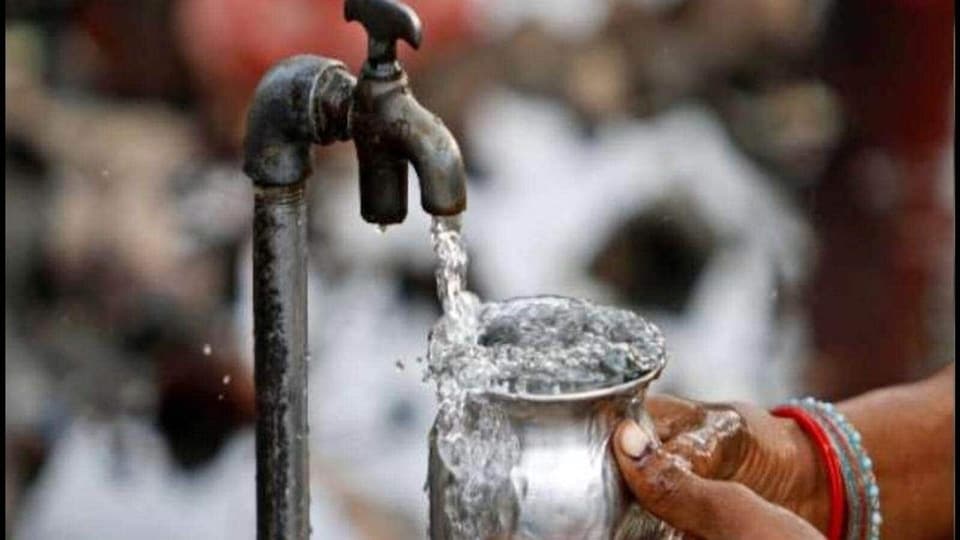
In the Marwar region, over half the villages still lack direct access to clean water. Women walk 4–10 kilometres daily, tethered to a generational struggle now worsened by climate change. Droughts, once intermittent, now strike nearly three out of every five years, affecting most districts and millions of people.
And yet, Rajasthan’s past tells a different story; 17th and 18th century miniature paintings of the Mewar school depict landscapes dotted with lakes, streams, and verdant surroundings – a striking contrast to the dry desert imagery of today. These were not artistic exaggerations but reflections of a society that understood aridity as a condition to be managed.
For centuries, Rajasthan sustained intricate water harvesting systems that were decentralised, locally managed, and deeply embedded in community life. Rulers and local leaders invested in building lakes, baoris (stepwells), talabs (ponds), johads, and reservoirs – not merely as feats of architecture but as essential water lifelines. Structures such as Lake Pichola and Fateh Sagar in Udaipur or Jaswant Sagar near Pali were designed to harvest monsoon rains, recharge groundwater, and ensure year-round access to water for drinking, agriculture, and domestic use.
Despite this legacy, Rajasthan today is among India’s most water-stressed states. It supports nearly 5.7% of India’s population but has access to only about 1% of its water resources. Of its 295 administrative blocks, 245 fall in critical groundwater zones.
Climatic conditions compound the challenge. Over 60% of the state is arid or semi-arid, with average rainfall of just 531 mm – about half the national average. Rainfall is also highly erratic and uneven, ranging from 150 mm in Jaisalmer to nearly 900 mm in Banswara. When the monsoon arrives, it often falls in short, intense bursts that quickly run off, particularly when traditional waterbodies are silted and unable to store water.
By late winter, the consequences are stark: Over 70% of villages in western Rajasthan rely on private water tankers, with a 5,000-litre supply costing ₹1,000– ₹3,000--often unaffordable for rural households.
Water scarcity here is not merely an environmental concern; it is a socio-economic crisis. It constrains agriculture, deepens poverty, triggers migration, and disproportionately burdens women and children.
Environmental historian Anupam Mishra, in his seminal work Aaj Bhi Khare Hain Talab, captured this paradox powerfully. He documented how indigenous water systems once sustained Rajasthan’s arid landscapes through carefully designed networks of water harvesting structures. He also critiqued modern water management approaches that sidelined these systems in favour of centralised infrastructure, often at the cost of local resilience.
Even today, during peak summers when temperatures cross 48°C, groups of women gather to manually desilt and deepen community ponds. These acts of stewardship are remarkable, but they cannot match the scale or urgency of the crisis.
What Rajasthan needs is an approach that combines traditional wisdom with modern efficiency.
One such solution lies in rejuvenating existing waterbodies through machine-led desilting. By removing accumulated silt, this restores storage capacity and enhances groundwater recharge. At a cost of roughly ₹31– ₹39 per cubic metre, removing one cubic metre of silt creates nearly 1,000 litres of additional storage – making it one of the most cost-effective water augmentation strategies.
The benefits extend beyond water storage. In several regions, farmers transport nutrient-rich silt from ponds to their fields at personal expense, improving soil fertility and reducing fertiliser use. Gram Panchayats utilise non-fertile silt for bunding, road levelling, and other local works, lowering public expenditure while strengthening community participation.
Since 2021, A.T.E. Chandra Foundation, in partnership with NITI Aayog, Tata Capital Housing Finance Ltd., Caring Friends, and the RG Manudhane Foundation, has rejuvenated over 1,200 waterbodies across 12 districts. These interventions have added an estimated 1,191 crore litres of surface water storage and benefited nearly 1.8 million people across 1,800 villages.
Yet the real opportunity lies in scaling such efforts across the state.
Rajasthan recorded nearly 63% excess monsoon rainfall last year, yet over 70% of its groundwater units remain overexploited – highlighting a clear disconnect between rainfall and aquifer recharge. Without desilted ponds, restored catchments, and functional local water bodies, much of this water simply runs off rather than being effectively captured.
Looking ahead, climate forecasts suggest a growing likelihood of El Niño conditions emerging in 2026, with nearly a 60% probability in the latter half of the year. Such conditions are often associated with rainfall variability and drought risk. Preparing for this uncertainty requires strengthening local water storage systems now, before the next cycle of water stress begins.
Rajasthan already has an institutional framework capable of enabling such transformation. The Mukhyamantri Jal Swavlamban Abhiyan (MJSA), launched in 2016 and revived in 2024, was designed to address water challenges through participatory planning, convergence of government schemes, and community mobilisation. Integrating large-scale rejuvenation of waterbodies into MJSA could unlock a powerful synergy between sarkar (government) and samaj (society).
The potential is significant. Rajasthan has approximately 82,000 waterbodies (WRIS), many of which can be rejuvenated. With a focused, machine-led approach under MJSA 2.3, over ~40,000 waterbodies could be rejuvenated within five years – enhancing water storage, improving groundwater levels, benefiting 26,000 villages, and reducing dependence on costly tanker supply, with potential savings of nearly ₹9,963 crore.
Rajasthan’s past offers a vital lesson: Its traditional water systems were not relics, but practical, time-tested solutions rooted in ecological understanding. In an era of increasing climate uncertainty, reviving this wisdom through science and coordinated action may be the most effective path forward.
With sarkar and samaj working together, Rajasthan can once again transform scarcity into resilience.
(The views expressed are personal)
This article is authored by Moumita Mukherjee, deputy manager, A.T.E. Chandra Foundation.


