
 E-Paper



Despite dip, Punjab’s joblessness rate far above national average, Centre tells Parl
For people aged 15-29 years, unemployment rate falls from 19.1% in 2022 to 17% in 2025; national average dips to 9.9%

 Prefer HTon Google


Punjab’s youth unemployment rate has eased over the past three years, but the state continues to lag well behind the national average, with joblessness among educated youth also remaining disproportionately high, the Union government informed the Lok Sabha on Monday. While acknowledging concerns over industrial decline and rising emigration, the Centre maintained that employment opportunities in Punjab have expanded through MSME support, industrial incentives and self-employment schemes.
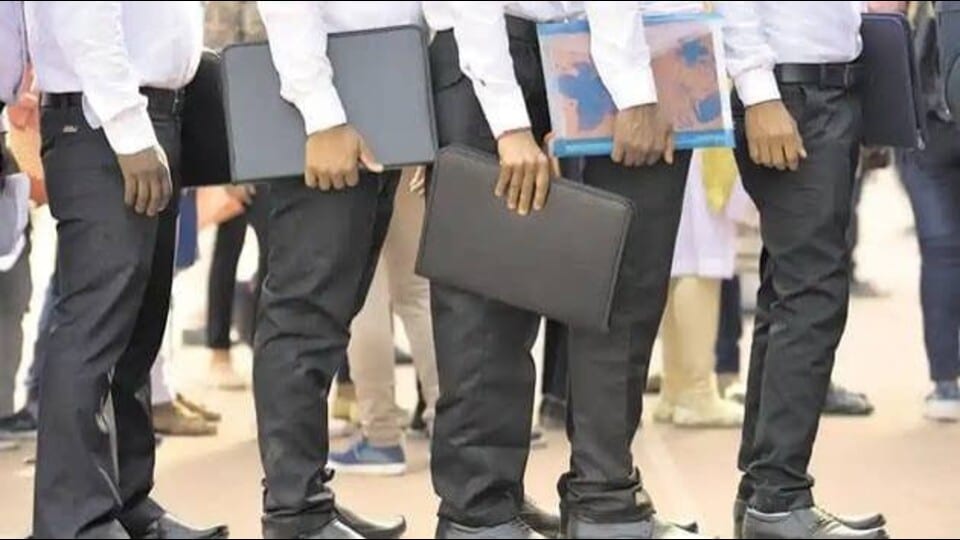
Replying to a starred question by Bathinda MP Harsimrat Kaur Badal on the impact of industrial decline on youth employment and migration, Union labour and employment minister Mansukh Mandaviya said the unemployment rate among people aged 15-29 years in Punjab declined from 19.1% in 2022 to 17% in 2025. However, it remained well above the national average, which fell from 10.9% to 9.9% during the same period.
The broader labour market picture also places Punjab among the poorer-performing northern states. According to the latest Periodic Labour Force Survey (PLFS) for October-December 2025, Himachal Pradesh recorded the highest youth unemployment rate at 29.9%, followed by Jammu and Kashmir (22.8%), Punjab (19.3%) and Rajasthan (18.3%), all above the national average of 14.3%. Haryana, by contrast, reported a lower youth unemployment rate of 12.4%.
The Centre also flagged higher unemployment among educated people in Punjab. Among those aged 15 years and above with secondary education or above, the unemployment rate stood at 9.3% in 2025, compared with the national average of 6.5%.
Responding to concerns over the decline of traditional industries such as textiles, hosiery, sports goods and machine tools, the government said 2,990 projects had been sanctioned under the Prime Minister’s Employment Generation Programme (PMEGP) in Punjab over the last four years. Financial assistance of ₹145.93 crore was released, generating employment for 29,782 people.
The Centre also highlighted the Punjab Industrial and Business Development Policy (IBDP)-2026, notified on March 8 this year, which offers capital subsidies, employment generation incentives, SGST reimbursement, electricity duty exemptions and other benefits to attract fresh investment and support existing industries.
It further asserted that organised manufacturing in Punjab has continued to grow despite concerns over industrial slowdown. According to the Annual Survey of Industries, the number of registered manufacturing factories in the state increased from 12,726 in 2017-18 to 13,166 in 2023-24.
At the national level, the government said the Production Linked Incentive (PLI) schemes, including those covering textile products, had attracted investments exceeding ₹2.40 lakh crore and generated more than 14.15 lakh jobs by March 31, 2026, including employment opportunities in Punjab.
On access to finance, the Centre said 1.47 crore credit guarantees worth ₹14.69 lakh crore had been extended to micro and small enterprises under the Credit Guarantee Fund Trust for Micro and Small Enterprises (CGTMSE) since its inception, with Punjab among the beneficiary states. It also cited the recently launched Bharat Audyogik Vikas Yojana (BHAVYA), under which 100 investment-ready industrial parks will be developed across the country, including in Punjab, with an outlay of ₹33,660 crore over six years.


