
 E-Paper



GST 2.0: Transformational reform in India’s tax landscape
This article is authored by Manoj Kumar Tiwari, director, IIM Mumbai and Utpal Chattopadhyay, professor, IIM Mumbai.

 Prefer HTon Google


The Union government led by Prime Minister (PM) Narendra Modi had initiated several key economic reforms during the last one decade. But nothing could be viewed as more transformational than the recent changes in the Goods and Services Tax (GST) policy. GST in India has always been the focal point in economic and policy circle discussions since its introduction in 2017. Though the revenue potential of GST was never in doubt, it was generally viewed as a complex tax system due to perceived difficulties involved in its implementation. This was more so for the micro, small and medium enterprises (MSMEs) who lacked the required skill and competence to transition to the new tax regime. The multiplicity of slabs and rates provided further fuel to the critics of GST system. However, since then GST has travelled a long distance and over the years it has emerged as the most important revenue source for the government. Simultaneously, the new tax system has undergone many changes to keep pace with the fast-changing economic realities, both in India and the global economy. The latest reform in GST is one such step taken by the central government which can have far-reaching economic consequences. When implemented it is likely to impact millions of lives favourably.
Let’s first look at the recent changes in the GST. Billed as GST 2.0 or NextGen GST, it introduces changes like much needed simplification in the rates and slabs, besides reducing tax burdens on the consumers. Instead of erstwhile multi-tier tax rates at 5%, 12%, 18% and 28%, the new tax structure under GST now has only two standard rates, viz. a 5% rate on essential commodities, while 18% for most other goods and services. Another 40% tax slab has been introduced for the first time for luxury goods and ‘sin’ goods like pan masala, aerated drinks, whose consumption might adversely affect public health. The 5% rate covers items of daily needs, agricultural goods and health care equipment. Products like electronic appliances, small cars and motorcycles with less than 350 cc are now subjected to a lower rate of 18%. Services such as individual health and life insurances need not have to pay any GST under the revised policy. Besides, the zero-rate applicable to dairy products and 33 lifesaving drugs aims to provide huge relief to the consumers. The new rates are effective from September 22, 2025, the beginning of the festive seasons in India.
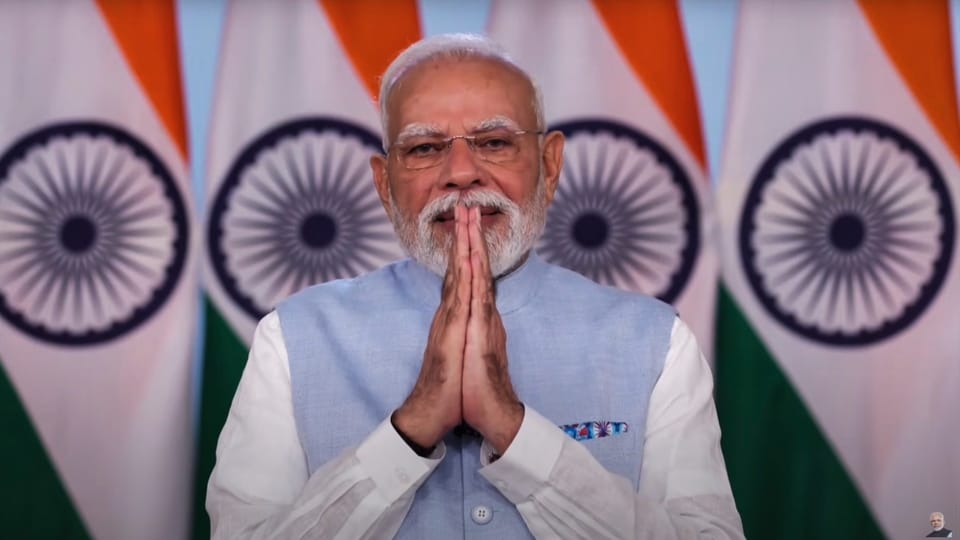
The GST 2.0 touches almost all key constituents of the Indian economy starting from agriculture to industry to services. It is expected that the drastic cuts in GST rates like this would give huge boost to the domestic demand for consumer goods. The step is equally beneficial to the industries too who can aspire to augment their sales volumes. The combined impact of these would result in higher economic growth. But the largest beneficiary of this reform would undoubtedly be the millions of common men and women from India who can now afford to live a better quality of life with consumption of more and healthier products. PM Modi very rightly echoed this sentiment when he reiterated that “#NextGenGST measures reflect the vision of 'Swasth Bharat' by making essential food items, cooking essentials and protein-rich products more affordable for families across India”.
The recently announced GST reforms have created a positive vibe in the country. The euphoria surrounding this move comes apparent from the enthusiastic and instantaneous reactions of the industry and industry bodies like CII who hailed this as a bold step towards one nation one tax policy of the government. Almost all industries cutting across sectors have agreed to fully pass on the benefits of GST cuts to the consumers. Looking from a different perspective the GST reforms by boosting domestic demand can largely compensate for the possible loss of revenue due to disruptive tariff policy of the Trump government. Overall, GST 2.0 promises a much better tomorrow for Indian consumers, an achha din for them in true sense. Going forward, this can be a game changer for the Indian economy to turn into a Viksit Bharat by 2047.
The GST reforms go well beyond agriculture. Starting September 22, 2025, India will adopt a simplified two-tier GST structure of 5% and 18%, with an outlier 40% rate for sin goods. By replacing a complex web of taxes, this reform aims to reduce compliance costs, streamline administration, and improve ease of doing business.
Historically, India’s indirect tax system evolved from colonial-era excise duties to VAT and eventually to GST in 2017. While the first GST rollout was challenging, it brought in a unified, digital-first tax framework. The latest reform is a natural progression—removing inefficiencies, widening the tax base, and ensuring equity in the tax burden.
The government expects a short-term revenue loss of about ₹48,000 crore, but this is likely to be offset by an expanding taxpayer base and higher consumption. Monthly GST collections have already grown from ₹82,000 crore in 2017-18 to over ₹2.04 lakh crore in 2025.
The GST overhaul is not just about numbers; it is about priorities. By making essential goods like farm implements, fertilisers, and life-saving medicines more affordable, the government has sent a clear message: taxation must serve inclusive growth.
For India’s farmers, who form the backbone of the economy, these changes translate into real and tangible benefits. Lower costs, better technology access, and higher incomes will not only improve livelihoods but also strengthen the rural economy.
This article is authored by Manoj Kumar Tiwari, director, IIM Mumbai and Utpal Chattopadhyay, professor, IIM Mumbai.


