
 E-Paper



Why urban India is becoming harder to live in
This article is authored by Debika Dutta, teacher, Jawahar Navodaya Vidyalaya, Mangaldai, Assam.

 Prefer HTon Google


At 8:30 am on a weekday morning, the city is already negotiating with its residents. In India’s largest metros, commuters now spend over 90 minutes a day in transit, according to estimates by TomTom. A commuter calculates whether leaving ten minutes earlier might save twenty in traffic. A renter weighs distance against affordability. A young professional scans expenses before planning a weekend. In India’s cities, living well is no longer assumed—it is managed.
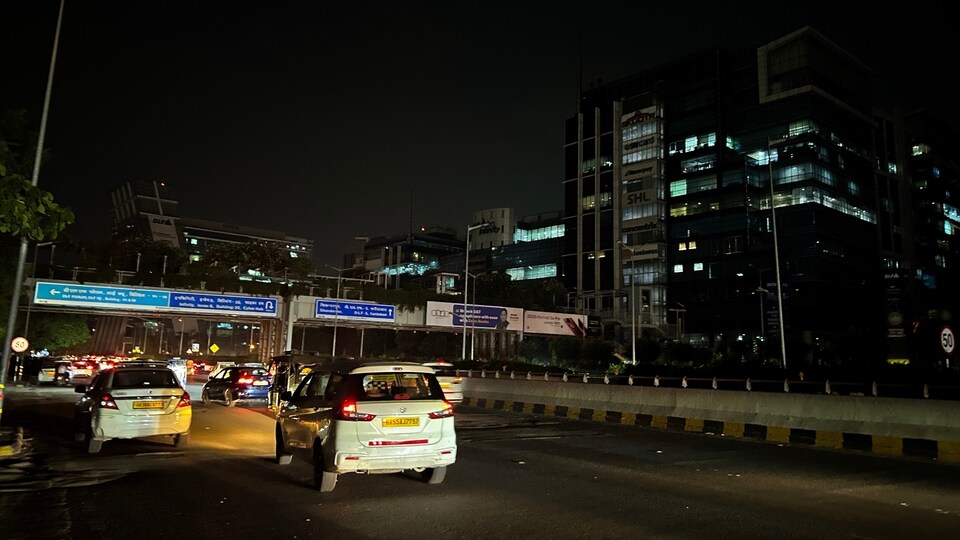
India’s urban expansion is often celebrated as momentum. By 2030, over 40% of Indians will live in cities, according to the World Bank. Infrastructure is expanding, skylines are rising, and policy discourse is saturated with the language of transformation. But this narrative is incomplete. Urban India is not just growing—it is becoming harder to live in.
The problem is not growth. It is the model of growth. India’s cities are being built for scale, not for life. The result is a steady accumulation of friction—of time lost, distances stretched, and costs rising faster than comfort.
Nowhere is this more visible than in mobility. In cities like Bengaluru and Mumbai, daily commute times frequently exceed 90 minutes, with congestion among the worst globally, as tracked by TomTom. This is no longer confined to major metros. In Guwahati—once considered manageable—rapid expansion, rising vehicle ownership, and weak public transport integration are producing the same outcome: unpredictability. And unpredictability, more than distance, is what makes cities exhausting to live in.
Housing reveals the same structural failure. Supply has increased, but affordability has not. Data from the National Housing Bank shows sustained price escalation across urban centres, with housing costs in several metros reaching seven to ten times average annual incomes. This is not a market adjustment; it is a distortion. The choice between proximity and affordability is no longer a trade-off—it is a constraint. Even in cities like Guwahati, peripheral growth is outpacing infrastructure, locking residents into longer, more expensive commutes.
Public space, meanwhile, is being treated as expendable. Indian cities provide less than two sq metres of open space per person, far below the World Health Organization guideline of nine. This is not just a planning gap—it is a failure to recognise what makes cities liveable. Without shared spaces, cities become dense but isolating, functional but alienating.
For younger urban residents, the consequences are sharper. Opportunity has expanded, but stability has eroded. According to the Periodic Labour Force Survey, a growing share of urban employment is informal or gig-based. Income insecurity is rising at the same time as the cost of living. This is not flexibility; it is precarity, dressed up as opportunity.
What emerges is a clear pattern: cities are transferring the cost of their growth onto individuals—through time, stress, and financial pressure.
This is not because India is not building. It is building rapidly. The problem is what is being prioritised. Urban policy continues to measure success through expansion—more roads, more housing, more infrastructure—while ignoring whether these actually make life easier.
This approach is flawed. A city is not successful because it is bigger or faster. It is successful if it reduces the effort required to live in it. By that standard, many Indian cities are failing.
The shift required is not incremental; it is conceptual. Mobility must prioritise reliability, not just speed. Housing must be integrated with work and services, not pushed to the periphery. Public spaces must be treated as essential, not optional. And governance must focus not only on building cities, but on making them liveable.
India’s urban transition is still unfolding. But the direction it takes will determine whether cities remain engines of opportunity or become sites of exhaustion.
For a city that demands too much eventually gives too little.
This article is authored by Debika Dutta, teacher, Jawahar Navodaya Vidyalaya, Mangaldai, Assam.


