
 E-Paper



A new direction in tackling energy challenges
This article is authored by Gouri Sankar Nag and Mihir Dey.

 Prefer HTon Google


Amid the escalating West Asia crisis, mounting concerns over global energy security, and Pakistan’s emerging diplomatic role in facilitating engagement between the US–Israel alliance and Iran, the 11th BRICS Energy Ministers’ Meeting assumes considerable geopolitical, economic, and strategic significance for India. As the host nation of the 18th BRICS Summit, scheduled for September 12–13, 2026, India gears up vigorously to convene the 11th BRICS Energy Ministers’ Meeting in Gurugram, Haryana, on June 25–26, 2026. The meeting brings together energy ministers from BRICS nations and senior officials from all BRICS member States to strengthen cooperation in the areas of energy security, sustainability, technological innovation, and the transition to cleaner energy systems. We have seen how unprecedented geopolitical volatility in the Strait of Hormuz during the last couple of months sent severe shock waves through the energy supply choke-point. Now even after a deal has been concluded is not a guarantee that discussion and negotiation would move forward successfully. It is due to the fact that a major breakthrough is logically impossible in the atmosphere of deep mistrust between the US and Iranian sides.
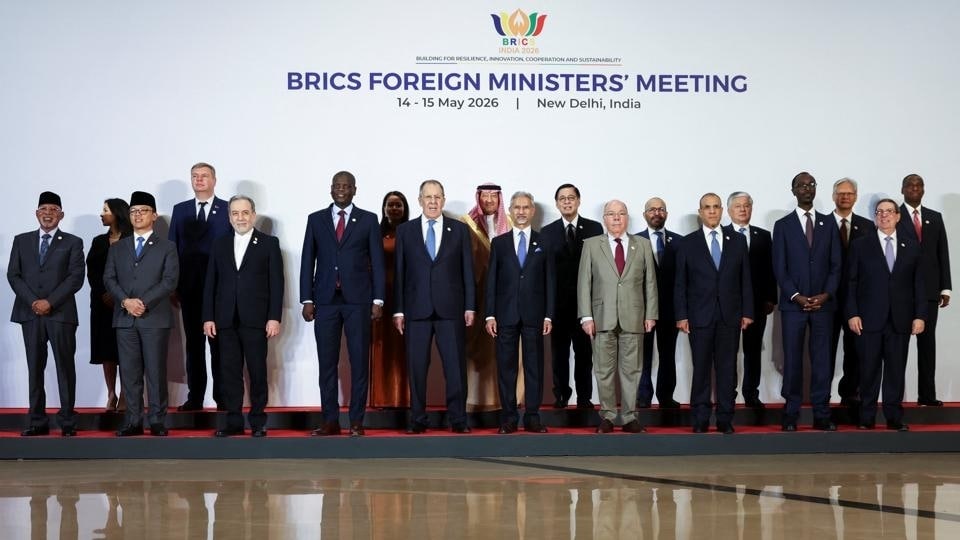
In such a scenario, all eyes are fixed on India as it hosts the premier energy summit. Obviously, India’s stewardship of this important gathering reflects how the country prepares for the upcoming high-profile event to assume fourth BRICS chairmanship, following its previous tenures in 2012, 2016, and 2021. With BRICS now comprising 11 member countries that collectively represent nearly half of the world’s population and approximately 40% of global GDP, the outcomes of this meeting are expected to attract significant global spotlight. Against the backdrop of shifting geopolitical alignments and growing uncertainties in global energy markets, the discussions in Gurugram are likely to play a crucial role in shaping future energy cooperation and strategic partnerships among these emerging economies.
As the host country, India has embraced the theme Building for Resilience, Innovation, Cooperation and Sustainability (BRICS). To reiterate, the theme gains particular significance in light of the recent conflict in West Asia and disruptions in the Strait of Hormuz, which have intensified concerns about global energy security. The uncertainty surrounding energy supplies and the growing difficulties in accessing critical resources have further complicated the global energy landscape. Diplomatic efforts to ease regional tensions have achieved limited success.
In this challenging environment, India, known for its commitment to peace and dialogue, has adopted Energy for All as the benign theme for the 11th BRICS Energy Ministers’ Meeting. The theme reflects the collective determination of BRICS nations to support each other in ensuring affordable, reliable, and sustainable access to energy for all, while strengthening cooperation to address emerging global energy challenges.
The upcoming meeting accords priority to three broad areas:
- Energy security and sustainability
- Energy access and equity, and
- Technology and innovation.
In an increasingly uncertain global energy environment stronger cooperation among BRICS countries assumes particular significance. From India’s perspective the meeting undoubtedly provides an opportunity to showcase progress in building a sustainable and future ready energy system. At the global level India has emerged as a leading advocate for clean energy cooperation through pioneering initiatives such as the international Solar Alliance and the Global Bio-fuels Alliances reinforcing its role in advancing an inclusive and sustainable energy future.
To advance discussions under BRICS, energy track seminars has already been conducted on the role of Artificial Intelligence in energy sector and on the breakthrough in carbon capture, utilisation and shortage (CCUS) technology with active participation from BRICS members. These meetings suggest a significant shift in strategy towards building consensus on key priorities and identifying areas for deeper cooperation among BRICS nations. Today’s meeting is important for India for several reasons: Firstly, in the post-Sindoor period India’s image as a global power experienced a sudden diminution due to coziness of hobnobbing between America and Pakistan. Even neighbouring country like Bangladesh became an irritable tantrum for India in post-Hasina period. But when energy crisis started due to West Asia conflict the newly formed BNP government asked help from India and as a magnanimous hegemon India did not hesitate to help. So, through this energy meeting within BRICS India seems well-positioned to regain her global energy player status. Secondly, China for some time now throws gauntlet to India in energy and other fields in regional and global level. Recently it has started to increase its investment to the institutions all over the world. For example, China raised its share to UN regular budget from 1% in 2000 to 20% in 2025. It has taken initiative to reform WTO and China’s authority has increased in such pivotal organizations like Asian Infrastructure Investment Bank, the New Development Bank, and the Shanghai Cooperation Organization. China has also posed challenges to India’s role as energy player globally. So today’s meeting also serves as a platform for India to promote the priorities of the Global South and contribute to shaping an inclusive global energy future.
India’s approach would not be narrowly inclined to uphold its national goals alone but it would veer towards harmonization between domestic priorities and a broader multilateral strategy, particularly to leverage progress in building a sustainable energy system and strengthening transmission and distribution infrastructure through international cooperation initiative. As such, India’s actions demonstrate an admixture of her commitment to champion the requirements of global south while implementing a collaborative model in close association with advanced global architecture. Noticeably, the schedule suggests that the ministerial meeting will be preceded by the meeting of the high-level energy sector official committee accompanied by side events and followed by a virtual energy summit.
(The views expressed are personal)
This article is authored by Gouri Sankar Nag, professor & head, department of political science, SKB University and Mihir Dey, assistant professor, department of political science, Sushil Kar College, South 24Pgs, West Bengal.


