
 E-Paper



America’s immigration squeeze: Ceding the throne to India?
This article is authored by Sriparna Pathak.

 Prefer HTon Google


As American policies ranging from immigration to education to foreign policy to economics continue wading the Trumpian mist of confusion, and the Silicon Valley grapples with varying and confusing waves of H-1 B visa restrictions, the US stands at crossroads. Trump 2.0, echoing the hardline policies of Trump’s first term as President of the US has imposed a staggering $ 100,000 fee on new H-1B petitions, a move that is designed to prioritise American workers, but can throttle the very engine of American ingenuity, as a seismic shift in global talent wars is now underway. For years, the US successfully attracted the world’s brightest minds, with over 70% of H-1B recipients from India alone, as promises of opportunity and innovation in the US stood out, over and above those of others.
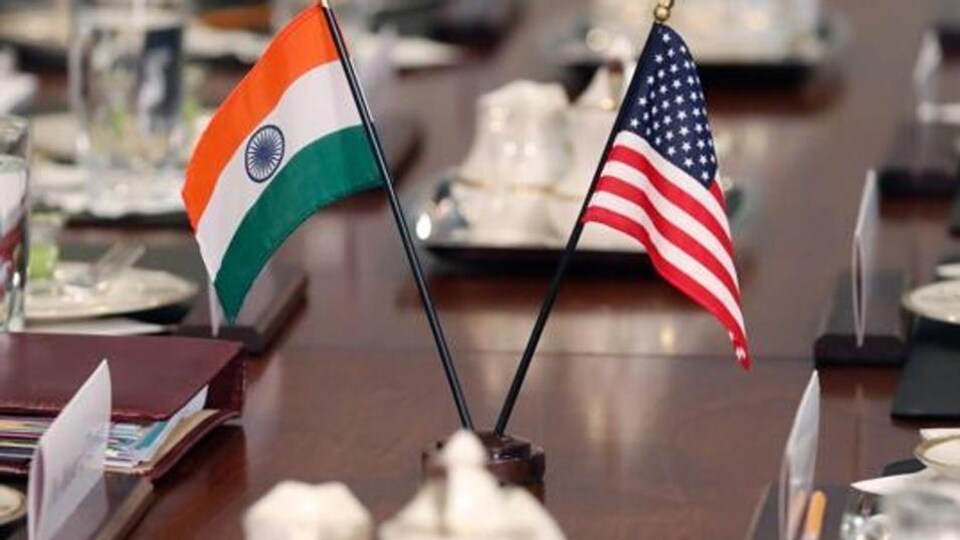
Currently, the applications for fiscal year 2026 is down 38% from the previous year, amid fraud crackdowns and economic slowdowns, and the squeeze is real. Tech giants like Google and Amazon, which had secured thousands of these visas in 2025, are now quietly rerouting operations overseas. The irony is that the protectionist gambit now risks handing over America’s innovation crown to others, plausibly even to India, which has for long been plagued by its own brain drain, but now is primed for a spectacular reversal.
As revealed by a Federal Reserve Study, between 30 to 50% if US productivity growth from 1990 to 2010 is attributed to foreign STEM workers, many on H-1Bs. Half of Silicon Valley’s startups boast immigrant founders, and a third of them have been Indian. The pipeline, thanks to the slashes could dry up. Data tells a clear story of why the US had to rely on foreign STEM workers in the first place. Unemployment among US computer science graduates has doubled to 6.1 percent since 2019, not owing to immigrant competition, but from a broader innovation stall.
The fallout is already visible as start-ups, strapped for cash, face existential binds. The new fees could devour seed funding before prototypes hit the lab. Big Tech, in the meantime is hedging bets. Microsoft’s $ 3 billion infrastructure pledge in India signals a pivot east. Similarly, Google has made its largest investment ever in India, with a $ 15 billion AI data centre in Visakhapatnam, Andhra Pradesh. Announced in October 2025, the hub will feature a gigawatt-scale data centre campus with AdaniConneX and Airtel. Another example is Apple, which is rapidly scaling up its manufacturing and retail presence in India to diversify its supply chains away from China, and the company is assembling a growing number of iPhones in India, with production reaching $ 22 billion in fiscal year 2025. In fact, for the first time, India became the top exporter of smartphones to the US in the second quarter of 2025.
China, the biggest geopolitical and geoeconomic rival of the US has announced the K visa, to attract foreign STEM graduates, positioning it as an alternative to the US Globally, all of these erode US soft power. As China surges in AI models like DeepSeek, America’s talent drought invites rivals to fill the void. The biggest beneficiary however, will be India, where history’s brain drain is now morphing into a brain bonanza.
For years, when the brain drain phenomenon dominated, 11,000 graduates on an average annually fled India for US shores, building empires like Google and Microsoft under Sundar Pichai and Satya Nadella. In the past, however, there have also been reversals. The dot-com bust forced returns, birthing India’s IT boom. By 2005, software exports eclipsed America’s, thanks to H-1B alumni importing skills and networks. In 2025, in today’s world, approximately seven million tech professionals are trained globally by Indian firms, and the 5.2 million strong diaspora in the US alone remains a boomerang asset. Half of Indian-American households earn over $ 160,000, but now US barriers accelerate the U-turn.
Zoho Corporation’s Sridhar Vembu is a successful example of a US returnee, as Zoho now serves 100 million plus users worldwide, and employs 15,000 plus, many in rural India. Other such successful examples are of Ola’s Bhavish Aggarwal, Zomato’s Deepinder Goyal, OYO Rooms’ Ritesh Agarwal, Unacademy’s Gaurav Munjal among a long list of others. India has a positive youth dividend, its domestic consumption remains strong, and with a renewed focus on self-reliance or Aatmanirbhar Bharat, India is poised to take full advantage of the talent pipeline drying up in the US
While China’s K visa will also attract some talent that used to earlier flock to the US, the plausibility of it attracting significant numbers of non-ethnic Chinese professionals remains low. China’s K visa is similar to the R visa introduced in 2013, for high-level foreign talent. But it had stringent approval processes and a preference for overseas Chinese experts, limiting the appeal for Indian STEM workers. Past precedents, such as China's 2017 admission in State media that it had ignored Indian high-tech talent in favour of US and European recruits, highlight a long-standing oversight in building targeted recruitment pipelines from India, resulting in minimal inflows even as firms like CA Technologies shifted R&D operations to India instead. India stands to gain from the confused policy making in the Trumpian era in the US and from China’s continued difficulties for Indian STEM workers. Without realising the throne might just have been ceded to India. How well India utilises the opportunity remains to be seen in the near future.
This article is authored by Sriparna Pathak, professor, China Studies and International Relations, Jindal School of International Affairs, OP Jindal Global University, Sonipat.


